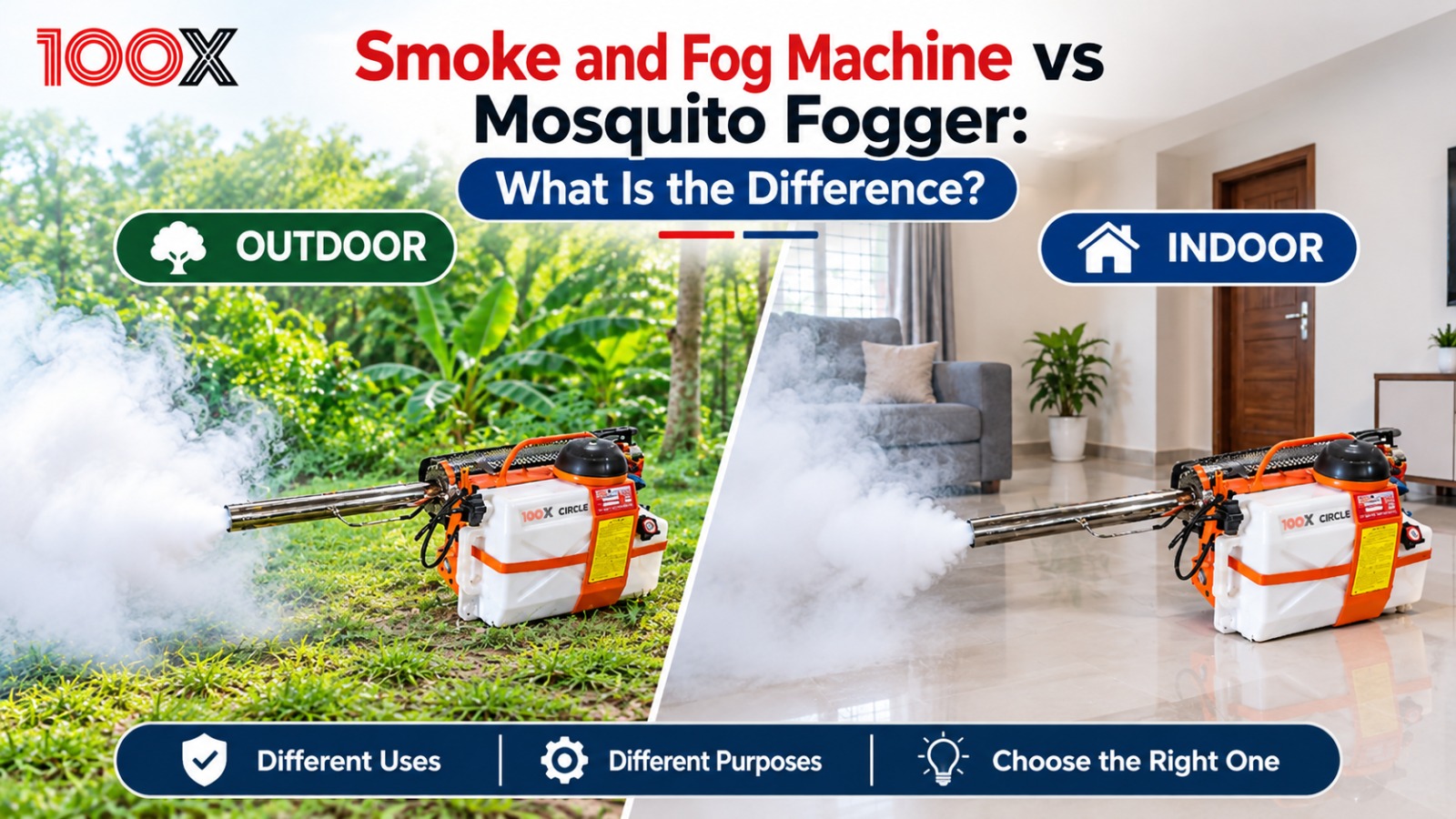
Smoke and Fog Machine vs Mosquito Fogger: What Is the Difference?
Is a smoke and fog machine the same as a mosquito fogger? See 7 differences in purpose, fluid, safety and use before you buy.
Both machines blow out a thick white cloud, so many people think they are the same thing. They are not. A smoke and fog machine is made to create effects for stage shows, parties, and film sets. A mosquito fogger is made to deliver pest control chemicals into drains, gardens, and streets. Mixing them up can ruin a machine, waste money, or even harm your health.
This guide explains the difference in simple words. You will see how each machine works, what goes into the tank, where each one belongs, and how to pick the right one. If you plan to buy, read to the end first.
Show or Pest Control: What Does Each Machine Really Do?
The Purpose of Entertainment Fog
Entertainment fog is all about looks. It lights up beams in a concert, adds mystery to a haunted house, and gives a film scene its mood. The fog is made from a special fluid designed for use around people, although heavy exposure can still irritate the throat, and it fades away in a few minutes. It does not kill anything.
The Purpose of Mosquito Fog
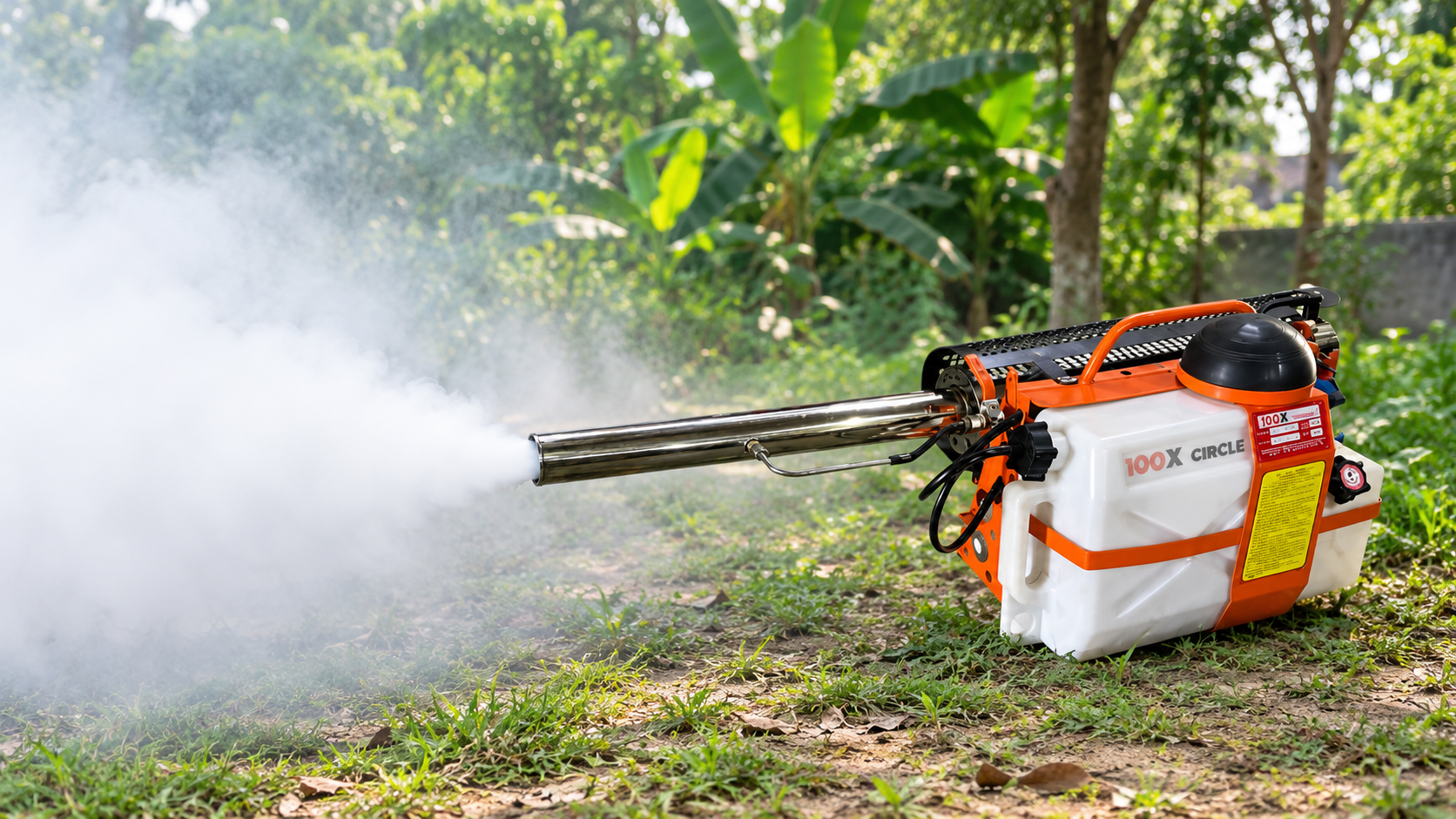
Mosquito fog is all about control. The cloud carries a small dose of insecticide that reaches mosquitoes resting in grass, drains, and dark corners. Public health teams use it during dengue and malaria drives. Here the goal is not a nice look but a real kill.
Why the Fog Looks the Same?
Many machines of both kinds heat a liquid and push it out as a visible cloud, so the cloud looks alike. What is inside the cloud is completely different, and that is where all the risk lies.
Mosquito Fogging Machine or Entertainment Unit: How Does Each Work?
Inside an Entertainment Unit
A stage unit has a small tank, a pump, and a heated block. The pump sends a drop of fluid across the hot block. Glycerine and water mixed is generally used as fluid for entertainment foggers or smoke foggers. The fluid turns to vapour and meets cool air at the outlet, where it forms a cloud. Some units add a chiller to keep the fog low on the floor. Most are small, light, and plug into a wall socket.
Inside a Pest Control Unit
A mosquito fogger is built tougher. Many models use a pulse jet engine that burns fuel in quick bursts and sends hot gas through a resonator tube. The chemical mixture is fed into this hot stream and breaks into very fine droplets, often 8 to 20 microns on good models. Other models skip the heat and use air pressure for the same job.
Why Pest Units Cover More Ground?
The pulse jet pushes the fog far, so one operator can treat a lane or a garden in minutes. Vehicle mounted versions cover whole wards. Entertainment units cannot do this. They are made to fill a room, not a neighbourhood.
Thermal Fog Machine or Heat Exchanger Unit: Which Heating Style Is Which?
A thermal fog machine of the pest control type burns fuel to make heat. A stage unit does not burn anything. It uses an electric heating element instead. This is the biggest build difference, and it explains the gap in power, size, and noise.
Fuel and Fire Safety
Fuel burning units need open air, a safe place to refill, and a cool machine before refuelling. Electric stage units need only a power supply, but they can trigger smoke detectors, so tell the venue before a show.
Noise and Size
A pulse jet is loud and heavy. It is made to be carried across fields or fixed on a vehicle. A stage unit hums quietly and sits on a table. If you need quiet and indoors, the pest control type is the wrong tool. To see where pulse jet units are used in real work, read about the uses of a thermal fogging machine.
Fogger Machine for the Stage or the Street: Fluid or Chemical?
Every fogger machine needs the right liquid. This is where most mistakes happen.
What Goes Into a Stage Unit?
Only a fluid made for that unit should go in. It is usually a mix of water with glycol or glycerin. Using the wrong fluid can clog the heater, leave a sticky film, or give off a bad smell.
What Goes Into a Pest Control Unit?
Here the tank holds an insecticide mixed with a carrier, which can be oil or water depending on the machine and the product. Each chemical has its own dose and rules, so the label comes first. For a list of common products, read our guide to common fogging machine chemical names.
Never Swap the Liquids
Putting stage fluid in a pest unit will not kill a single mosquito. Putting insecticide in a stage unit will fill a room with a harmful mist and ruin the machine. Neither mistake is worth making.
Indoor or Outdoor: Where Each Machine Belongs?
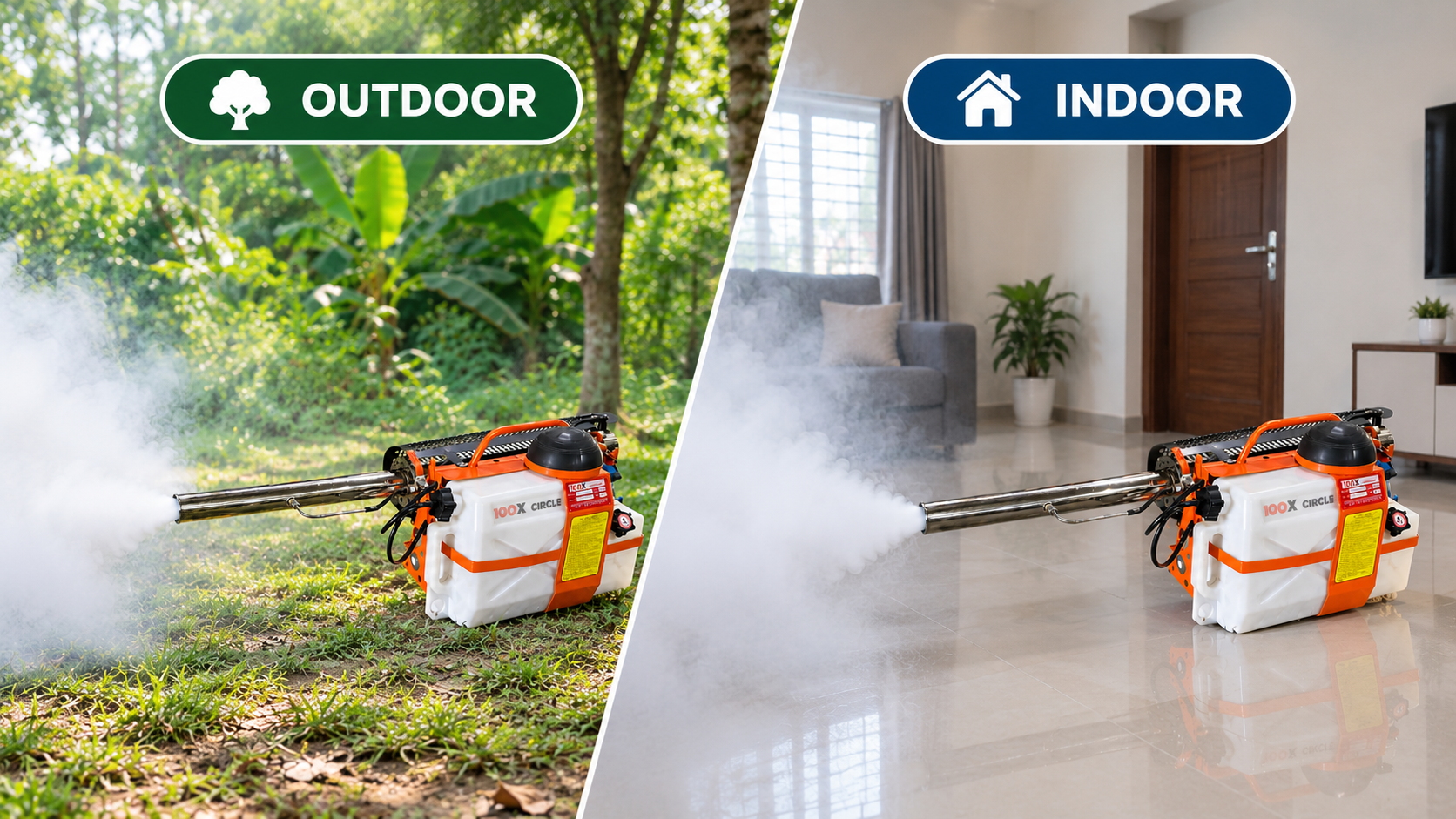
Indoor Spaces
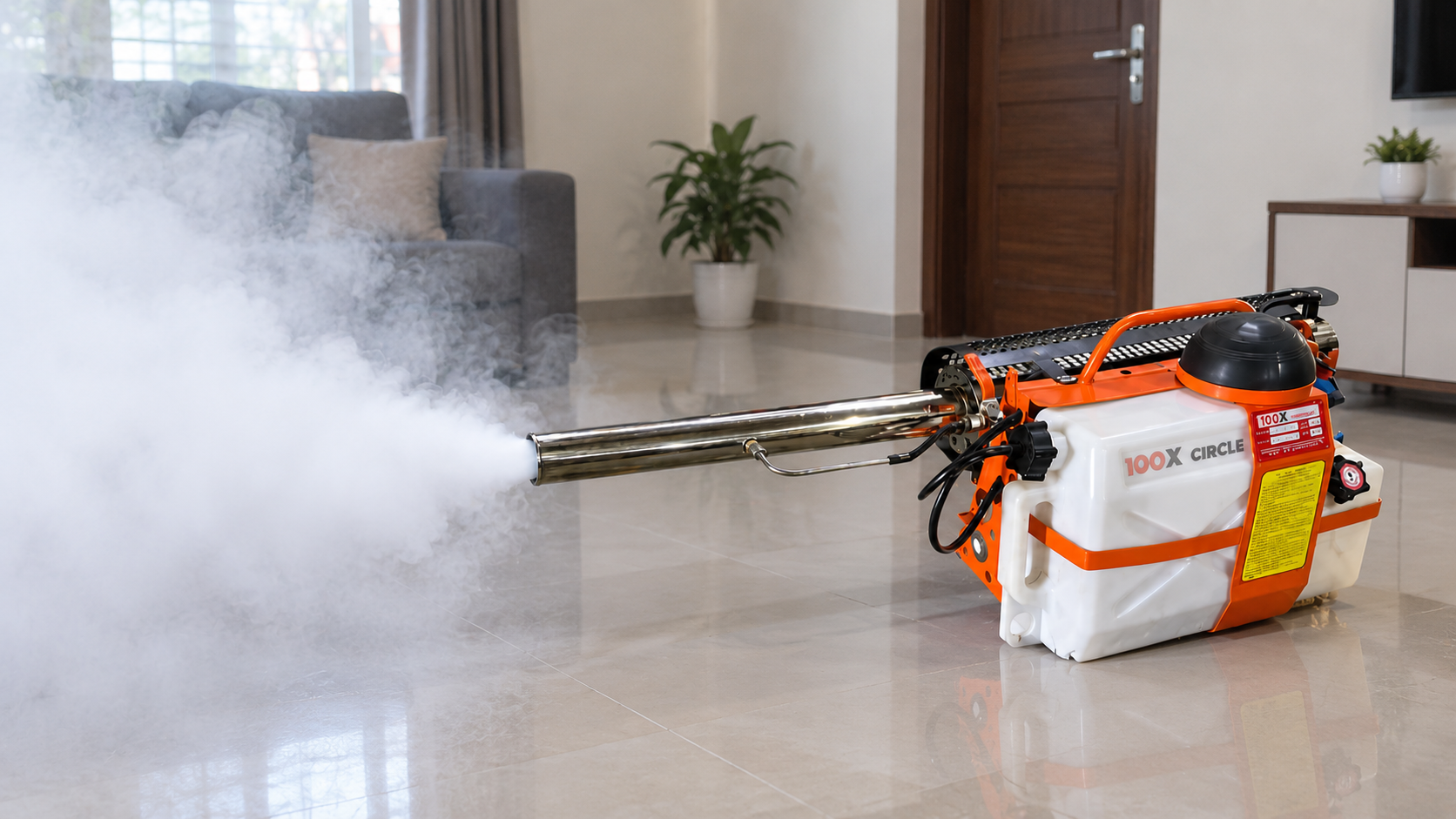
Stage fog suits halls, studios, and clubs. Pest fog indoors needs great care. Hospitals and food areas follow strict rules, and the room must be sealed and cleared of people during treatment. Many professionals prefer cold fogging for indoor jobs, and our blog on cold fogging uses.
Outdoor Spaces
Open drains, parks, farms, and housing lanes are where mosquito fog belongs. Wind matters here. A strong breeze carries the cloud away before it works, so plan the drive for calm hours and check wind direction first.
Mixed Sites
Events held outdoors, such as weddings on lawns, often need both. Use stage fog for the effect, and fog for mosquitoes the day before, with the right unit and enough time for the area to clear.
Safe or Risky: Can One Machine Do Both Jobs?
Short answer: no. A machine built for one job is not safe for the other. Look at the list below.
Why Swapping Is a Bad Idea?
- Health: leftover insecticide can end up in the air people breathe
- Damage: stage heaters clog when they meet oils or chemicals
- Results: show fluid has no kill power against mosquitoes
- Fire: pulse jets run hot and need open air
- Rules: pest control work often needs approved equipment and trained staff
Smart Safety Habits
Wear a mask, gloves, and eye cover when you handle insecticide. Keep children and pets away during fogging. Store show fluid and chemicals in separate, labelled places.
Cost or Value: What Are You Really Paying For?
Entry Price and Running Cost
Stage units are cheap to buy and cheap to run, since fluid is the only regular expense. Pest control units cost more at the start because of the engine, the tank, and the heat resistant parts. Running costs include fuel, chemical, and some servicing.
Build Quality
Look at the tank material and the spare parts supply. HDPE and stainless steel tanks last longer with chemicals. A maker such as 100x circle private limited that stocks original parts keeps your machine working through a full season. A cheap unit with no spares often ends up costing more.
Hidden Costs
Training, protective gear, and safe storage add to the bill. Budget for them from day one.
Beginner or Professional: Who Should Run Each Machine?
Stage Units for Beginners
Most stage units are plug and play. Add fluid, wait for the heat, and press a button. A short read of the manual is enough.
Pest Units Need Training
A pest control unit needs more care. The operator must know the dose, the carrier, the walking pace, and the safe distance. Many municipal teams train their staff before every season.
Where to Get Help?
Pick a seller who answers questions before the sale and after it. Good support means clear manuals, quick spare parts, and honest advice on which model fits your job.
Mosquito Fogging Machine or Smoke Machine: Which One Should You Buy?
Ask yourself one question: do you want a visual effect or a pest free space? Your answer settles the choice.
Buy a Smoke Unit If
You run events, shoot videos, or plan a Halloween set. You need quiet, low heat, and a small plug in machine.
Buy a Pest Control Unit If
You must treat drains, farms, gardens, estates, or wards. Look at vehicle mounted and portable models from 100x circle private limited, which ship original spare parts across India.
Check Types Before You Pay
Pest control units come in many types, so see our overview of the types of fogging machines first.
Myth or Fact: What People Often Believe?
All Fog Is the Same?
Myth. The clouds may look alike, but the liquid, the dose, and the purpose are different.
More Fog Means Better Control
Myth. A thick cloud can look strong, but the kill depends on the right chemical, the right dose, and good timing. Dawn and dusk work best because mosquitoes are active and the wind is calm. See how often to fog in our mosquito control schedule guide.
Fog Machines Are Only for Parties
Myth. The same basic idea, vapour from heat, also powers serious pest and crop protection tools.
Final Verdict: Show Fog or Pest Fog?
A smoke and fog machine and a mosquito fogger look alike but live in different worlds. One makes show effects for people to enjoy. The other delivers chemicals to protect people from disease. Once you know how each one works, what goes in the tank, and where it belongs, the choice is simple. Never swap the liquids, and always read the label. If you need a real pest control unit, the team at 100x circle private limited can help you pick the right model and support it for years. A little planning now saves money and risk later. Use the box below to get a free recommendation for your site.
Frequently Asked Questions
Is a smoke machine the same as a mosquito fogger?
No, a smoke machine makes harmless stage effects while a mosquito fogger sprays insecticide to kill pests.
Can I use stage fog fluid to kill mosquitoes?
No, show fluid has no insecticide in it, so it will not control mosquitoes.
Can I put insecticide in a party fog machine?
No, it can ruin the heater and release harmful mist into the room.
Which machine is better for home mosquito control?
A small portable pest control fogger is the right tool, used outdoors with the correct chemical.
Do stage fog machines set off fire alarms?
Yes, the vapour can trigger smoke detectors, so warn the venue and test before the show.
Ansita Sahu
Article Author