How Often Should You Fog for Mosquito Control? A Complete Guide
Learn how often fogging should be done for mosquito control, including key factors that affect treatment frequency, effectiveness, and mosquito prevention.
Every summer and monsoon, the same question comes up in every ghar and mohalla: kitni baar fogging karayein? Spray once and forget rarely works, because machhar come back within days if the timing is off. Getting your mosquito fogging frequency right is the real difference between a one-time exercise and lasting relief from mosquitoes. This guide breaks down how often to fog, when to fog, and how the season changes the plan, in plain and simple language.
Mosquito Fogging Frequency: How Often Is Enough?
The most common question homeowners ask is simply how often to fog for mosquitoes once the season starts. There is no single answer for every ghar, since it depends on standing water nearby, how much greenery surrounds the property, and how bad the mosquito problem already is.
Factors That Decide the Right Mosquito Fogging Frequency
Water bodies, open drains, plant pots, and even a stray tyre lying around can turn into a breeding spot within a week. Answering how often to fog for mosquitoes for your own property depends on how many such spots exist nearby, along with the wind direction, temperature, and how close you are to a park, field, or nala.
Best Time to Fog for Mosquitoes
Timing matters as much as frequency. The best time to fog for mosquitoes is early morning or just after sunset, when the air is still and mosquitoes are most active. Fogging during strong afternoon heat or heavy wind wastes chemical, since the fog disperses before it can settle on resting mosquitoes.
Signs Your Area Needs More Frequent Fogging
If you are spotting mosquitoes indoors during the day, hearing more complaints from neighbours, or noticing itchy bites even after using repellents, it is a clear signal that the current gap between sessions is too wide. Checking the mohalla WhatsApp group or local health worker updates for dengue or malaria cases nearby is also a practical way to decide whether to tighten the schedule before symptoms show up at home.
Weekly vs Monthly Fogging: Which Schedule Is Right for You?
One of the biggest confusions people have is choosing between weekly vs monthly fogging for their locality. Both have their place, and picking the wrong one either wastes money or leaves gaps for mosquitoes to bounce back.
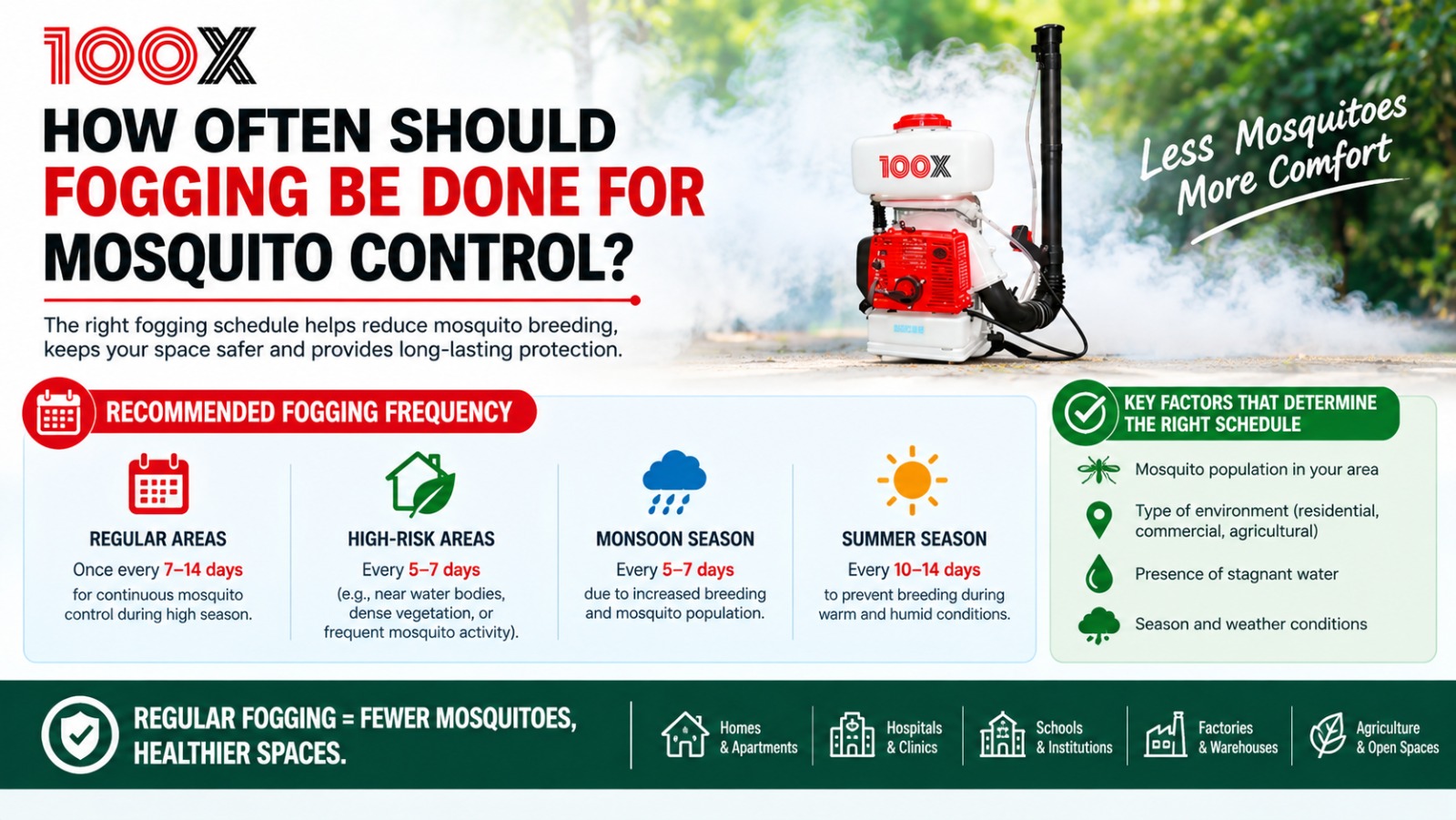
- Weekly fogging suits high-risk zones such as areas near open drains, construction sites, or during a dengue or malaria outbreak
- Monthly fogging works well for well-maintained homes and societies with low standing water and regular cleanliness drives
- Apartment complexes usually sit in between, needing fogging every two to four weeks during peak season
- Farms and orchard boundaries can often stretch beyond a month unless pest pressure is unusually high
The choice between weekly vs monthly fogging should also factor in the equipment being used. A reliable pulse jet thermal fogger from a trusted manufacturer such as 100x circle private limited covers a larger area per session with a finer fog, which sometimes allows a longer gap between visits without losing effectiveness.
Fogging Machine Type Also Affects the Right Interval
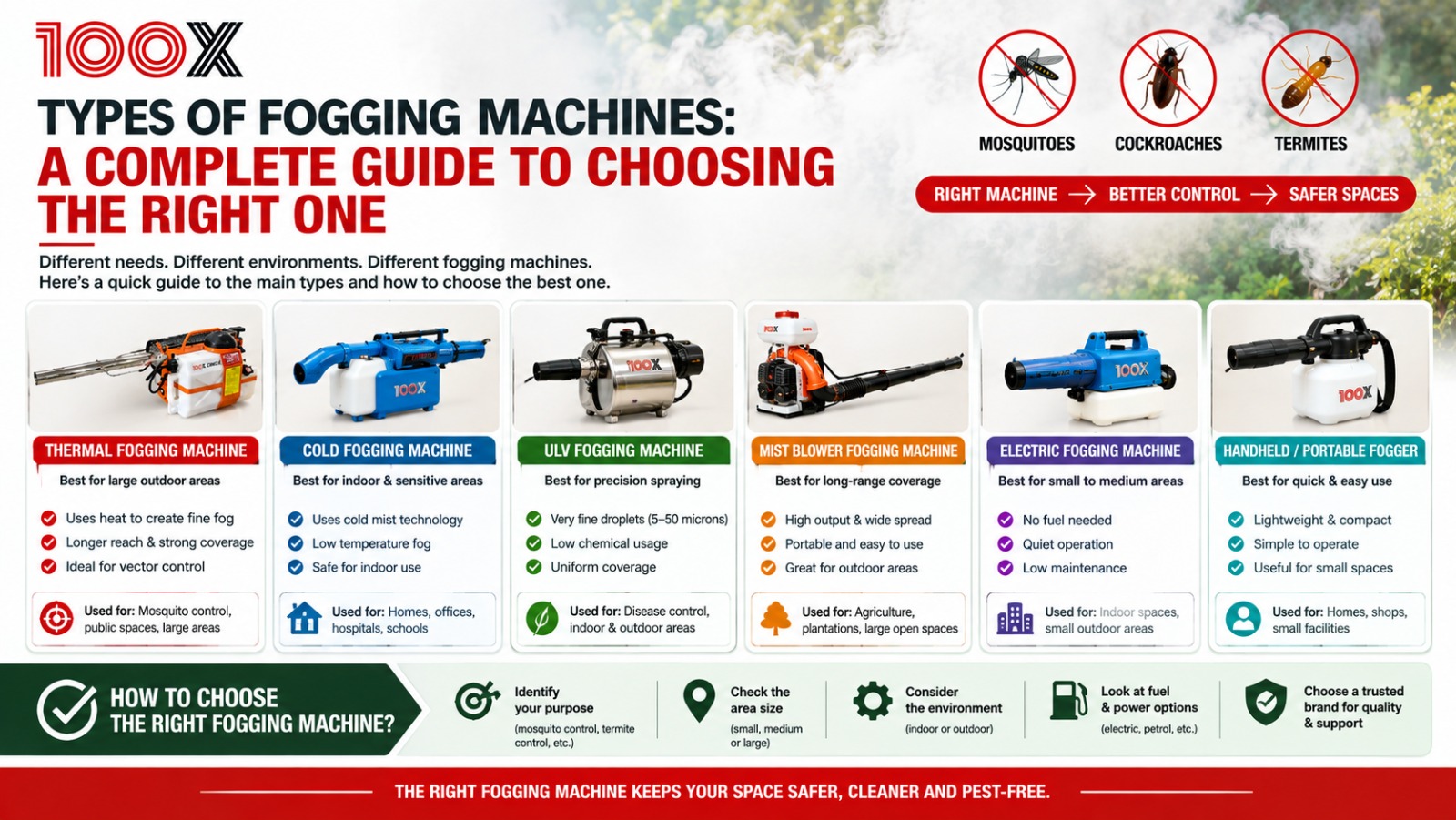
A thermal fogger and a cold ULV fogger do not behave the same way once the fog is released. Thermal units create a dense, visible fog that clings well to leaves and open drains, which can hold up longer outdoors, while cold foggers produce a finer mist better suited for indoor spaces where visible smoke is not welcome. Picking the wrong type for the job often means fogging more often than actually needed just to get the same result.
Fogging Schedule for Mosquitoes Across the Year
A good fogging schedule for mosquitoes does not stay the same all year round, because mosquito fogging frequency needs change with the weather. Summer, monsoon, and winter each bring a different level of mosquito activity, and the schedule should move up or down with it.
Fogging During the Rainy Season
Nothing pushes mosquito numbers up faster than the monsoon. Fogging during the rainy season needs to happen more often, usually every one to two weeks, because puddles, clogged drains, and waterlogged plots turn into breeding grounds within days of the first heavy shower. Nagar Nigams and health departments across India typically increase fogging drives sharply the moment monsoon arrives, and household schedules should follow the same logic.
Adjusting the Fogging Schedule for Mosquitoes in Summer and Winter
Summer months, especially just before the rains, are the second busiest period for fogging since standing water from irrigation or old containers still attracts breeding mosquitoes. Winter usually sees a natural drop in mosquito activity in most parts of India, so many households safely stretch out their fogging schedule for mosquitoes to once every couple of months, picking the pace back up as temperatures rise again. Keeping an eye on how the season shifts is often more useful than following a rigid calendar.
Monsoon Mosquito Fogging: The Best Time of Day to Fog Your Home
Combining timing and season gives the best results. During monsoon, the best time to fog for mosquitoes is right after the rain stops and before the next spell begins, since fogging into active rainfall washes the chemical away before it can work. Early morning sessions, before the mohalla wakes up and while the air is calm, remain the most effective slot even in fogging during the rainy season drives run by municipal teams.
Below is a simple comparison to help decide how often different properties should be fogged, based on the area and the season.
This table is only a starting point. The real fogging frequency for your property should be checked against local mosquito activity, nearby water sources, and any health department advisory for your area. Using dependable, GeM-registered equipment from 100x circle pvt ltd also makes it easier to stick to whichever schedule you choose, since a consistent, ultra-fine fog gives predictable coverage every single time.
If you are also weighing the cost of setting up your own fogging routine, our detailed guide on how much a mosquito fogging machine really costs breaks down prices, types, and features to help you choose the right one for home or society use.
Working with a Professional Fogging Team?
Municipal drives and pest control companies use calibrated, high-output machines and trained operators who know how to read wind direction, water sources, and local mosquito activity before deciding the day's route. For an individual home or a small society, calling a professional once to assess the property and set a baseline schedule is often more useful than guessing the frequency on your own, especially in the first season of tackling a mosquito problem.
Final Thoughts
There is no one-size-fits-all answer to mosquito fogging frequency, but understanding your area, the season, and the right timing takes most of the guesswork out of it. Whether it is a single ghar, an apartment society, or an entire mohalla, matching the schedule to real mosquito activity keeps results consistent without wasting chemical or effort. 100x circle pvt ltd, an established GeM-registered manufacturer ensures the machine behind your schedule performs reliably, season after season.
Frequently Asked Questions
How often should fogging be done during peak mosquito season?
Every two to three weeks for most homes, and weekly in high-risk or outbreak-prone areas.
Is weekly fogging better than monthly fogging for a housing society?
Weekly suits high mosquito zones, while monthly works fine for well-maintained, low-risk societies.
What is the best time of day to fog for mosquitoes?
Early morning or just after sunset, when the air is calm and mosquitoes are most active.
Does the rainy season need more frequent fogging?
Yes, monsoon months usually need fogging every one to two weeks due to waterlogging.
Can fogging schedules change between summer and winter?
Yes, most areas can safely reduce fogging in winter and increase it again before summer and monsoon.
Ansita Sahu
Article Author