What Is the Best Time for Mosquito Fogging?
Wondering when to fog for mosquitoes? Learn the best time of day, weather conditions, and schedule for effective mosquito fogging at home.
Every fogging session works best inside a fairly narrow window, and missing it means burning through chemicals and diesel that mosquitoes barely notice. Homeowners scheduling a weekend treatment and municipal teams planning a city-wide drive both end up asking the same question before switching on the machine, what is the best time for mosquito fogging? Get the timing wrong and even the most powerful thermal fogger struggles to reach its target, because heat, wind, and mosquito activity patterns all shift through the day. This guide walks through the exact hours, weather conditions, and seasonal windows that make fogging genuinely effective.
When to Do Mosquito Fogging for the Best Results?
Understanding mosquito behaviour is the real starting point for building any fogging schedule, rather than simply picking a convenient hour. Mosquitoes are most active during two narrow windows, dawn and dusk, when temperatures are moderate, wind is calm, and humidity is higher, so the fog stays suspended in the air long enough to make contact instead of dispersing before it reaches anything. Fogging outside these windows is rarely wasted entirely, but the return on chemical and fuel used drops noticeably once the sun is fully up or the air has gone still and cold late at night.
When to do mosquito fogging also depends heavily on which species is the actual target. Aedes mosquitoes, the ones that spread dengue and chikungunya, bite mostly during daylight hours, while Culex and Anopheles species are far more active after sunset. A single fixed schedule can easily miss part of the target population, which is why many municipal programme run both a dawn and a dusk round rather than relying on just one.
Timing Your Fogging Program Around the Seasons
Municipal fogging drives typically intensify just before and during the monsoon, since stagnant water accelerates larvae into biting adults within days of the first heavy rain. Waiting for visible case counts to rise wastes the head start that early, proactive fogging provides, which is why most public health departments schedule rounds through the pre-monsoon and post-monsoon months rather than reacting only once an outbreak is already underway.
Temperature plays a supporting role alongside season. Fogging chemicals generally perform best within a moderate temperature band, since extreme heat causes droplets to evaporate faster than intended, shrinking their effective range before they can settle on resting mosquitoes. Cooler months still see mosquito activity in many parts of India, so treatment schedules are usually adjusted in frequency rather than dropped entirely once winter arrives, particularly in low-lying or waterlogged areas where breeding continues year-round.
Best Time of Day to Fog for Mosquitoes: Hour by Hour
Even within the dawn-to-dusk window, some hours consistently outperform others once wind speed, temperature, and mosquito movement are all factored in together:
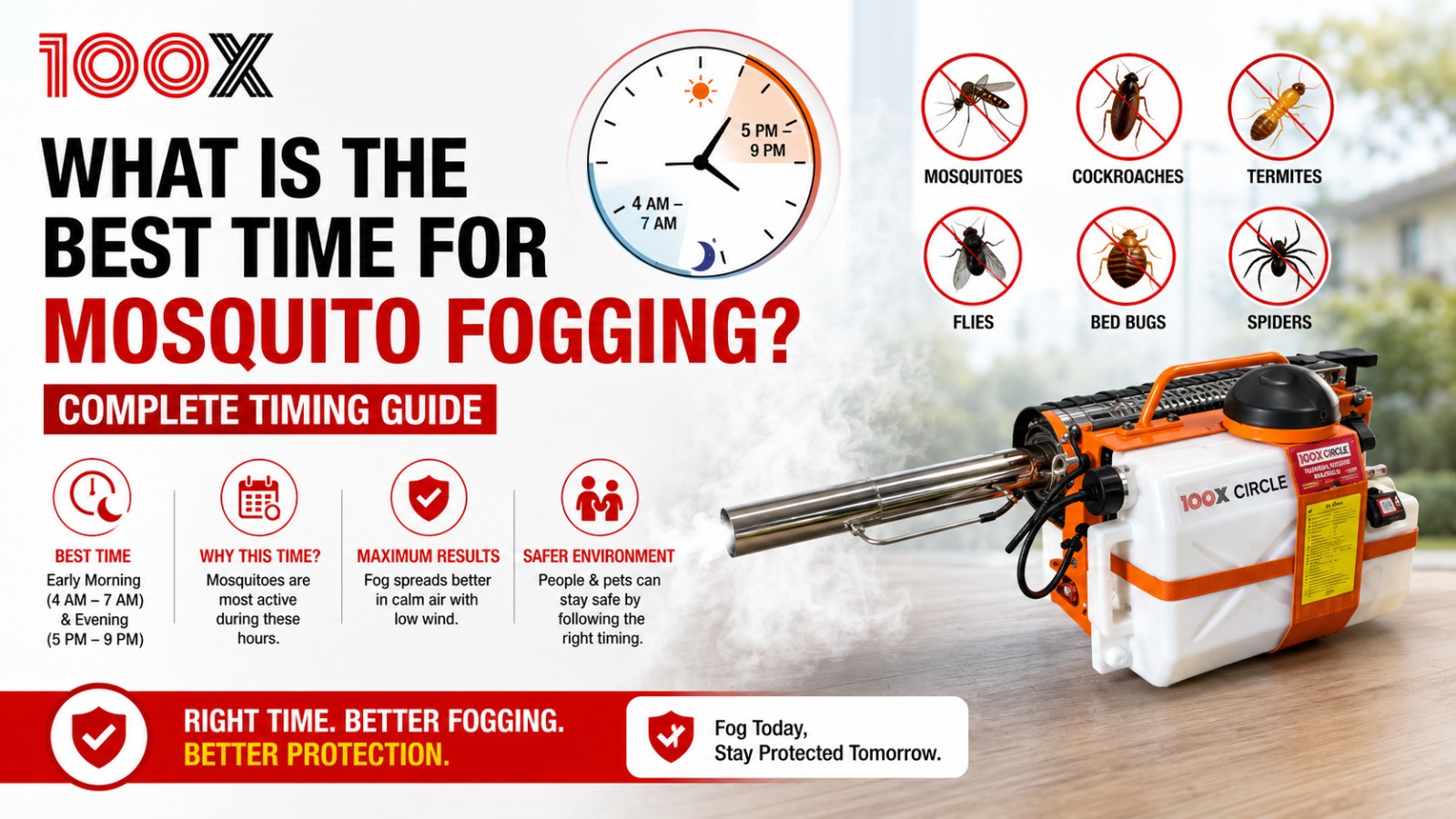
- Early morning, 5:30 to 7:00 AM: calm wind and cool, dense air hold the fog close to the ground while mosquitoes are actively feeding.
- Early evening, 6:30 to 8:00 PM: the second daily activity peak, with fog settling well as temperatures drop after sunset.
- Late night: effective against nocturnal species, but limited visibility and higher operational risk make it less practical for most residential use.
- Midday: the least effective window, since rising heat lifts warm air currents that carry fog away before it can settle on target surfaces.
- Post-rainfall calm spells: a useful bonus window when dawn or dusk timing is not possible, since settled air after a shower briefly mimics early-morning conditions.
For most Indian conditions, the best time of day to fog for mosquitoes remains early morning or early evening, since both windows combine low wind speed with peak mosquito movement, giving the fog the best possible chance of actual contact rather than just visible drift.
Humidity is the quiet factor that decides how far a well-timed fog cloud actually travels. Moderately humid air helps droplets stay airborne longer without evaporating, which is one reason early morning and early evening outperform the dry heat of mid-afternoon even when wind speeds are similar. Operators running fogging drives in arid regions sometimes shift their schedule slightly earlier to take advantage of overnight humidity before it burns off with the rising sun.
Get professional thermal fogging machines built for consistent, reliable output whatever the hour, season, or weather calls for. Contact Us now!
Mosquito Fogging at Home: A Practical Schedule to Follow
Homeowners do not need municipal-scale equipment to benefit from correct timing, only a consistent routine. Mosquito fogging at home works best when treatment is scheduled thirty to forty-five minutes before family activity begins in the yard or garden, giving the fog enough time to settle fully before anyone walks back outside. Weekly or twice-weekly sessions during peak mosquito season generally outperform occasional, poorly timed treatments, since consistency prevents the population from rebuilding between rounds.
Portable machines make it practical for households, farms, and small estates to fog on their own schedule rather than waiting for a municipal round to pass through the area, provided basic safety precautions such as keeping people and pets indoors during the spray are followed every time.
Coordinating timing with neighbours makes a noticeable difference in shared residential blocks. A single household fogging on its own schedule only clears mosquitoes temporarily, since untreated gardens next door quickly repopulate the area. Where possible, aligning treatment windows with adjacent properties, or timing sessions to follow a municipal round rather than duplicating it, stretches the benefit of each application considerably further than fogging in isolation.
Mosquito Fogging and Rain: Timing That Actually Makes a Difference
Rain complicates fogging timing more than almost any other single variable. Mosquito fogging before or after rain calls for different thinking depending on which side of the rainfall you are on: fogging right before a downpour risks the chemical being washed off surfaces before it can act, while fogging immediately after rain, once puddles have settled and wind has calmed, often performs better because the rain has temporarily cleared dust and pollen that would otherwise interfere with fog dispersal.
Municipal teams operating vehicle-mounted foggers typically plan routes around the local forecast rather than a fixed calendar, since consistent droplet output regardless of humidity is one of the practical advantages of pulse-jet thermal technology over basic sprayers.
Wind direction deserves a final mention alongside rainfall, since even a well-timed session underperforms if the fog drifts away from the intended target zone. Checking wind direction before starting and working from downwind to upwind through a property or ward keeps the fog concentrated where mosquitoes are actually resting rather than pushing it harmlessly into open sky.
Get the Timing Right, and the Rest Falls Into Place
So when should the next round actually go on the calendar? The best time for mosquito fogging combines species behaviour, weather, wind, and season rather than any single rule, which is why early morning and early evening sessions, adjusted around rainfall and monsoon timing, consistently deliver better results than fogging on a fixed weekly slot regardless of conditions. Treating timing as a variable to actively manage, rather than a formality before switching the machine on, is ultimately what separates a fogging program that keeps mosquito numbers down from one that simply produces an impressive-looking cloud.
Timing only gets you halfway there. If you want the best time for mosquito fogging to actually reduce mosquito numbers instead of just producing a visible cloud, the equipment matters just as much. 100x circle manufactures GeM-approved thermal fogging machines designed for consistent, reliable output, whether it's a 5 AM municipal round or a quiet evening session at home.
Frequently Asked Questions
What is the best time of day to schedule mosquito fogging?
Early morning and early evening, when the wind is calm and mosquitoes are most active, generally give the best results.
Should mosquito fogging be done before or after rain?
Fogging shortly after rain, once puddles and wind have settled, usually works better than fogging right before a downpour.
How often should home fogging sessions be repeated?
Weekly or twice-weekly sessions during peak mosquito season are generally more effective than occasional treatments.
Does wind speed affect fogging effectiveness?
Yes, strong wind disperses fog before it can settle, so calm conditions in the early morning or evening work best.
Is nighttime fogging effective against mosquitoes?
It can help against nocturnal species, but limited visibility makes it less practical than dawn or dusk sessions for most users.
Ansita Sahu
Article Author