How Long Does Mosquito Fogging Last? Effectiveness, Timing & Cost Explained
Wondering how long mosquito fogging keeps bugs away? Learn effectiveness, timing, and how often to fog for lasting results.
A fogging van rolls through, leaves a thick white cloud behind, and mosquitoes seem to vanish within minutes, but the question every household eventually asks is: how long does mosquito fogging last before the mosquitoes come right back in the same numbers as before? The honest answer depends on more variables than most services mention upfront, from wind and rainfall to the specific chemical used and how close mosquitoes are breeding nearby. This guide walks through the real timeline you can expect after a fogging session, what shortens or extends that window, and how to get more lasting value from every round.
What Really Happens to Mosquitoes After a Fogging Treatment?
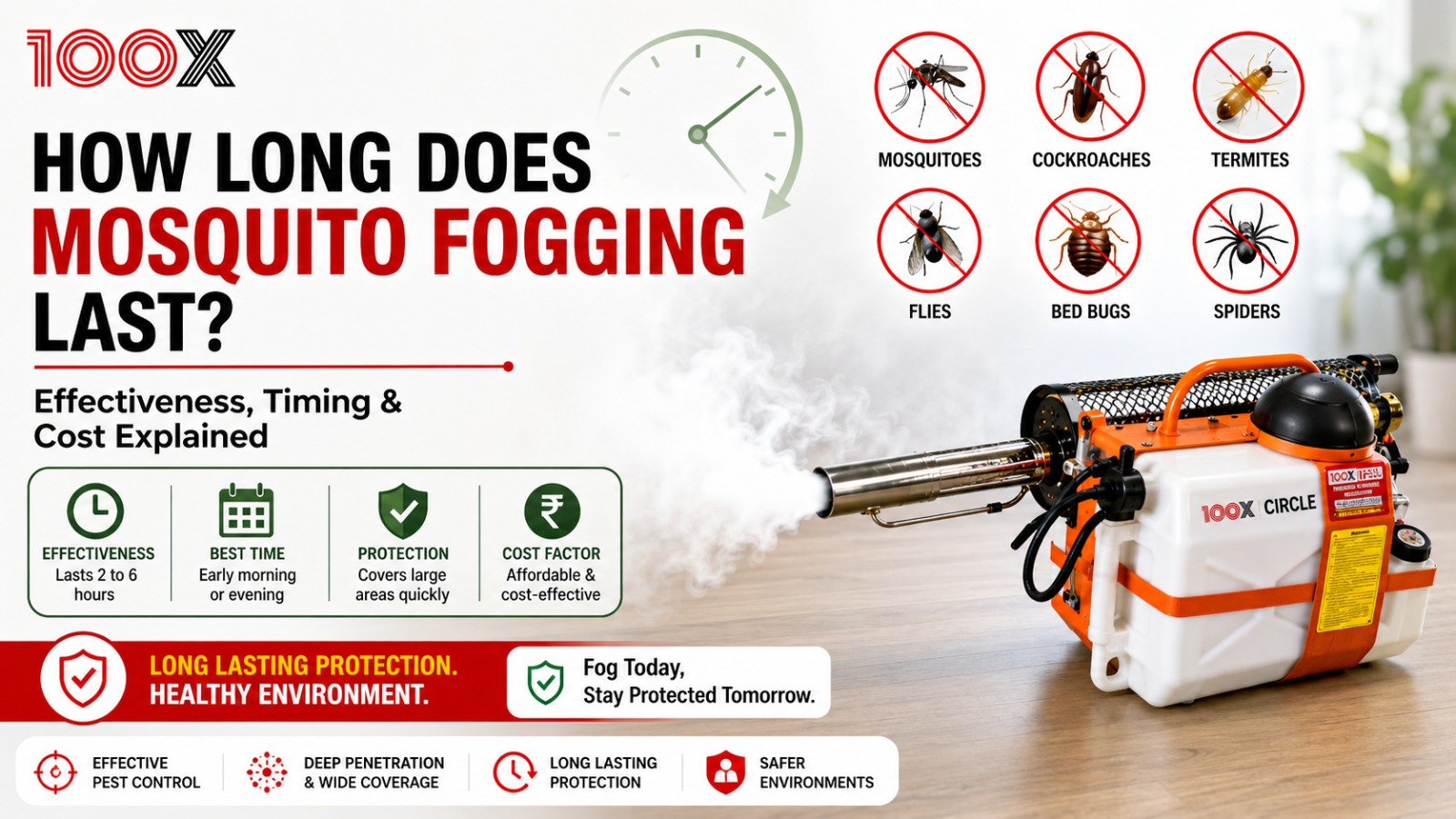
Immediately after fogging, adult mosquitoes in the treated area die or are knocked down within minutes, since the fine chemical droplets coat their wings and body surfaces on direct contact. Mosquito fogging effectiveness typically peaks within the first 24 to 48 hours after treatment, then fades steadily as new adults emerge from nearby breeding sites and as wind, rain, or sunlight break down whatever residue is left on outdoor surfaces. In practical terms, most households notice a sharply reduced mosquito presence for three to five days, with numbers gradually climbing back toward normal by the end of the first week.
The surrounding environment shapes this curve more than most people expect. A fogged garden bordered by an untreated drain, empty plot, or neighbouring property with standing water sees mosquitoes migrate back in far faster than an isolated treated area, simply because adult mosquitoes can fly in from outside the treatment zone within hours of the fog settling. This is one of the main reasons two households following the identical schedule and chemical often report noticeably different results.
Does Mosquito Fogging Actually Work?
Skepticism about fogging is common, mostly because people expect a single session to eliminate mosquitoes permanently, which was never how the treatment was designed to function. Does mosquito fogging really work as a mosquito control method? Yes, but only as one part of a layered strategy rather than a standalone fix. Mosquito Fogging removes the current adult population quickly and visibly, while separate steps such as source reduction and larvicide treatment stop the next generation from replacing them, which is the part fogging alone cannot do.
How Often Should You Fog for Mosquitoes? A Practical Schedule
The right frequency depends heavily on location, season, and how much standing water sits nearby, so a single fixed schedule rarely fits every property equally well:
- High-risk outbreak zones, where dengue or chikungunya cases have been reported nearby: every 3 to 5 days during active transmission periods.
- Residential gardens with moderate mosquito pressure: roughly once every 1 to 2 weeks through peak season.
- Large open plots, farms, or estates with regular breeding sites: weekly during monsoon, tapering to biweekly the rest of the year.
- Event or occasion fogging: a single session 24 to 48 hours beforehand, timed to land within the peak effectiveness window.
So, how often should you fog for mosquitoes? The answer depends on the local mosquito breeding cycle, which usually takes 7 to 10 days in warm weather for an egg to turn into a biting adult. Fogging more often than this window disrupts the population before it can recover which explains why outbreak zones follow a much stricter schedule than everyday residential treatments.
Keeping a simple log of each session, noting the date, weather, and how quickly mosquitoes noticeably returned, makes it far easier to fine-tune frequency over a season than guessing from memory. Many households find that after two or three logged cycles, the actual gap that works for their specific property becomes clear, and it often differs meaningfully from generic advice found online.
Want to know more about how mosquito fogging improves public health? Click here to learn more.
The Best Time of Day to Fog for Mosquitoes (And Why It Matters)?
Timing affects not just how well a session works but how long the effect actually holds. The best time to fog for mosquitoes is early morning or early evening, when wind is calm and temperatures are moderate, since these conditions let the fog settle fully on vegetation and resting surfaces instead of dispersing into open air within minutes. A well-timed session under calm conditions can noticeably outlast a rushed midday treatment done purely for convenience, even when the same chemical and dosage are used in both.
Rainfall shortly after treatment is the most common reason a fogging session underperforms its expected window, since residual chemical on leaves and surfaces washes away before it has finished working. Checking the forecast before scheduling and avoiding sessions right before expected rain, is a simple habit that protects the full duration of each round.
How Much Does Mosquito Fogging Cost? Key Factors That Affect the Price
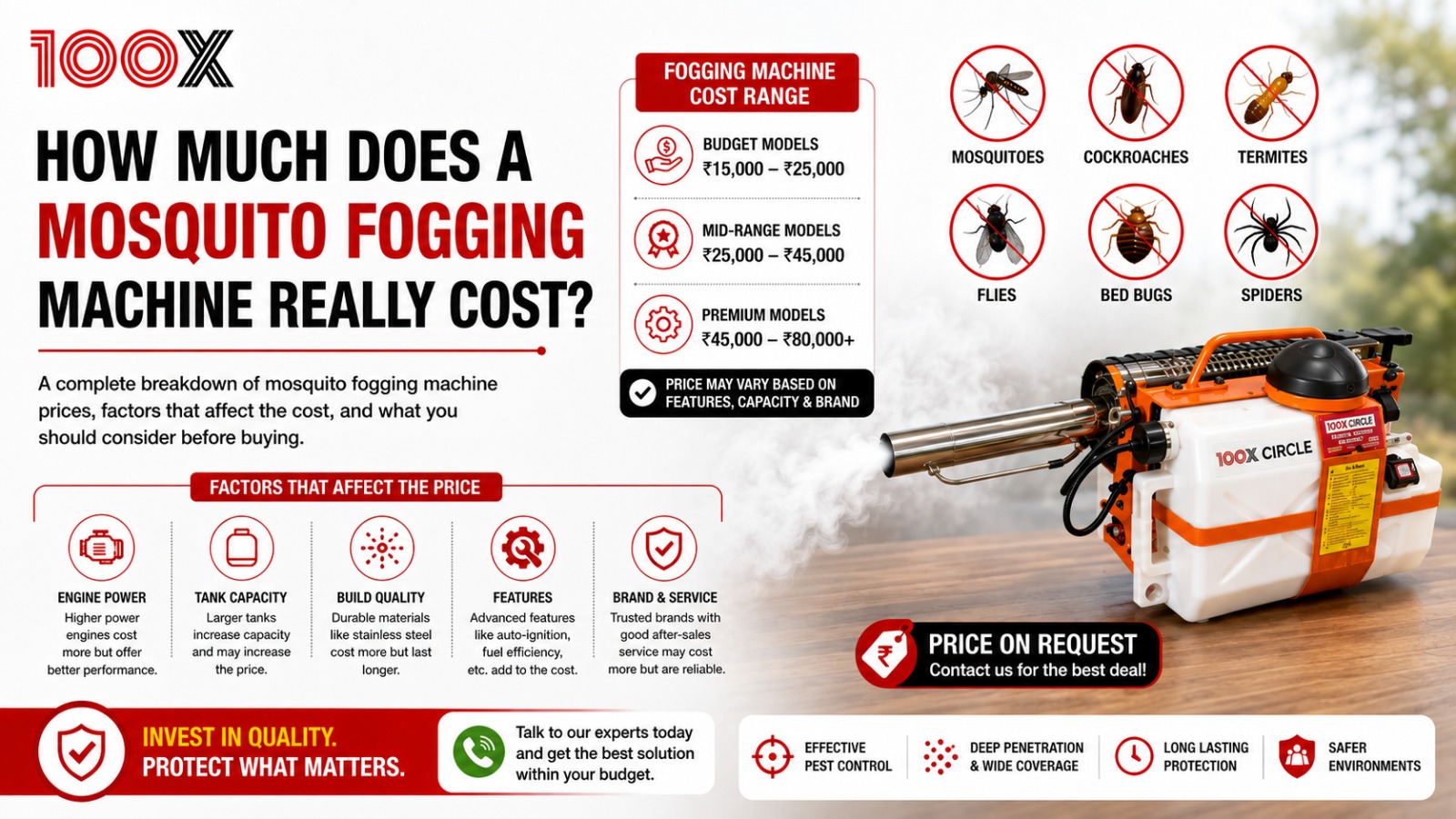
Cost is closely tied to duration, since a session that lasts longer effectively reduces the price per day of protection, even if the upfront charge looks higher. Mosquito fogging cost for residential treatment in India typically ranges from a few hundred rupees for a small plot to several thousand for larger estates or repeated municipal-style coverage, depending on area size, chemical choice, and how many sessions are booked in a cycle.
Equipment quality plays a bigger role in long-term cost than most people expect. Our thermal fogging machines are built to maintain consistent droplet size across long fogging cycles, which helps sustain effectiveness for the full expected window rather than tapering off early due to uneven output, a common issue with cheaper, poorly maintained equipment. Municipalities and pest control operators running our fogging machines to see lower running costs over time, since durable pulse-jet engines need less frequent part replacement than budget alternatives, which keeps the effective cost per fogging round down across a full season.
Curious what actually goes into a fogging treatment? This guide on what chemicals and solutions are used in fogging breaks it down and since the type and quality of chemicals used can vary, it's also a big factor in what you end up paying.
Comparing quotes purely on the price of a single visit often misleads buyers, since a cheaper session using diluted chemicals or poorly calibrated equipment may need repeating twice as often to achieve the same result as one properly executed round. Asking a provider about droplet size, chemical concentration, and expected duration before booking gives a far more accurate picture of true cost than the headline price alone.
The Bottom Line
So, how long does mosquito fogging last? In most residential settings, expect a strong effect for three to five days, with numbers gradually returning by the end of the first week unless treatment is repeated on a matched cycle. Timing, weather, and equipment quality all shift that window in either direction, so the households and municipalities that get the most value are the ones treating fogging as a scheduled, weather-aware routine rather than a one-off emergency response. Tracking results over two or three cycles, rather than judging effectiveness from a single session, is usually what separates a genuinely useful fogging program from one that feels inconsistent for reasons that were never really about the chemical at all. For anyone who wants that window to consistently run on the longer end, 100xcircle manufactures GeM-approved thermal fogging machines engineered for stable, professional-grade output round after round, so every session delivers the full duration it is supposed to rather than fading out early.
Make Every Fogging Round Last Longer. Get professional thermal fogging machines built for consistent droplet output, so effectiveness holds through the entire treatment cycle, not just the first hour. Request a Longer-Lasting Fogging Quote.
Frequently Asked Questions
How long does mosquito fogging last on average?
Most sessions offer strong protection for three to five days, with mosquito numbers gradually returning within a week.
Is fogging an effective way to control dengue-spreading mosquitoes?
Yes, it kills adult mosquitoes on contact, though it must be paired with source reduction for lasting control.
How often should mosquito fogging be repeated?
Every 3 to 5 days in high-risk outbreak zones, or every 1 to 2 weeks for routine residential upkeep.
What is the best time to fog for the longest-lasting results?
Early morning or early evening, when calm wind and moderate temperatures let the fog settle fully.
Does rain reduce how long fogging lasts?
Yes, rain shortly after treatment washes away residual chemical, which shortens the effective window considerably.
Ansita Sahu
Article Author