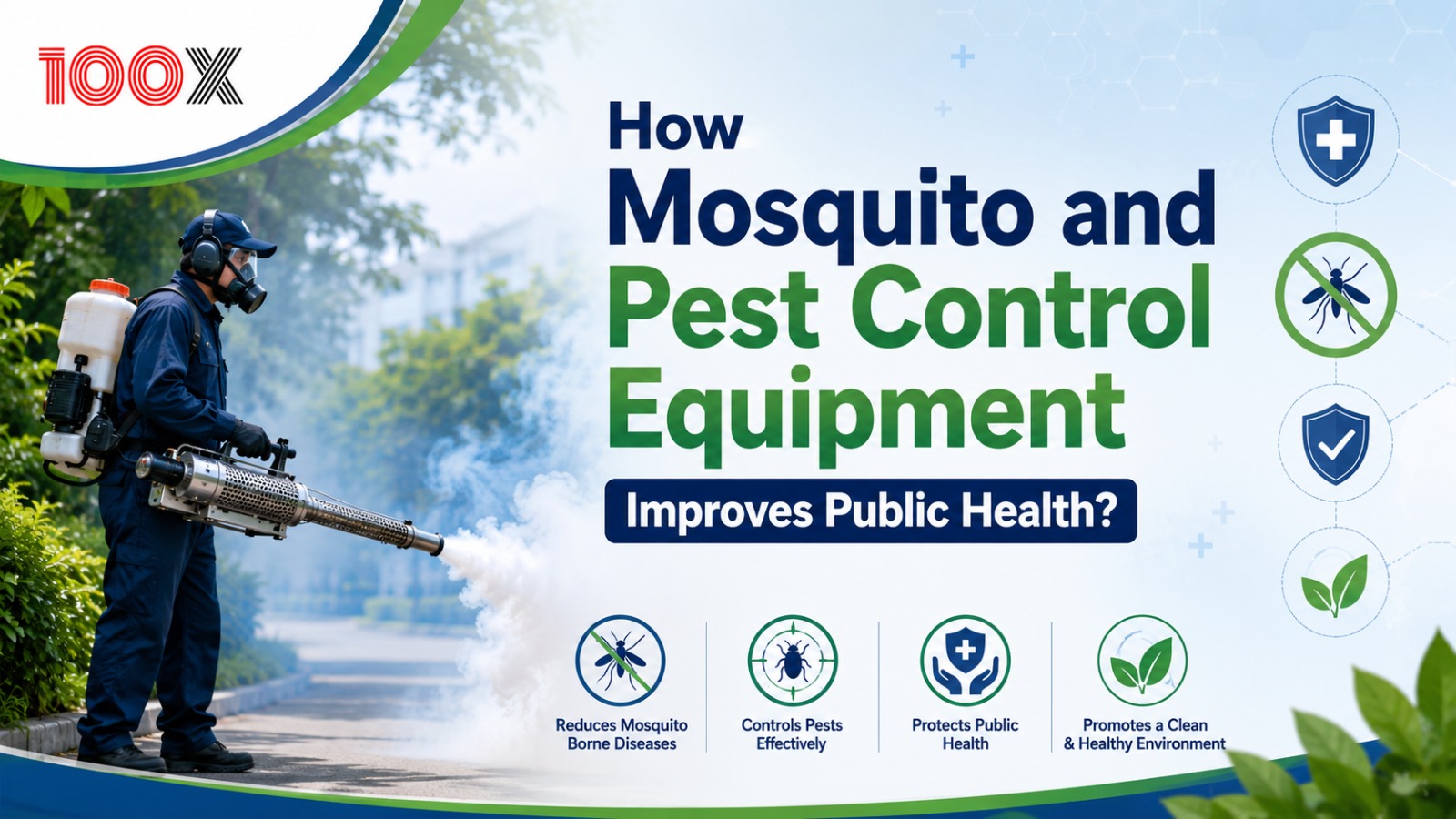
How Mosquito and Pest Control Equipment Improves Public Health?
How Mosquito and Pest Control Equipment Improves Public Health?
Public health has always been a race against invisible enemies. Mosquitoes, ants, cockroaches, and other pests are not just a nuisance. They are carriers of life-threatening diseases that kill hundreds of thousands of people every year. That is exactly why mosquito and pest control equipment has become one of the most critical tools in modern public health management, particularly across densely populated regions like India.
According to the World Health Organisation, vector-borne diseases account for more than 17% of all infectious diseases globally, causing over 700,000 deaths annually. In India alone, dengue, malaria, and chikungunya continue to affect millions of citizens every monsoon season. The scale of the problem demands a scaled response, and that response increasingly comes through mechanised, high-performance fogging and pest management solutions.
In this article, we explore how modern mosquito and pest control equipment is being deployed across municipalities, farms, warehouses, and public spaces to protect communities, reduce disease burden, and save lives.
The Role of Pest Control Fogger in India for Disease Prevention
The pest control fogger in India has grown significantly over the past decade, and for good reason. Urban expansion, waterlogging, and poor drainage systems have created ideal breeding grounds for mosquitoes and insects. Municipal bodies across states like Bihar, Uttar Pradesh, Maharashtra, and Delhi now rely on high-capacity foggers to conduct mass vector control drives at short notice.
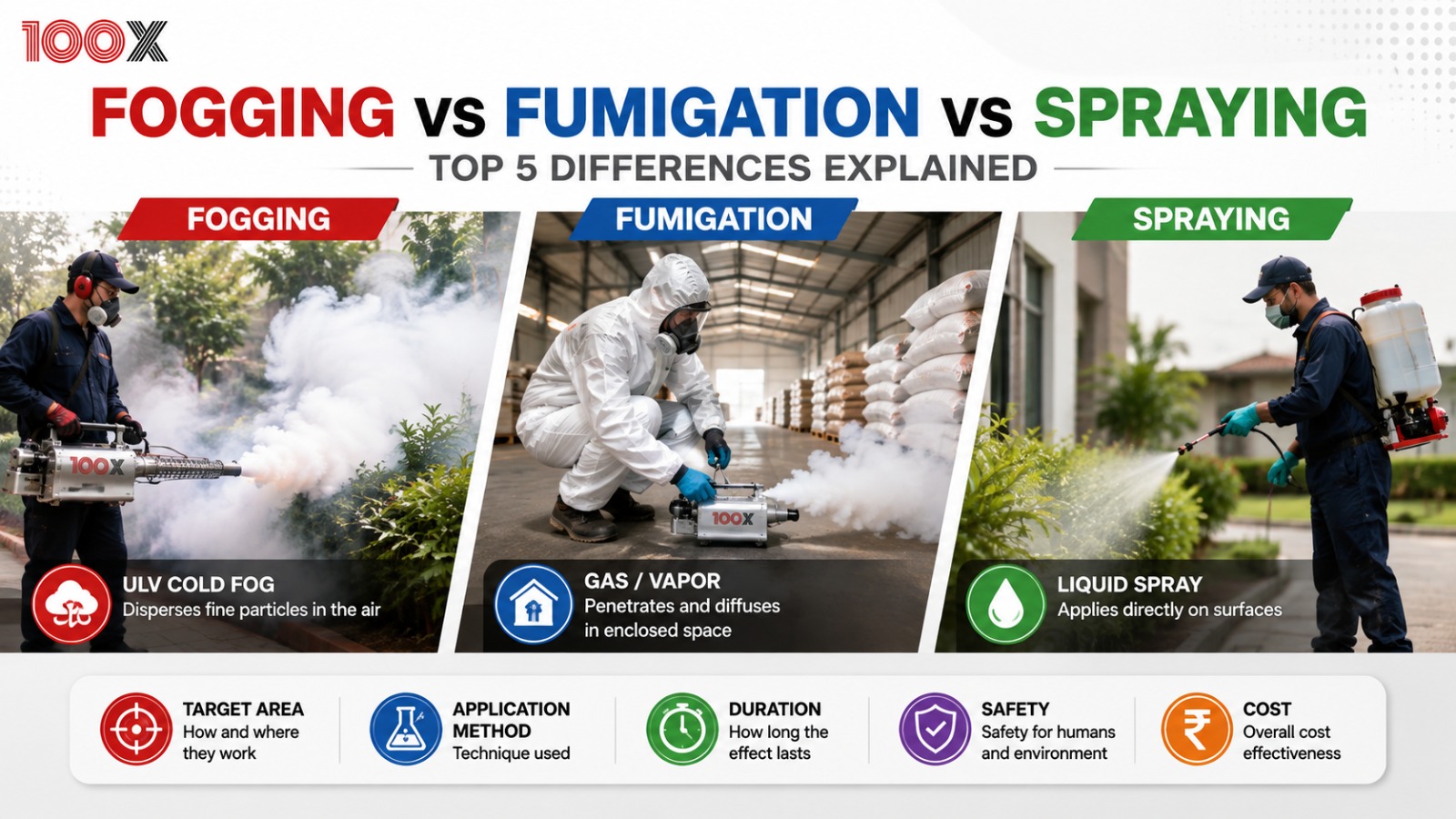
A fogger works by converting a chemical solution into ultra-fine droplets, typically in the range of 8 to 20 microns, that remain suspended in the air long enough to kill mosquitoes, flies, and other insects on contact. Unlike hand-spraying, which covers limited ground and misses hard-to-reach spots, a fogger penetrates thick vegetation, open drains, construction sites, and narrow lanes within minutes.
Why Municipalities Trust Foggers During Outbreaks
When a dengue or malaria outbreak hits a city, time is the most critical variable. A fogger-equipped response team can treat an entire residential block in under an hour. This speed of coverage is something no manual method can match. Nagar Nigams, Nagar Palikas, and state health departments have made foggers a standard procurement item for this precise reason.
Cities like Patna, Lucknow, and Pune have conducted documented fogging drives that covered 50 or more kilometres of urban roads in a single night operation using vehicle-mounted units. The public health outcomes from these drives, measured in reduced hospitalisations and lower disease incidence, speak for themselves.
How a Mosquito Control Machine Works in the Field
A mosquito control machine is not a single piece of technology. It is an entire category of equipment designed to address specific environments, scales, and operational needs. Hand-carried units work well for narrow lanes, indoor spaces, and targeted spot treatments. Vehicle-mounted systems take over when the coverage area stretches across kilometres of urban or semi-urban terrain.
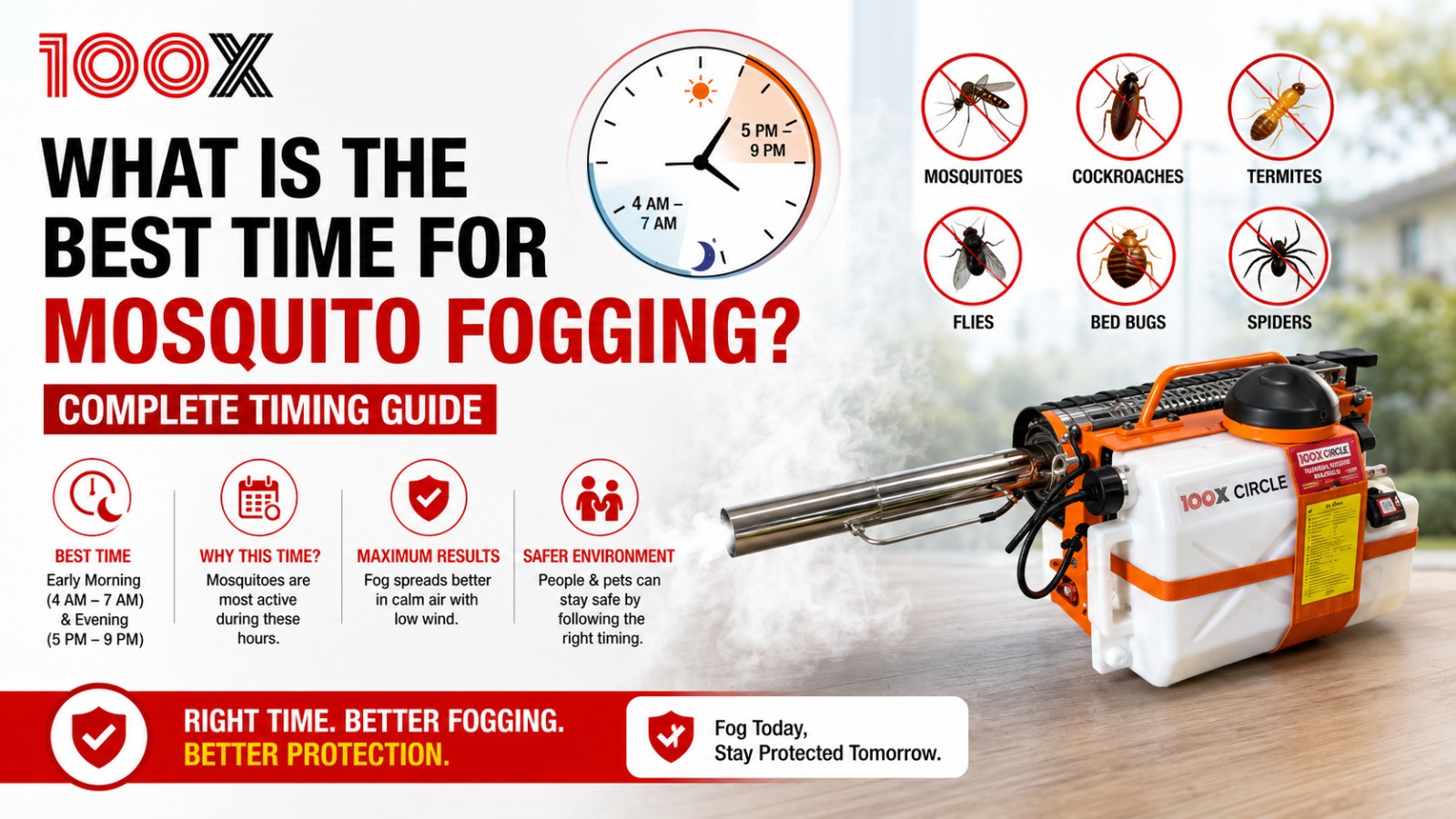
The operating principle is straightforward. A measured quantity of pesticide or insecticide is loaded into the machine's tank and mixed with a carrier, typically diesel or a water-based solution. The machine then disperses this mixture as a fog, allowing the insecticide to reach areas and surfaces that spraying alone would never touch. When used during early morning or late evening hours when mosquitoes are most active, the results are significantly more effective.
Key Applications of Mosquito Control Machines in Public Health
- Dengue and malaria prevention campaigns in urban zones
- Post-flood sanitation of waterlogged streets and temporary shelters
- Pre-monsoon and post-monsoon fogging drives by local bodies
- Emergency epidemic containment in dense residential areas
- Routine vector control maintenance across parks, drains, and open lots
Why a Fogger Machine for Mosquitoes Outperforms Manual Methods
If you have ever watched a pest control team go door to door with handheld sprayers, you have seen how slow and inconsistent manual treatment can be. A fogger machine for mosquitoes changes this equation entirely. The coverage is faster, more uniform, and reaches spaces that human hands simply cannot.
To put this in perspective: a single operator using a high-output thermal fogger can cover 2 to 5 acres per hour, depending on terrain and machine specifications. That same area would take a crew of 6 to 8 people with manual sprayers multiple hours to treat, with far less penetration into the canopy or structural gaps.
Comparing Coverage Efficiency: Foggers vs. Manual Spraying
The numbers make the case clearly. Manual spraying typically achieves surface-level coverage, meaning insects resting on vegetation undersides, inside drains, or inside wall cavities are rarely reached. Thermal fogging, by contrast, fills an entire space with suspended particles that settle on every surface within the treatment zone.
This depth of coverage matters enormously during outbreak response. A half-treated zone is almost as dangerous as an untreated one, because surviving mosquito populations rebound quickly. Effective fogging reduces the surviving insect population to a level where disease transmission chains are genuinely interrupted, not merely slowed.
Thermal Fogging Machine: The Gold Standard in Vector Control
Among all types of pest management equipment, the thermal fogging machine holds a special place in large-scale public health operations. It works by using a pulse-jet engine to generate high-temperature combustion, which vaporizes the chemical solution and forces it out through the resonator tube as an ultra-fine fog. The result is a dense, smoke-like cloud of sub-50-micron droplets that drifts deep into target areas.
This technology is particularly effective in dense urban environments, forested areas, and locations with complex terrain. The fog penetrates thick vegetation, goes around obstacles, and disperses into spaces where conventional pressure sprayers cannot reach. Municipal health teams across India have validated this across thousands of field operations.
Where Thermal Fogging Makes the Biggest Difference
Consider the challenge of treating a densely packed slum settlement during a dengue outbreak. Streets are narrow. Structures are packed closely together. Roof overhangs, open sewers, and stacked materials create countless hiding spots for mosquitoes. Manual spraying in this environment is practically useless at meaningful scale.
A thermal fogger deployed at the entry of each lane fills the entire space with insecticidal fog within minutes. The particles drift, suspend, and deposit on every surface throughout the treatment zone. Repeat this across 20 lanes in a single evening, and you have achieved something that would have taken an army of manual workers several days to attempt.
Pest Management Equipment Across Sectors: Beyond Mosquitoes
The conversation about pest management equipment extends well beyond mosquito control. Rats, cockroaches, flies, stored-product insects, and agricultural pests all contribute to public health risks in different ways. A rodent infestation in a food storage facility, for example, can contaminate grain stocks and trigger outbreaks of leptospirosis or salmonellosis in communities that depend on those supplies.
Modern pest management takes an integrated approach. This means combining fogging, trapping, baiting, and structural intervention to address pest populations at multiple points in their lifecycle. Equipment plays a central role in scaling this approach from individual premises to entire neighbourhoods or agricultural zones.
Sectors Where Pest Management Equipment Has Transformed Outcomes
- Hospitals and healthcare facilities: Regular fogging prevents nosocomial infections and protects vulnerable patients.
- Schools and childcare centres: Mosquito and pest control drives protect children who are most susceptible to vector-borne diseases.
- Food processing plants: Strict pest control prevents contamination and maintains food safety certifications.
- Agricultural fields: Pest control equipment prevents crop loss and reduces the agricultural chemical burden over time.
- Construction sites: Active sites near residential areas are high-risk zones for mosquito breeding and require regular treatment.
Choosing the Right Mosquito and Pest Control Equipment for Your Needs
Selecting the right equipment is not a one-size-fits-all decision. The scale of the operation, the terrain, the specific pests being targeted, and the chemical formulations being used all influence which machine makes the most sense. Here are the key factors to evaluate before any procurement decision.
Factors That Determine Equipment Performance
- Coverage area: Hand-carried foggers suit targeted or small-area applications. Vehicle-mounted systems handle kilometres of terrain in a single operation.
- Particle size: Particles in the 8 to 20 micron range achieve the deepest air suspension and most effective contact with insects.
- Chemical compatibility: Ensure the equipment is rated for the pesticide or disinfectant concentration you intend to use.
- Tank capacity: Larger tanks reduce refill interruptions, which matters during extended municipal drives.
- Build quality: Corrosion-resistant tanks, heat-rated components, and durable body construction directly affect operational longevity.
Getting these specifications right from the beginning avoids the expensive cycle of underpowered equipment, repeated treatments, and early replacement that many buyers fall into when they choose on price alone.
Final Thoughts
The link between quality pest management infrastructure and measurable public health improvements is well established. Communities that invest in the right equipment and operate consistent control programmes see lower disease incidence, reduced healthcare costs, and healthier, more productive populations. The equipment is not optional. It is foundational.
Whether you are a municipal health officer planning your next vector control campaign, a pest control operator expanding your service capability, or an institutional buyer managing a large facility, the decision to invest in high-performance mosquito and pest control equipment pays returns that go far beyond operational convenience.
If you are assessing options for any of these applications, explore the full range of industrial fogging and pest control solutions available at 100x Circle. With over a decade of manufacturing experience, GeM-approved OEM status, and a nationwide distribution network, 100x Circle delivers equipment built for the real conditions of the Indian field. The right machine, backed by the right support, is the foundation every serious operation needs.
Frequently Asked Questions (FAQs)
Q1. How does a thermal fogger differ from a cold fogger in public health applications?
A thermal fogger uses heat to vaporise the chemical solution into sub-50-micron particles that suspend in the air longer and penetrate deeper into vegetation, drains, and structural gaps, making it far more effective for large-area vector control than a cold fogger, which produces larger droplets with a shorter suspension time.
Q2. How often should municipal fogging drives be conducted to maintain effective mosquito control?
The frequency depends on disease incidence and seasonal risk, but most public health guidelines recommend at least fortnightly fogging during monsoon and post-monsoon periods, with additional emergency drives triggered by outbreak notifications or surveillance data showing a spike in vector populations.
Q3. What safety precautions should operators follow when using pest control fogging equipment?
Operators must wear appropriate PPE, including masks, gloves, and eye protection, ensure the treatment area is evacuated before fogging begins, follow manufacturer-specified chemical dilution rates exactly, and allow adequate ventilation time before allowing re-entry, based on the specific chemical formulation used.
Q4. Can the same fogging machine be used for both agricultural pest control and mosquito eradication?
Yes, most industrial-grade thermal foggers are versatile enough to handle both applications, provided the machine is compatible with the chemical formulation being used; agricultural operations typically use fungicides and pesticides, while mosquito control drives use WHO-approved insecticides, and confirming chemical compatibility before use is essential.
Q5. What is the typical coverage area a single thermal fogger can treat in one hour?
A single operator using a high-output thermal fogger can typically treat 2 to 5 acres per hour in open terrain, with vehicle-mounted units extending this to 15 or more kilometres of road coverage during a night operation, making them the most operationally efficient option for municipal-scale vector control programmes.
100X
Article Author