Which Dengue Fogging Chemical Works Best? 6 Steps to Mix and Apply It Correctly
Which dengue fogging chemical suits thermal and cold fogging? Learn the types, dilution basics and 6 application steps for dengue control.
Every monsoon, municipal teams and health officers face the same question, which dengue fogging chemical actually knocks down Aedes mosquitoes, and how should it be mixed so it works without harming people? The wrong product or a careless dilution wastes budget, fails to break transmission and leaves residents unhappy. This complete list compares the common active ingredients, explains how carrier liquids change performance, and walks you through six clear steps to mix and apply the formulation correctly. Whether you run a ward level drive, a hospital campus programme or a housing society schedule, the guidance below keeps your work effective, safe and compliant.
Dengue spreads through Aedes aegypti, a day biting mosquito that breeds in clean standing water in coolers, tyres, buckets and rooftop tanks. Fogging does not remove those breeding sites, but it quickly kills flying adults during outbreaks, which lowers the chance of further bites and virus spread. That is why fogging is used alongside larval control, community awareness and surveillance, never instead of them.
Always treat product labels, national vector borne disease control guidelines and your state health department's instructions as the final authority.
The notes below explain the logic behind those instructions so you can apply them with confidence and avoid common field mistakes. A good rule is simple: if the label, the guideline and your habit disagree, follow the label and ask your supervisor.
Best Fogging Chemical Options for Dengue Control
No single fogging chemical is best in every situation. The right choice depends on local mosquito resistance, the machine you use, the carrier liquid and the setting where you fog. The active ingredients below are the ones most often used in public health programmes, and each should be bought only as a registered, clearly labelled formulation.
Complete List of Active Ingredients
- Deltamethrin: A synthetic pyrethroid with fast knockdown, widely used in outdoor drives and mixed in water or oil based carriers. Deltamethrin 1.25 ULV is most selling oil based chemical for mosquitoes elimination.
- Lambda-cyhalothrin: A pyrethroid with longer residual action, useful where mosquitoes rest on walls and foliage.
- Cypermethrin: A budget friendly pyrethroid that gives broad outdoor coverage in dense neighbourhoods.
- Malathion: An organophosphate that programmes may rotate in where pyrethroid resistance has been reported.
- Pyrethrum extract: A plant derived choice with quick knockdown and short persistence, suited to areas close to homes.
- Permethrin and cyfluthrin: Other pyrethroids found in approved vector control formulations.
Why Resistance and Rotation Matter?
Mosquitoes adapt when the same active ingredient is used season after season. Health authorities therefore test local populations and may rotate between pyrethroids and an organophosphate to keep results strong. As a field operator, your job is to use what the programme specifies rather than switching products on your own. For a wider reference on active ingredients, see common fogging machine chemical names.
Matching the Active Ingredient to the Setting
Outdoor drives through lanes and drains favour fast knockdown pyrethroids, while areas close to homes, schools and hospitals call for products with short persistence and low odour. Indoor treatments inside offices or wards need water based formulations applied with a cold unit, and only where the label allows indoor use. Ask your supervisor which product the programme has approved for each setting before you load the tank.
Public Health Fogging Solutions and Safe Dilution Basics
Most public health fogging solutions are sold as concentrates that must be diluted in the correct carrier before use. Understanding the two main formulation types prevents expensive mistakes, because a liquid built for one machine can damage or underperform in another.
Thermal and Cold Formulations
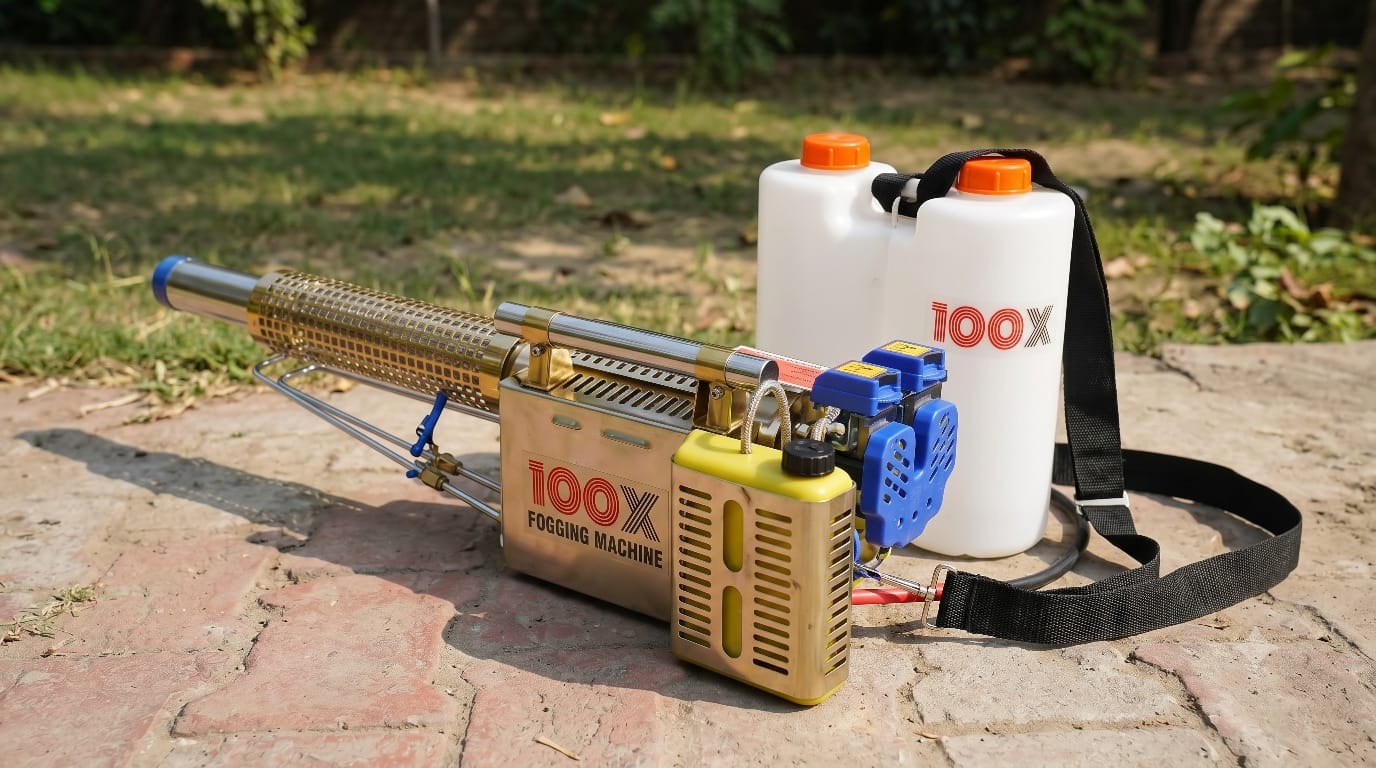
Thermal foggers vaporise the mixture in a hot tube, so the carrier is usually diesel, kerosene or a purpose made thermal oil that protects the active ingredient from heat and creates a thick visible fog. Cold foggers use air pressure to break the liquid into tiny droplets without heat, so they run on water based or light oil concentrates. Never pour a thermal mix into a cold unit or the reverse.
Dilution Basics Without Guesswork
Dilution simply means the volume of concentrate mixed into a volume of carrier. The label gives the ratio for your formulation and machine, so follow it exactly. Use a marked measuring jug rather than estimating by eye, because a stronger mix does not kill better and a weaker one breeds resistance. Mix only what you need for the shift, since diluted liquid can separate or lose strength. Wear gloves, goggles and a respirator while handling concentrate, and keep it away from food, water and children.
Storage and Disposal
Store concentrate in its original labelled container, in a cool, locked and shaded room away from heat, food and children. Never reuse empty containers for water or food. Triple rinse empty containers and dispose of them as the label and local rules require, and never pour leftover liquid into drains, ponds or wells, because it harms fish and drinking water.
6 Steps for Effective Mosquito Fogging
Good mosquito fogging is a repeatable routine, not a one time event. Follow these six steps in order for every drive, and your results will be more consistent from ward to ward.
Step 1: Survey and Plan the Area
Walk or drive the target zone first. Note reported dengue cases, breeding hotspots, lane widths, dense vegetation and open drains. Divide the area into blocks, plan the route so you cover each lane once, and inform residents in advance so they can stay indoors and cover food and water. Prioritise localities with recent cases, schools, markets and construction sites, where mosquitoes concentrate.
Step 2: Check the Label and Pick the Formulation
Confirm that the product is registered for public health use and matches your machine type. Check the expiry date, the active ingredient, the recommended carrier and the safety instructions. If anything is unclear, ask your supervisor before opening the container. Keep the safety data sheet with the crew so first aid steps are available in an emergency.
Step 3: Measure and Mix the Solution
Measure the concentrate and carrier with marked containers, add the concentrate to the carrier slowly and stir well. Fill the tank in a ventilated space away from flames, because thermal carriers are flammable. Wear a respirator and gloves during mixing, and wash hands thoroughly afterwards. Never combine two different products in the same tank, since some pairings react badly or cancel each other out.
Step 4: Prepare and Test the Machine
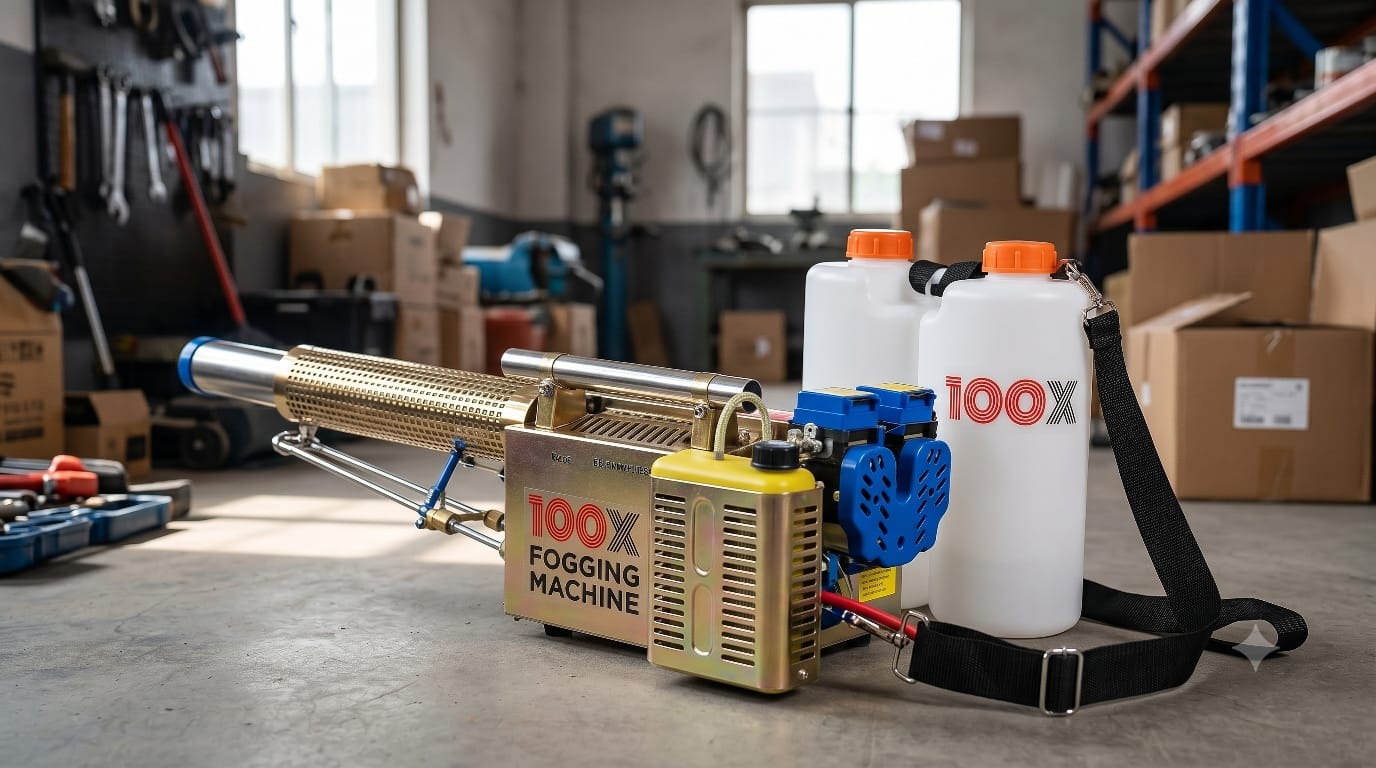
Inspect the tank cap, hoses, nozzle and fuel supply, then test the machine before leaving base. For example, foggers from 100x circle private limited use a DC 12V auto start system, which helps crews begin quickly during early morning drives. Run a short test fog away from people to confirm the output is steady and the nozzle is not blocked.
Step 5: Fog at the Right Time and Speed
Aedes mosquitoes are most active in the early morning and late afternoon, so these are the best windows, and early hours also mean less traffic and fewer crowds. Choose calm weather, because strong wind blows fog off target and heavy rain washes it away. Keep the nozzle pointed at breeding and resting zones, move at a steady walking or vehicle pace, and avoid fogging directly at people, pets or food stalls.
Step 6: Record, Review and Repeat
Log the date, area, product, dilution, machine and operator for each drive. Review case numbers to see whether fogging is helping, and plan repeat visits according to health department guidance. Frequency matters as much as the product as well.
Choosing an NHM Fogging Machine for Your Programme
Machines bought for programmes funded under the National Health Mission, often called an NHM fogging machine, are expected to meet government specifications and to be procurable through approved channels such as GeM. The best formulation will still fail if the machine cannot deliver it properly, so equipment choice deserves as much attention as the liquid.
Match the Machine to the Terrain
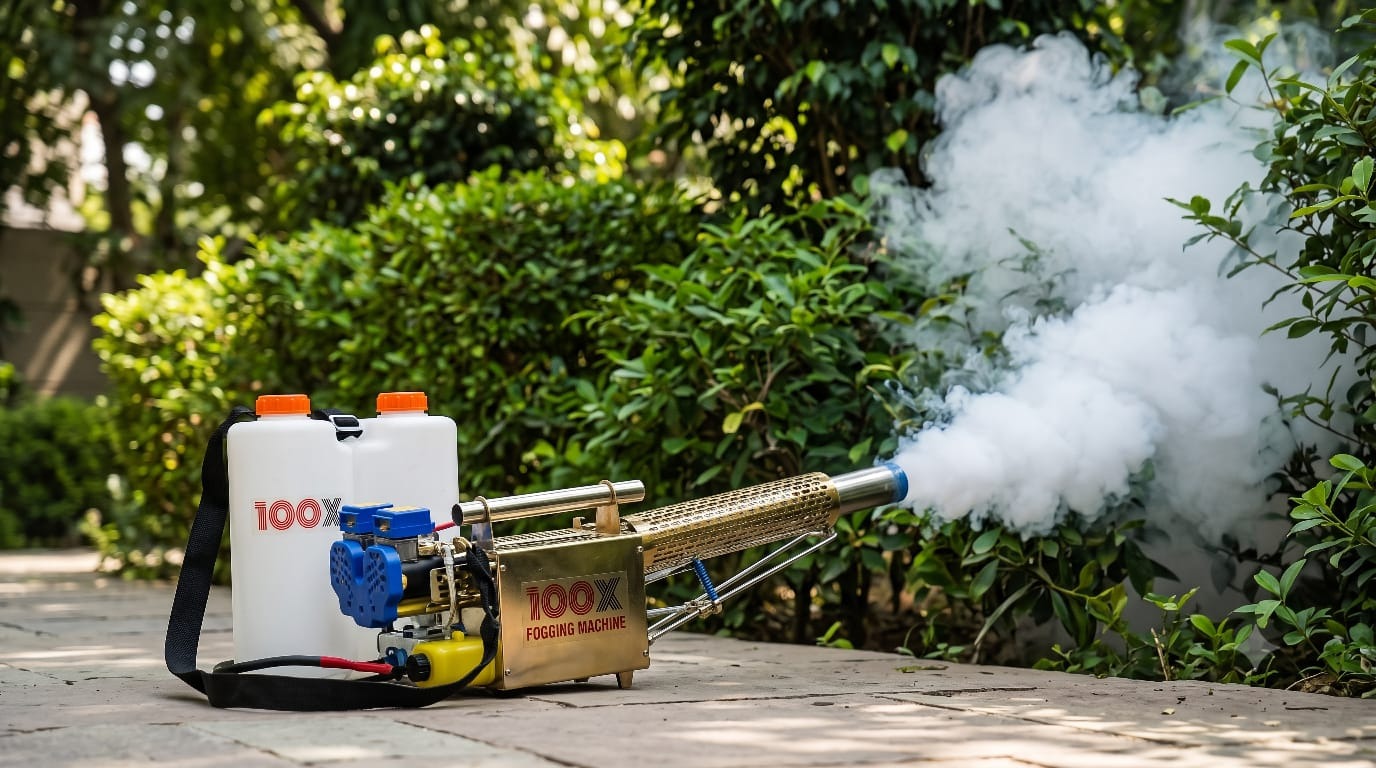
Vehicle-mounted foggers suit wide roads and large wards, while portable or hand-carried units reach narrow lanes, drains and compounds. Hospitals, schools and housing societies often prefer a portable thermal and cold combination for flexibility.
Check Compliance and Support
Look for IS 14855 part 1 compliance, clear documentation, genuine spare parts and after sales service, because breakdowns during an outbreak are costly. 100x circle private limited supplies IS 14855 compliant thermal foggers to municipal bodies and health departments, including vehicle mounted and portable models. Ask any supplier for test certificates and a written warranty before you place an order.
Keep the Machine Clean
Flush the tank and lines after every shift, store the unit dry and replace worn seals and filters on schedule. Clean equipment delivers a consistent droplet size, which protects both your results and your budget.
Conclusion
Choosing the right dengue fogging chemical is only half the job. Match the active ingredient to local resistance data, dilute it exactly as the label says, use the correct carrier for your machine, and follow the six steps from survey to record keeping. Pair fogging with larval source removal for lasting results. Careful planning, correct mixing and disciplined records turn a routine drive into real protection for your community. If you need dependable equipment to deliver your chosen formulation, 100x circle private limited manufactures thermal and cold foggers in India, backed by spare parts and support for municipal and health programmes.
Frequently Asked Questions
Which chemical is best for dengue fogging?
Pyrethroids such as deltamethrin are widely used, but the best choice depends on local resistance data and the product label.
What is the best time to fog for dengue control?
Early morning or late afternoon, when Aedes mosquitoes are most active and the wind is calm.
How often should fogging be done during an outbreak?
As health officials advise, usually every few days in affected zones alongside larval source removal.
Is fogging alone enough to stop dengue?
No, fogging kills adult mosquitoes only, so breeding sites must also be emptied and treated.
Is fogging safe for people and pets?
Residents should stay indoors and keep food and water covered until the fog settles, following the label.
Ansita Sahu
Article Author