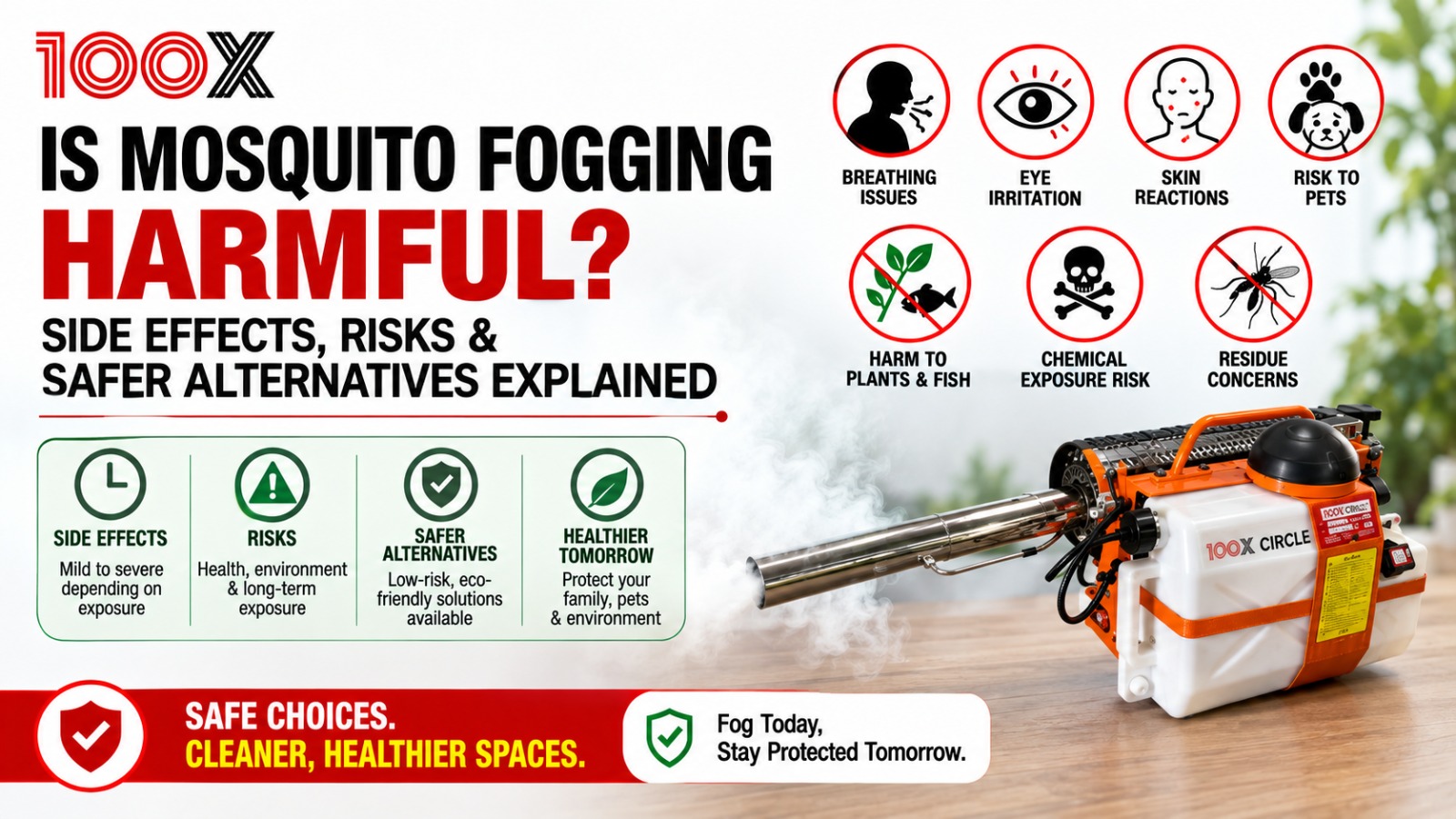
Is Mosquito Fogging Harmful? Side Effects, Risks & Safer Alternatives Explained
Wondering if mosquito fogging is safe? Learn about its health effects, chemical risks for kids & pets, and safer alternatives backed by facts.
Mosquitoes carry more than an itchy bite; they carry the risk of dengue, malaria, and chikungunya, which is exactly why fogging vans and pest control services have become a common sight in Indian neighbourhood every monsoon. But as the fogger rattles past your gate, leaving a thick white cloud behind, a fair question follows every household: Is mosquito fogging harmful to the people, pets, and plants left standing in that mist? This guide breaks down what the chemicals in fogging actually do, who faces the highest risk, and which safer methods genuinely reduce mosquito numbers without the guesswork.
Mosquito Fogging Health Effects: What the Evidence Actually Shows?
So, is mosquito fogging harmful in the way social media warnings often suggest? The short answer is usually not, provided fogging is carried out at approved chemical concentrations, during correct wind and time conditions, and with people kept at a safe distance while spraying is underway. Public health bodies classify most fogging insecticides as low risk for brief outdoor exposure. The mosquito fogging health effects reported most often in field studies and clinic visits are mild and short-lived: eye and throat irritation, coughing, mild headache, and occasional skin tingling in people who walk directly through fresh fog. These symptoms typically fade within a few hours once the person moves to clean air, though anyone with asthma, chronic bronchitis, or existing chemical sensitivity should avoid the fog cloud entirely rather than test their tolerance.
Dosage is the factor that separates a routine municipal fogging pass from an actual health hazard. Regulatory bodies set approved concentrations specifically because the toxicity of these insecticides to mammals is far lower than their toxicity to insects, which is what allows fogging to be used near homes at all. Problems tend to trace back to human error rather than the chemical itself, such as an operator mixing an incorrect ratio, fogging too close to open windows, or spraying during unsuitable wind conditions that push the fog into occupied spaces instead of letting it disperse outdoors.
Side Effects of Pyrethroid Fogging
Most Indian municipal and residential fogging programmes rely on pyrethroid-based insecticides such as deltamethrin and cypermethrin, because they break down quickly in sunlight and are considered safer than the older organophosphate sprays once used widely. Even so, the side effects of pyrethroid fogging can show up in sensitive individuals soon after exposure, including a scratchy throat, watery eyes, mild nausea, or a tingling sensation on exposed skin, particularly when fogging happens in an enclosed courtyard, a narrow lane, or a space with poor ventilation. Repeated, poorly timed exposure is the real concern, not a single well-managed fogging pass.
Mosquito Fogging Chemicals Used in India: A Quick Breakdown
Understanding what actually goes into the fog puts the risk into proper context instead of leaving it to guesswork. Most municipal and residential mosquito fogging chemicals in India fall into a small number of well-studied categories:
- Pyrethroids (deltamethrin, cypermethrin): synthetic compounds designed to kill mosquitoes on contact.
- Plant extract insecticides ( Pyrethrum extract ): Extract found naturally in chrysanthemum flowers, valued for fast knockdown and quick breakdown in sunlight.
- Organophosphates (malathion): an older chemical class, used less often today, that disrupts an insect's nervous system.
- Diesel or kerosene carrier: not a pesticide itself, but the fuel base that turns the chemical into the visible white fog.
- Larvicides (temephos): are applied separately into stagnant water rather than sprayed as an airborne fog.
Concentration and droplet size matter just as much as the chemical family itself. A fogger that produces uneven, oversized droplets forces operators to use more chemical to get the same visible cloud, which raises exposure for anyone nearby without improving mosquito control. Equipment matters as much as the chemical pulse-jet thermal foggers are engineered to atomize the chemical-diesel mix into ultra-fine, WHO-compatible droplets, which improves mosquito contact while reducing the amount of chemical drifting beyond the target zone. This is also why municipal tenders in India increasingly specify GeM-approved, IS 14855-compliant machines rather than unbranded equipment, since consistent droplet size directly affects both efficacy and the safety margin for residents.
Want to know exactly what goes into the fog? This guide breaks down what chemicals and solutions are used in fogging.
Is Fogging Safe for Pets and Children?
Children and pets sit closer to the ground, breathe faster relative to their body weight, and are far more likely to touch treated grass, puddles, or fallen leaves than an adult walking past. Because of this, is fogging safe for pets and children largely comes down to timing, distance, and a few sensible precautions rather than avoiding fogging altogether. Municipalities working with 100x circle typically schedule fogging drives for early morning or dusk specifically to reduce overlap with school-run traffic and evening pet walks, since fewer people and animals are outdoors when the fog is freshest.
A few precautions make the biggest difference: keep pets and children indoors during the actual spray, close windows facing the road, and wait until the fog has visibly settled before letting them back outside. Fish tanks, birdcages, and beehives should also be covered or moved indoors for the same window of time, since aquatic life and pollinators are considerably more sensitive to these chemicals than mammals are. Dogs and cats that walk through freshly treated grass can pick up a light chemical film on their paws, so wiping paws down with a damp cloth before they settle indoors is a simple habit that removes most residual exposure.
Pregnant women and infants deserve the same caution shown to pets, since developing systems are generally more sensitive to any chemical exposure. Staying indoors with windows shut during the fogging pass and airing the room out afterwards is usually enough, and there is no need for pregnant women to evacuate the area entirely for a single, properly conducted municipal fogging round.
Mosquito Fogging vs Natural Mosquito Control: Which Actually Lasts Longer?
Fogging kills adult mosquitoes on contact but does nothing to the eggs or larvae quietly developing in stagnant water nearby, which is why the effect rarely lasts more than a few days before mosquito numbers climb back up. Comparing mosquito fogging vs natural mosquito control methods makes the trade-off clear: source reduction, removing standing water from coolers, flowerpots, plant saucers, and open drains, offers a longer-lasting fix with zero chemical exposure, while fogging delivers fast, short-term relief during an active outbreak or a specific event.
The two approaches work best together rather than as competitors. Neem oil sprays, citronella and lemongrass planting, mosquito dunks in ornamental ponds, and proper mesh screening on doors and windows all reduce the baseline mosquito population, so that fogging is needed less often and at lower intensity when it is used.
The Bottom Line
For most households, whether mosquito fogging is harmful is less a yes-or-no question and more a matter of dose, timing, and equipment quality. Community outbreaks of dengue and chikungunya genuinely warrant professional fogging, and the health risk from a single, well-managed session is low for the general population. For municipalities and pest control operators who want fogging to stay effective without becoming a repeated health irritant, our manufactured GeM-approved thermal fogging machines engineered for precise chemical dosing and consistent, professional-grade output, so every fogging drive does its job with the least possible margin for error. Whether you are a Nagar Nigam planning a dengue-season drive or a homeowner simply deciding whether to let your children play outside after the fogging van passes, the practical answer stays the same: respect the timing, keep sensitive groups clear of fresh fog, and pair fogging with source reduction so you rely on chemicals less often overall.
Frequently Asked Questions
Does short-term exposure to fogging spray affect human health?
No, brief outdoor exposure at approved concentrations is generally considered safe, though people with asthma or chemical sensitivity may notice mild irritation.
Can pyrethroid fogging trigger allergic reactions?
Yes, sensitive individuals may experience skin tingling, watery eyes, or a mild cough shortly after direct exposure to fresh fog.
How long should pets and children stay indoors after fogging?
Most guidance recommends staying indoors for 30 to 45 minutes, until the visible fog has fully settled outside.
Does fogging kill mosquito eggs and larvae?
No, fogging only kills adult mosquitoes and must be paired with larval source reduction for lasting results.
Are natural mosquito control methods as effective as fogging?
Natural methods work best for ongoing prevention, while fogging is better suited to fast, short-term control during an active outbreak.
Ansita Sahu
Article Author