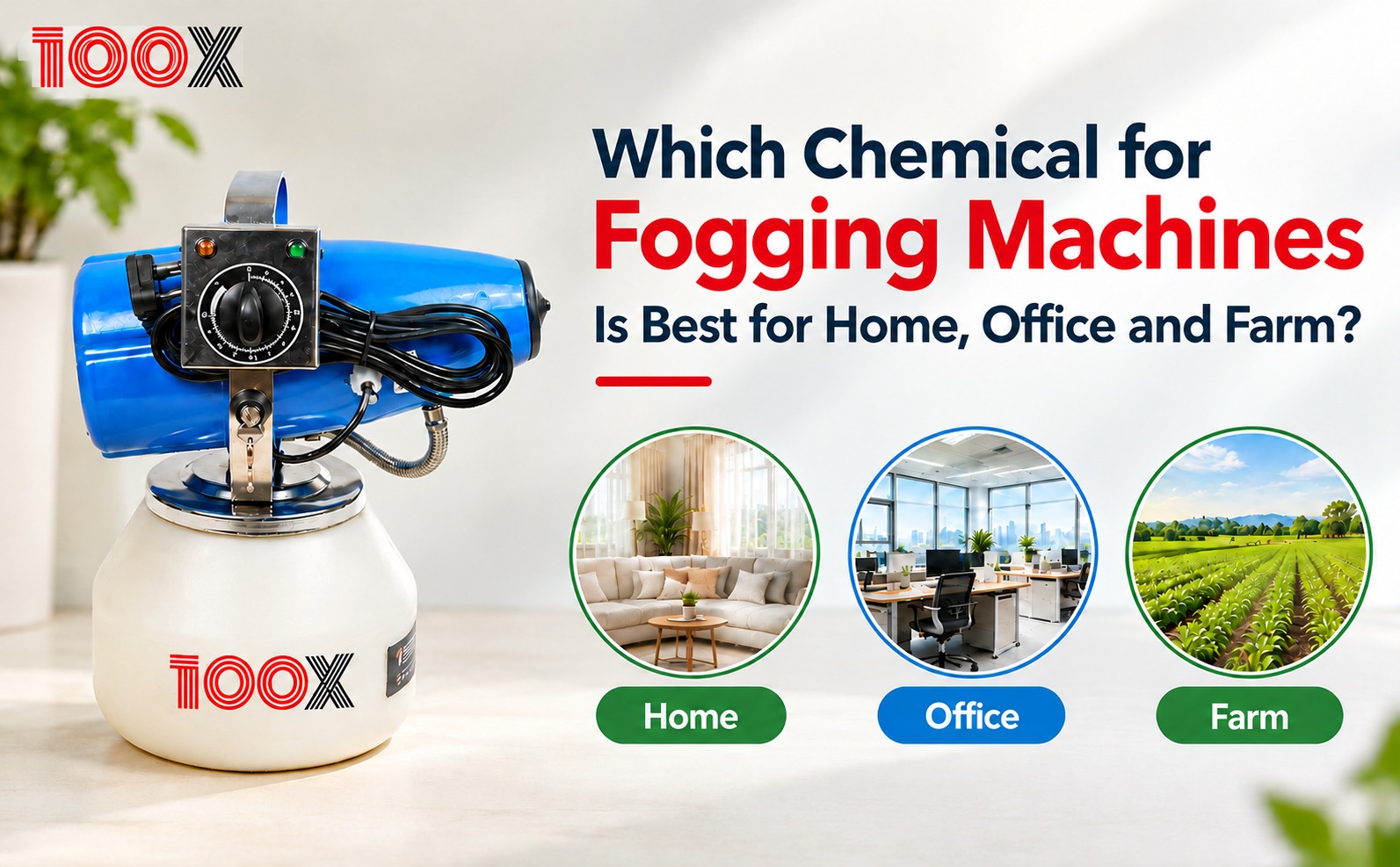
Which Chemical for Fogging Machines Is Best for Home, Office, and Farm? Complete List
Not sure which chemical for fogging machine to use? See the best options for home, office and farm, plus how to choose and use them safely.
The chemical you choose for fogging machine operation decides whether a fogging session protects your space or simply wastes money. A fogger only breaks liquid into fine droplets, so the result depends entirely on what goes into the tank. A solution that works beautifully in a bedroom can damage electronics in an office, and a mosquito formulation that suits an open drain is useless inside a poultry shed.
This complete list walks through the best options for homes, offices and farms, explains how each type works, and shows how to match the liquid to your machine, your target and your safety needs.
Many buyers focus on the machine and treat the liquid as an afterthought. A better approach is to start with the job, whether that is removing germs from office desks, knocking down mosquitoes around a garden or cleaning an empty poultry shed. Then pick the chemistry, the carrier and the machine type that suit it.
Three questions narrow the choice quickly. What is the target: germs, insects or fungus? Where will the fog travel: an occupied room, an open drain or a closed farm building? And which technology do you own: a heat based thermal fogger or a cold ULV unit? The product label then has the final word on dilution, contact time and re-entry period, so read it carefully before you mix anything.
Best Disinfectant Fogging Solution for Homes and Offices
Indoor spaces call for a disinfectant fogging solution that kills germs without leaving residue, stains or a harsh smell. Water-based products are the standard choice because they run safely in cold foggers, and they avoid the oily carriers that make thermal machines unsuitable for closed rooms. Always check that the product is approved for surface or air disinfection in your country before you buy.
Hydrogen Peroxide and Silver Formulations
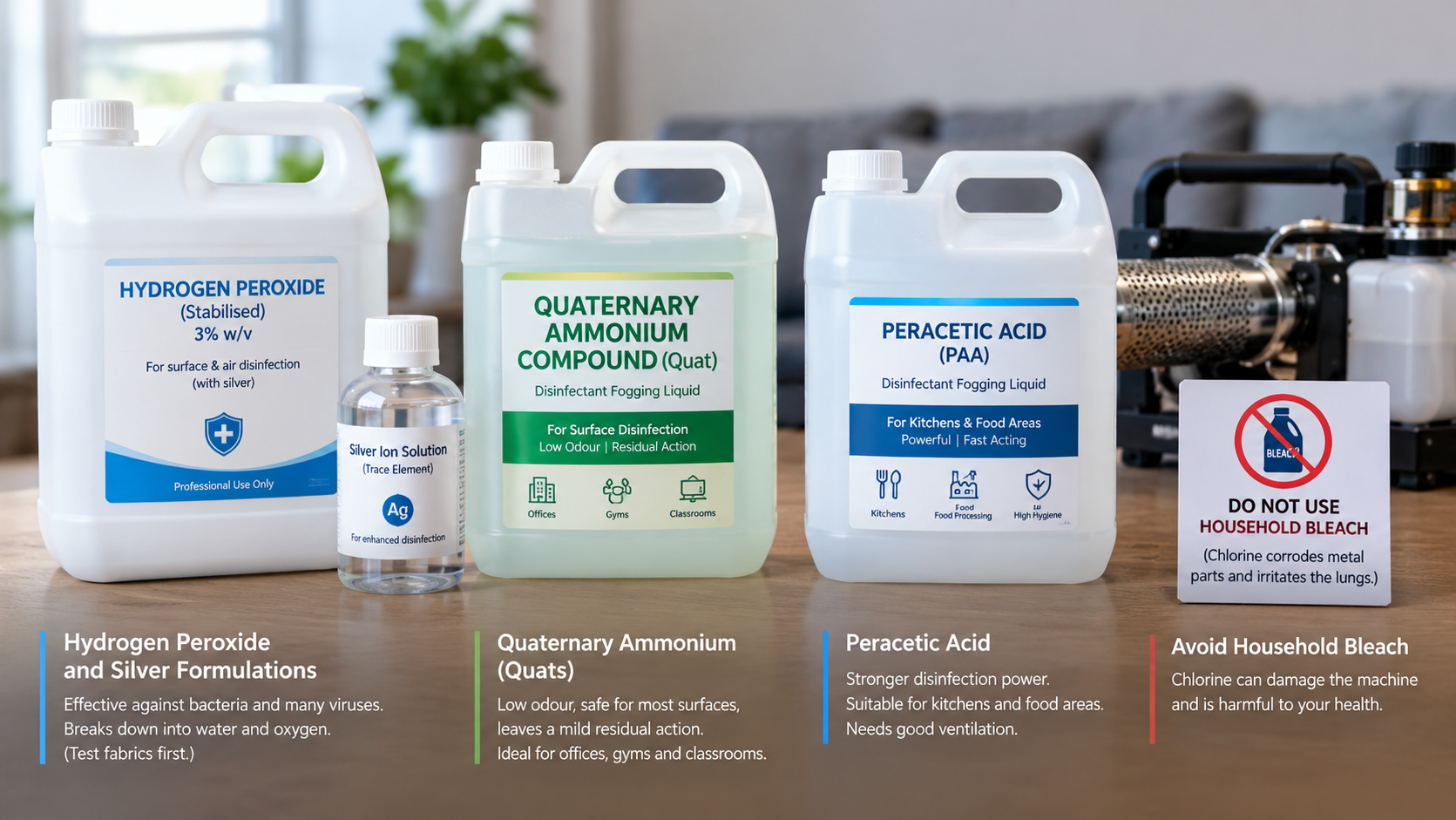
Stabilised hydrogen peroxide, often paired with a trace of silver, breaks down into water and oxygen after use. That makes it popular for bedrooms, clinics and meeting rooms where people return soon after treatment. It is effective against bacteria and many viruses at labelled strengths, but it can bleach some fabrics, so test a small hidden patch first.
Quaternary Ammonium and Peracetic Acid Options
Quaternary ammonium compounds, usually called quats, are the workhorse of office hygiene. They have low odour, suit most surfaces and leave a mild residual action on desks, handles and chairs. A ready-to-use sanitizer fogging liquid built on quats works well for reception areas, gyms and classrooms. Peracetic acid is stronger and suits kitchens and food areas, though it needs good ventilation. Avoid household bleach in any fogger, because chlorine corrodes metal parts and irritates the lungs.
For most households, one general-purpose disinfectant is enough. Offices with shared desks, phones and meeting rooms may need a weekly or monthly schedule, while clinics and kitchens often need more frequent treatment. Contact time is the detail people miss: the fog must stay wet on the surface for the full period stated on the label, or germs will survive.
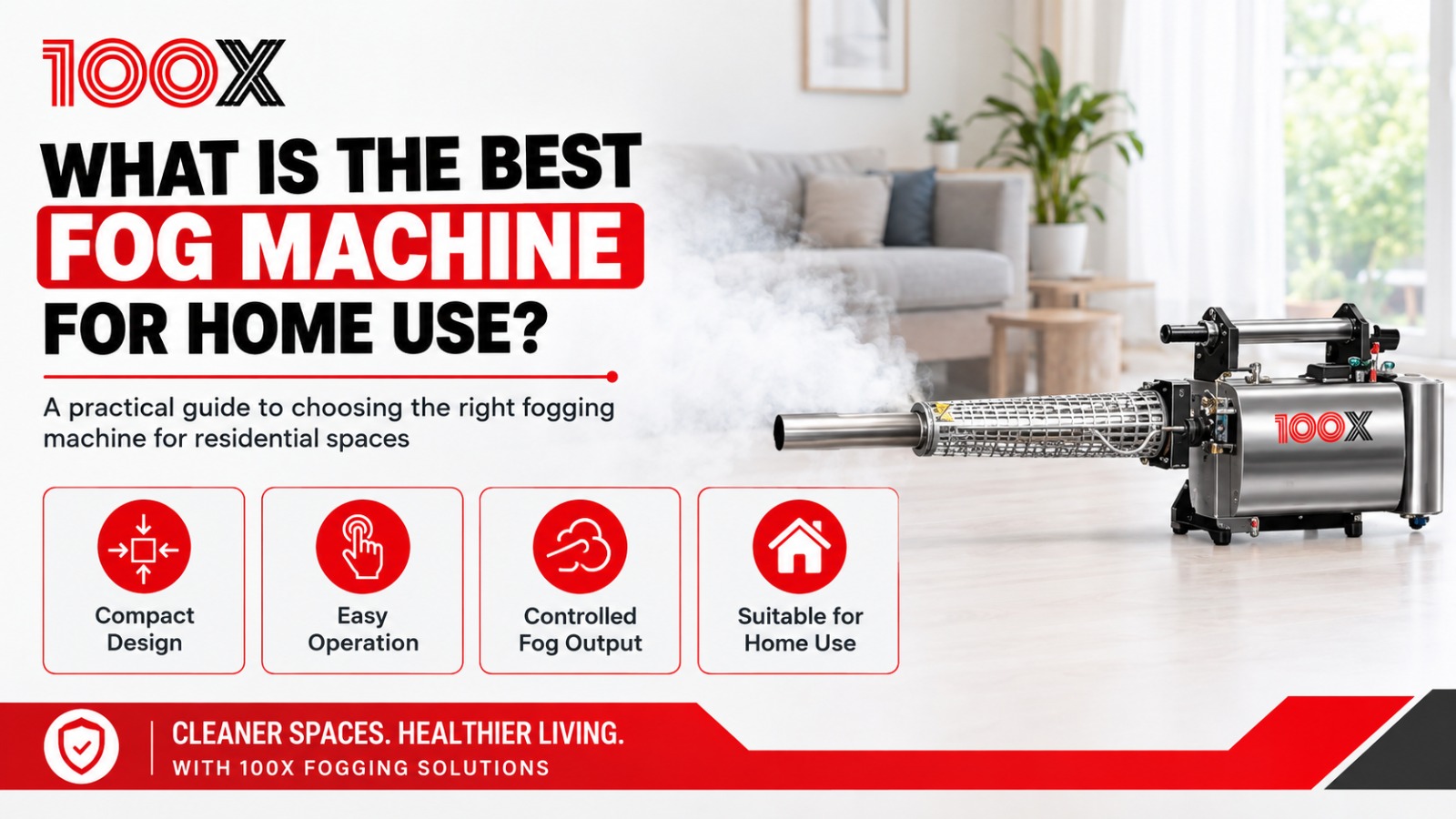
During fogging, keep people, pets, and food away from the area, and allow the mist to settle for the time specified on the product label before re-entering. If you're considering fogging equipment for indoor use, explore our guide to choosing the best fog machine for home use.
Mosquito Fogging Chemicals and Thermal Fogging Chemicals for Outdoor Control
Outdoor mosquito control needs insecticides that knock down adults quickly across a wide area. Choosing the right mosquito fogging chemical depends on whether you run a heat-based or a cold machine, because the carrier liquid is different. Thermal foggers vaporise the mixture inside a hot tube and release a dense, visible cloud that drifts through drains, hedges and thick vegetation. Properly formulated thermal fogging chemicals therefore use an oil-based or special thermal carrier so the active ingredient survives the heat. A rugged unit from 100x circle private limited handles these carriers well, which matters during long municipal drives.
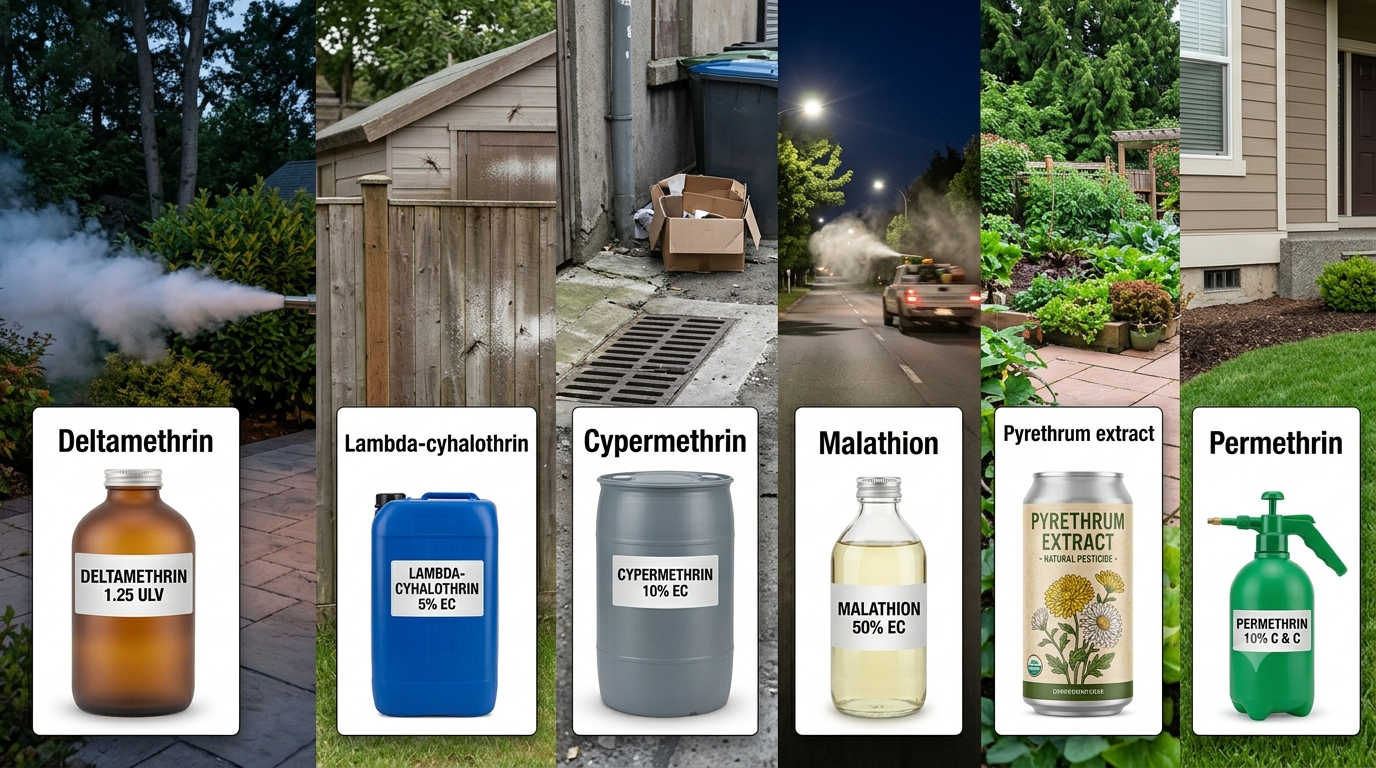
Complete List of Common Active Ingredients
- Deltamethrin: A fast-acting pyrethroid used widely in public health programmes, available in water and oil-based mixes. Deltamethrin 1.25 ULV is the most selling oil based chemical for mosquitoes elimination.
- Lambda-cyhalothrin: A pyrethroid with longer residual action on surfaces where mosquitoes rest.
- Cypermethrin: A budget friendly pyrethroid suited to outdoor drives around drains and waste dumps.
- Malathion: An organophosphate used in outdoor drives, often where pyrethroid resistance has been reported.
- Pyrethrum extract: A plant derived option with quick knockdown and short persistence, often chosen near homes and gardens.
- Permethrin: A common ingredient in garden and perimeter treatments, usually applied in dilute water based form.
Carrier, Timing and Dosing
Diesel or kerosene is the usual carrier for thermal machines, while water or a light oil suits cold units. Dilution depends on product strength, so follow the label and local public health guidance rather than copying a ratio from a forum. Fog at dawn or dusk, when mosquitoes are active and the wind is calm. Resistance is a real concern, because using the same active ingredient season after season lets mosquito populations adapt, so public health teams often rotate between pyrethroids and an organophosphate. Pair fogging with source reduction, such as emptying standing water, because fog kills flying adults but not larvae.
For better results, follow a consistent, label-compliant treatment schedule and refer to this practical guide on mosquito fogging frequency and effective control schedules.
ULV Cold Fogging Solution for Indoor and Precision Jobs
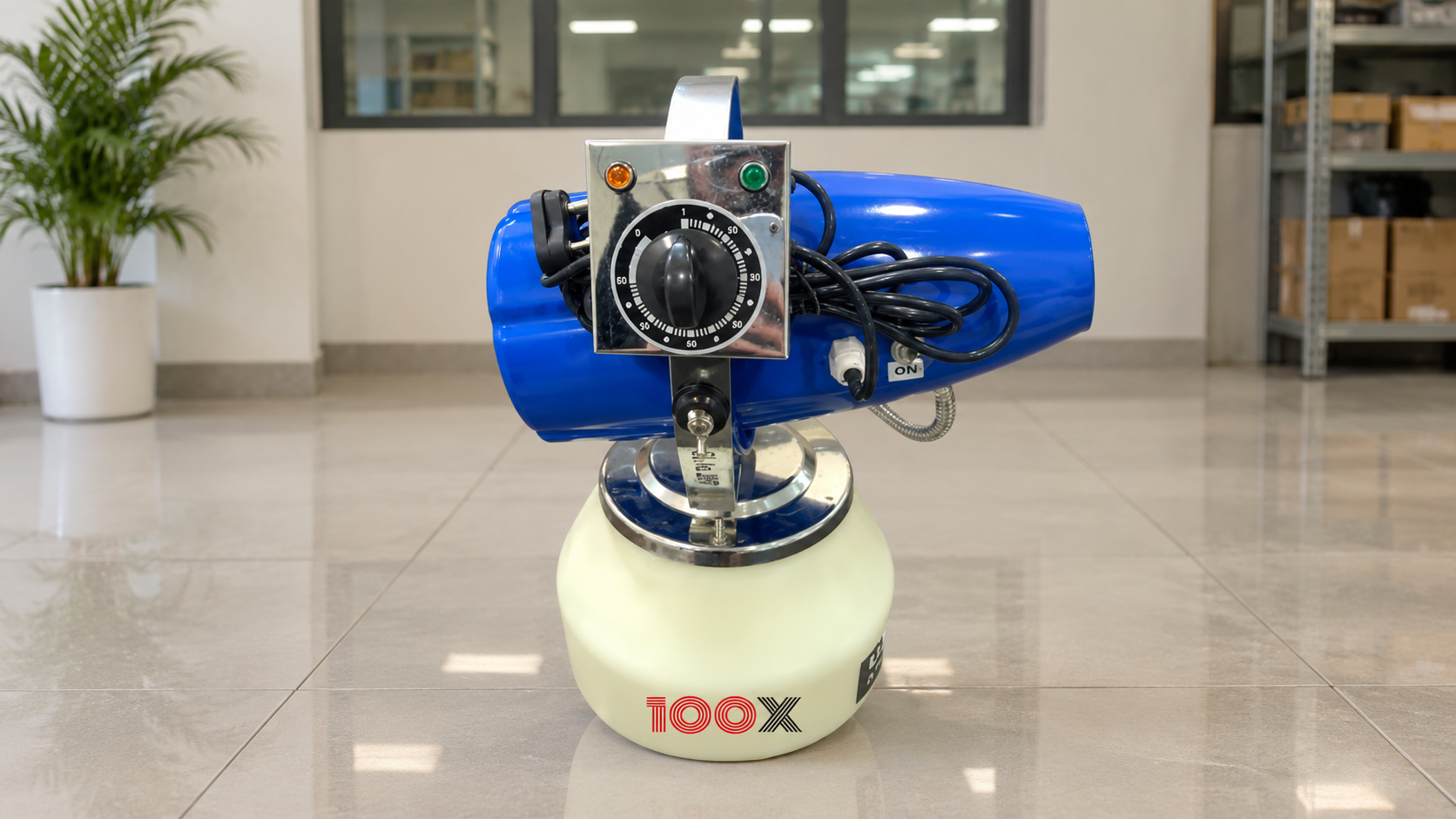
Cold foggers use air pressure and a fast nozzle to create fine droplets without any heat. The liquid is normally water based and designed to deliver a very small volume across a large area. Because no flame or hot tube is involved, ULV units are the safer pick for offices, hospitals, warehouses, shops and greenhouses, and for products that break down under heat.
Why Water-Based Formulas Win Indoors?
Water-based formulas avoid the oily film that carriers like diesel leave behind, and they keep the air clear after fogging. Typical choices include quats, hydrogen peroxide blends and low dose peracetic acid. A ready-mix sanitizer fogging liquid also helps because it needs little dilution on site, which cuts the risk of mixing errors. Cold fogging also saves money, because the dose per square metre is tiny and a single litre can cover a large hall, which keeps running costs low for schools, factories and event venues. Never pour an oil based mixture into a unit designed for a ULV cold fogging solution, since seals and tanks may swell or crack.
Matching Droplet Size to the Job
Smaller droplets stay airborne longer and reach cracks and corners, while larger ones settle faster on surfaces. For disinfecting a room, medium droplets that land evenly work best. For insect control inside a godown, finer droplets help the fog travel between stacked goods. The cold foggers from 100x circle private limited let operators adjust flow so one machine can cover several jobs.
Fogging Chemicals for Poultry Farms and Agricultural Spaces
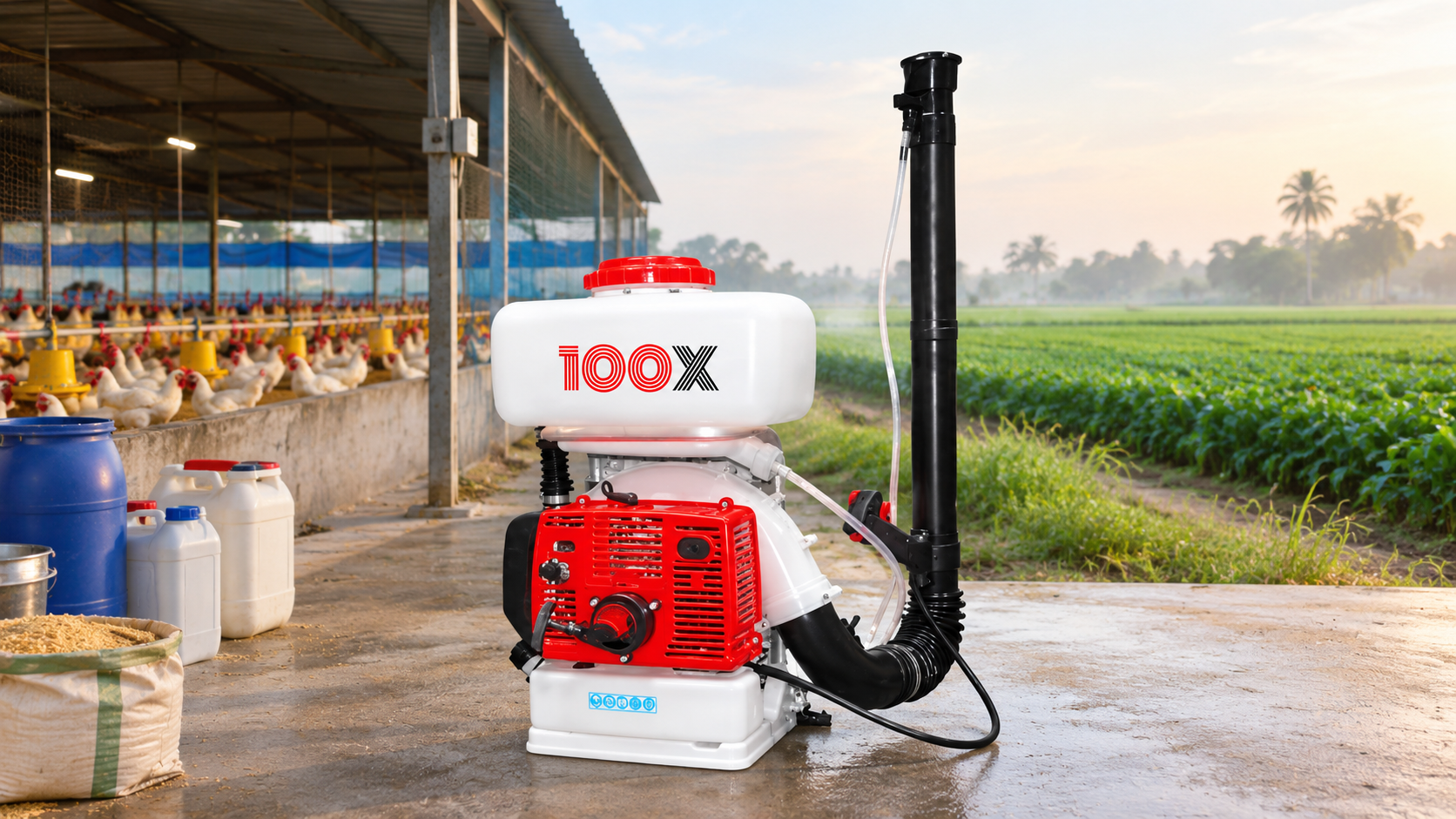
Poultry houses are warm, humid and full of birds, which lets disease spread fast. The right choice reduces bacteria, viruses and fungal spores on floors, walls, feeders and in the air. Most farms fog in two situations: a deep clean of the empty shed between batches, and a light, veterinarian approved mist while birds are present.
Between Batches
After litter removal and washing, a disinfectant such as glutaraldehyde with quats, peracetic acid or stabilised hydrogen peroxide can be fogged into the empty house. Iodine-based products are also used where approved. Close the vents so the mist stays in contact long enough, then ventilate fully before new chicks arrive.
With Birds in the House
When birds are present, fogging chemicals for poultry farms must be mild, label approved and used at low strength, and only on the advice of a farm veterinarian. Avoid strong aldehydes, high peracetic acid concentrations and phenols near chicks. Workers should wear a respirator, goggles and gloves every time.
Crop and Orchard Use
Beyond sheds, thermal foggers carry approved pesticides and fungicides into orchards and vegetable plots, where fine fog reaches the underside of leaves. Choose products registered for the crop, and respect the waiting period before harvest. Calibrate the machine before every season so the fog output matches the dose printed on the label.
Safety and Storage Rules for Every Liquid
Whatever you fog, wear a mask rated for chemical vapour, splash proof goggles and nitrile gloves. Mix in a ventilated area, add the concentrate to the carrier slowly, and never combine two different products, because some pairings release toxic gas. Rinse the tank and lines after each session so residue does not clog the nozzle. Store concentrates in their original labelled containers, away from heat, food and children, and keep the safety data sheet close by for emergencies.
Conclusion
No single product wins everywhere. Water-based disinfectants suit homes and offices, insecticides with the right carrier handle mosquitoes outdoors, and farm-grade sanitisers protect poultry sheds. Match the liquid to the target, the space and the machine; follow the label, and use protective gear every time. Getting the chemical for a fogging machine decision right saves money and keeps people safe, and 100x circle private limited builds thermal and cold foggers in India with spare parts and service support behind every unit.
Frequently Asked Questions
What is the best chemical to use in a fogging machine at home?
A water based, label approved disinfectant such as stabilised hydrogen peroxide or a quat blend, applied with a cold fogger, is best for indoor use.
Can I use plain water in a fogging machine?
Plain water only adds humidity and does not kill germs or insects, so always add an approved active ingredient.
Which liquid is best for dengue mosquito control?
Deltamethrin and pyrethrum based products are widely used, mixed in the carrier the label recommends.
Is it safe to fog around people and pets?
No, keep people, pets and food out during fogging and wait for the re-entry time on the label.
Can the same liquid be used in thermal and cold foggers?
Usually not, because thermal units need heat stable oil based carriers while cold units need water based mixes.
Ansita Sahu
Article Author