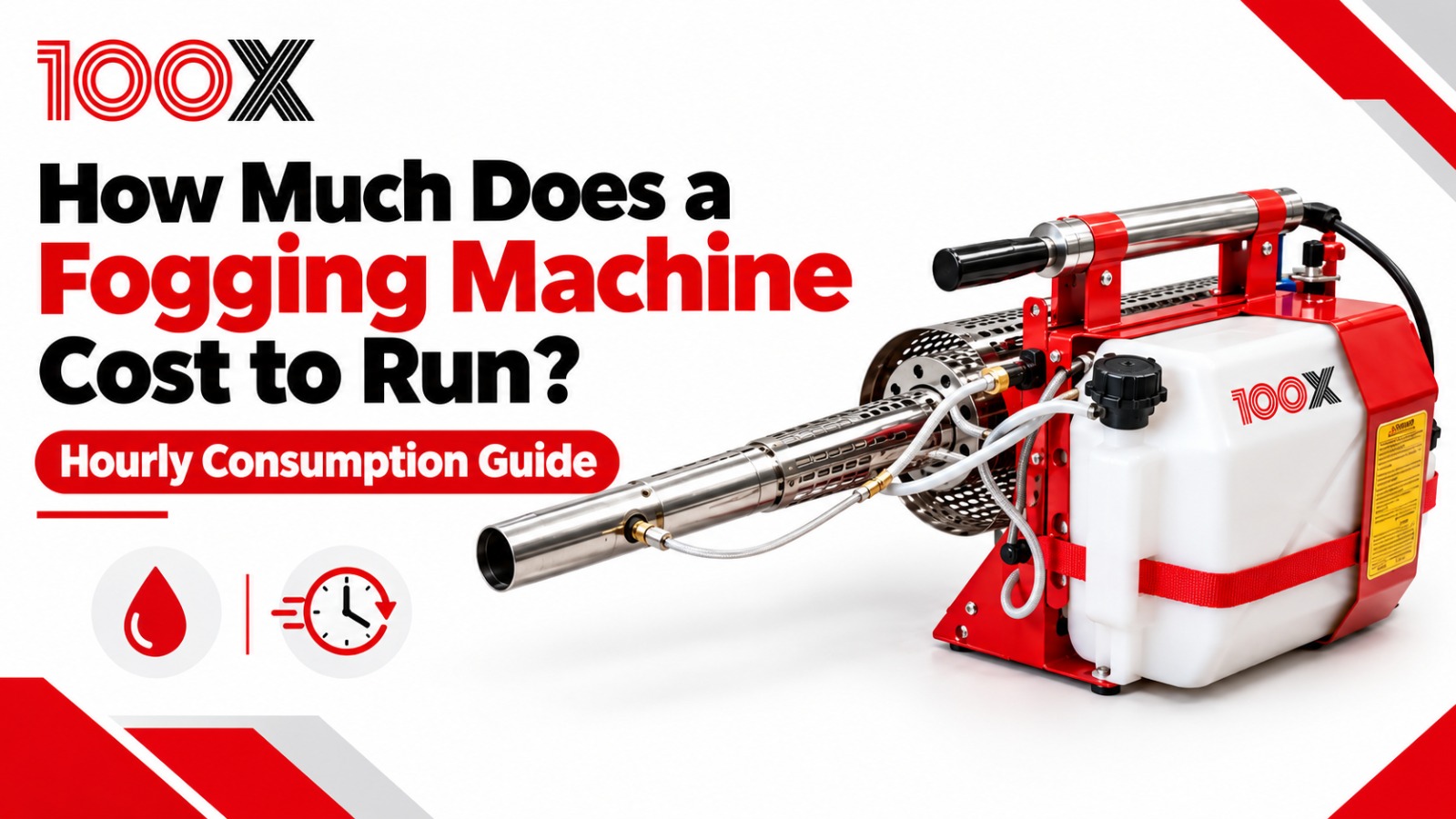
How Much Does a Fogging Machine Cost to Run? Hourly Consumption Guide
How much fuel does a fogging machine use per hour? Know the fuel type, diesel and petrol consumption, fogging chemicals and running cost.
Anyone planning to buy a thermal fogger for mosquito control, pest control, or disinfection asks the same question before ordering: what will it cost me for every hour it runs? The answer depends on the engine, the carrier liquid, and how the machine is operated. Knowing the fogging machine fuel consumption per hour helps you budget a contract, price your service properly, and avoid surprises at the pump.
This guide breaks down petrol use, diesel use, fuel mixing practices, and realistic hourly numbers, so you can plan with confidence whether you run a single unit or a full fleet.
Fogging Machine Running Cost Per Hour: The Basics
The hourly expense of a fogger is the sum of two separate liquids. The first is the fuel that powers the engine. The second is the carrier solution that holds the insecticide or disinfectant. Many buyers count only the first, which is why budgets often fall short. Add small items such as spark plugs, cleaning solvent, and operator time, and you get the complete picture of what each working hour truly costs.
What Exactly Is Used for Fogging?
Fogging uses a pesticide, disinfectant, or sanitiser mixed into a carrier liquid. In thermal fogging, the carrier is usually diesel or kerosene, because oil produces a dense, visible fog that hangs in the air for longer when it meets the hot exhaust stream. In cold fogging, also called ULV fogging, the carrier is normally water or a light oil, and the machine breaks it into fine droplets without heat. Typical jobs include municipal mosquito control, warehouse pest treatment, greenhouse protection, and large area sanitising.
What Fuel Is Used in a Fogging Machine?
Most portable pulse jet foggers run on clean, unleaded petrol. The engine has no rotating or moving parts. Petrol is vaporised and ignited, and the pulsating hot gas stream turns the chemical solution into fog. Manufacturers generally advise pure petrol with no lubricating oil added, because this is not a two stroke engine. Larger vehicle mounted units may use a petrol or diesel engine to drive a compressor, while electric cold foggers use mains power instead of liquid fuel.
Consumption of Fogging Machines by Type
Typical fogging machine fuel consumption per hour depends on the engine size and nozzle setting. Use these figures as a planning range, then confirm them against your model's manual:
- Handheld pulse jet foggers: about 1.5 to 2 litres of petrol per hour, with a tank of similar size, so one tank lasts close to an hour.
- Large double barrel or vehicle-mounted units: up to 3- 4 litres per hour or more under heavy load.
- Electric ULV cold foggers: no liquid engine fuel, but electricity and carrier liquid still add to the bill.
As an illustration, if petrol costs around Rs 100 per litre, a unit burning 1.5 litres per hour spends about Rs 150 on engine fuel each hour. The carrier liquid often costs far more, which the next sections explain.
Hidden Costs Beyond Fuel
Fuel is only part of the story. Nozzles, gaskets, spark plugs, and fuel filters wear out and need regular replacement. Cleaning solvents, protective gear, and transport also add up across a season. Tracking your fogging machine running cost per hour job by job, with every one of these items included, shows you the true margin on each contract.
How Much Petrol Does a Fogging Machine Use?
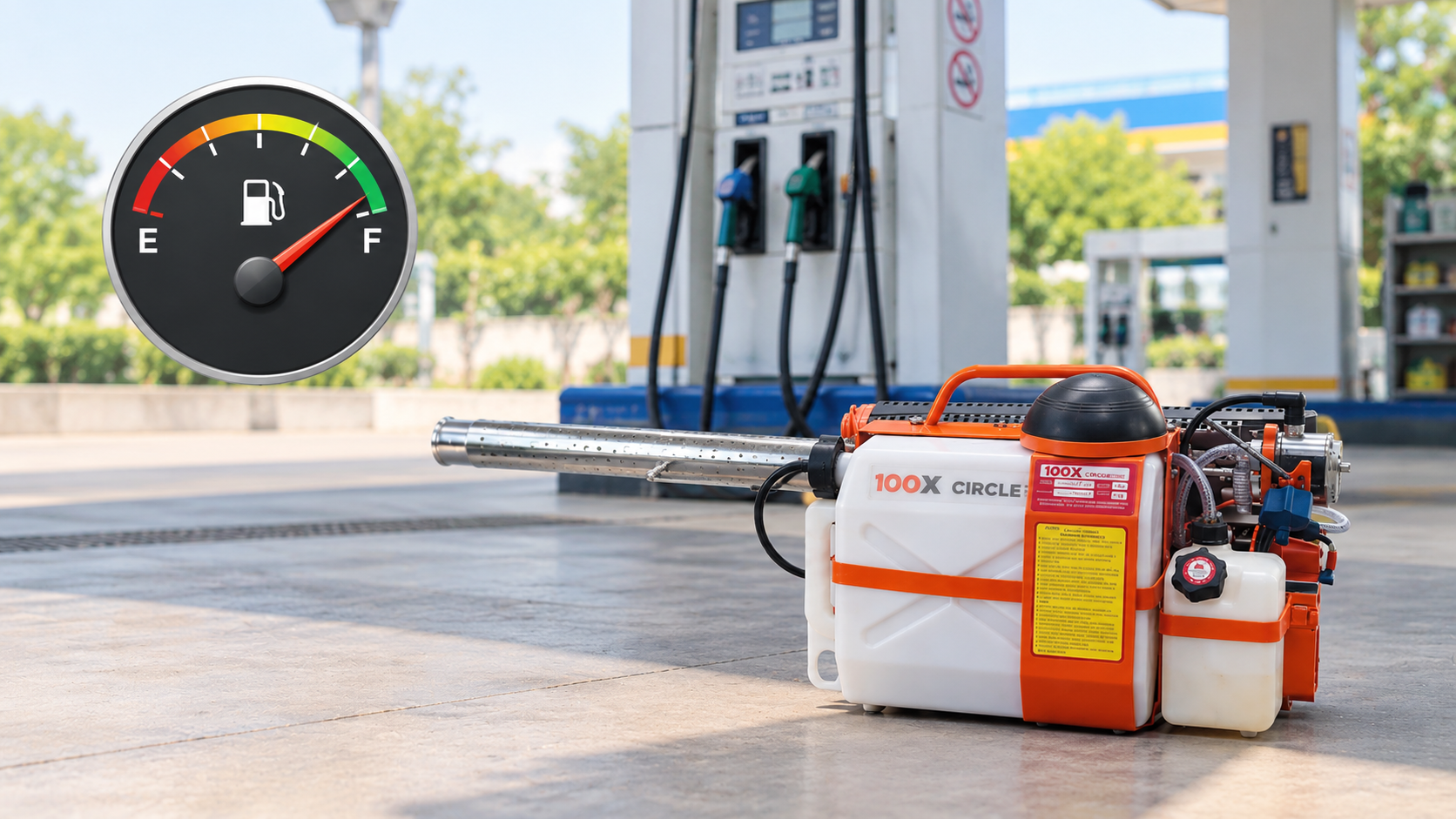
Petrol powers the pulse jet engine, so it is the most visible fuel on the job sheet. Most handheld models draw between 1.5 and 3 litres an hour, with the exact number set by engine design and how long the machine runs at full burn. So, how much petrol does a fogging machine use across a typical shift? A six hour municipal drive with a 1.5 litre per hour unit consumes about 9 litres, while a heavy duty unit at 3 litres per hour would need 18 litres for the same shift.
Factors That Change Petrol Use
Several factors push consumption up or down. Nozzle size and chemical flow rate change the load on the burner. Ambient temperature and altitude affect combustion, and a dirty carburettor or clogged air filter wastes petrol. Frequent stop and start cycles also burn extra fuel during each ignition. Regular cleaning of the resonator and fuel line keeps the burn stable and the numbers close to the rated value.
How to Calculate Your Own Numbers?
Fill the tank to the brim, run the machine for a measured period, then refill and note how many litres went back in. Divide by the hours run. Repeat this three times and use the average. Being a fogging machine manufacturer,100x circle private limited publishes the tank capacity and rated consumption for each model, which gives you a reliable baseline to compare against your field results.
Budgeting Petrol for a Season
If you run a fogger for four hours a day over a 90 day season, a 1.5 litre per hour unit uses roughly 540 litres of petrol. Multiply by the local petrol price and add a ten percent buffer for warm up, refills, and testing. Operators who track this number monthly spot leaks, worn parts, and careless fuel handling long before the cost becomes a problem.
Fogging Machine Diesel Consumption: The Carrier Liquid Cost
In thermal fogging, diesel is not burned for power. It is the carrier that moves the insecticide through the machine, so fogging machine diesel consumption is really the flow rate of your solution. Most portable machines deliver anywhere from 12 to 42 litres of liquid per hour, while some large pulse jet models push 50 to 80 litres per hour at full flow. This figure, not the petrol tank, usually decides your hourly spend.
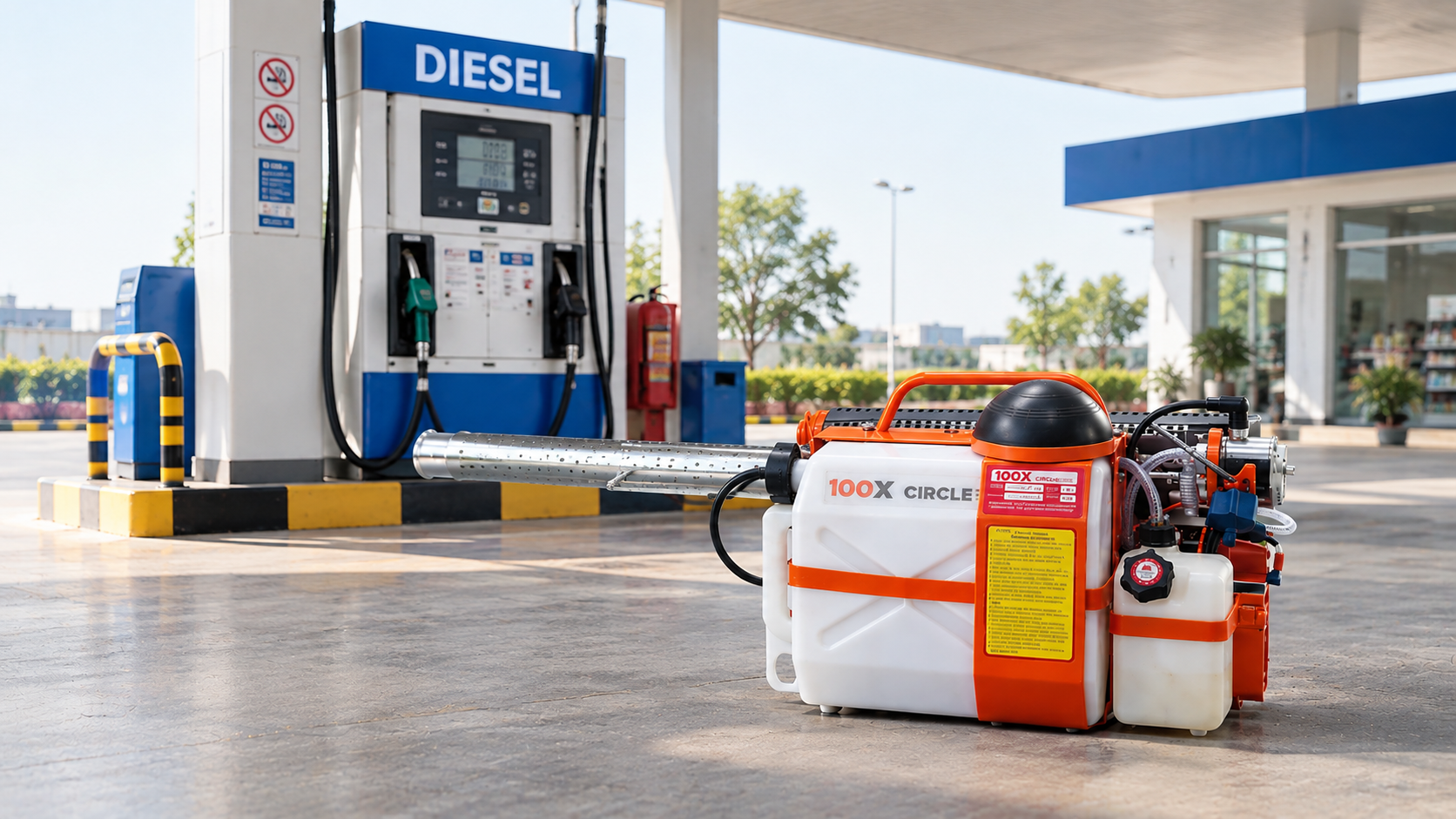
How Much Diesel and Petrol Is Consumed in Running a Fogging Machine?
Put the two together for a realistic hourly picture. A mid size unit might burn 1.5 litres of petrol and pass 20 litres of diesel based solution in one hour. With diesel at about Rs 90 per litre, the carrier alone costs around Rs 1,800, while petrol adds about Rs 150. Chemical concentrate comes on top. This is why carrier choice and flow control matter more to your margin than engine fuel does.
Ways to Cut Carrier Cost
Lower the flow rate to the minimum that still gives proper droplet coverage. Use calibrated measuring jugs instead of guessing. Switch to water based formulations with a cold fogger where the job allows it, since water costs almost nothing. Always follow the chemical label for dilution, as underdosing wastes the entire round.
Diesel quality matters too. Water contamination or sediment can clog filters and nozzles, creating uneven fog and downtime that costs more than the fuel saved. Buy from a trusted pump, store drums sealed, and strain the liquid before filling.
What Fogging Machines Manufacturers Recommend?
Most manuals specify pure unleaded petrol for the engine and keep kerosene or diesel strictly for the chemical carrier tank. Keeping the two liquids in separate, clearly labelled containers prevents costly mix ups. When in doubt, ask the supplier, which fuel and carrier combination suits a specific model.
Effects on Engine Life
Carbon build up restricts the resonator and valve, which raises petrol use and reduces fog output. Over a season, the repair bills and lost working hours from poor fuel choices can easily outweigh any saving at the pump. “Clean fuel is the cheapest maintenance you can buy."
Safety Practices While Handling Fuels
Fuel handling affects both cost and safety. Refuel only when the engine has cooled fully, and never near open flames. Use a funnel, keep fuel in approved containers, and store drums away from sunlight. Wear gloves, a mask, and eye protection during mixing and fogging. Clean spills at once, since leaked petrol is both a fire hazard and wasted money.
Conclusion
Running a fogger is cheaper than most buyers expect when you track the right numbers. Engine petrol is a modest hourly cost, the carrier liquid is the bigger line item, and good habits around cleaning, calibration, and fuel handling protect both. Measure your own fogging machine fuel consumption per hour, record it by job, and use it to price your services with a healthy margin. For fogging machines built for municipal, pest control, and agricultural work, explore our latest products and request model wise consumption details before you buy.
Frequently Asked Questions
What fuel does a fogging machine use?
Portable pulse jet foggers run on clean unleaded petrol, while the chemical is carried in diesel, kerosene, or water.
How long does one tank of fuel last?
A 1.5 litre tank usually lasts about one hour of continuous fogging.
Is diesel or kerosene better as a carrier?
Diesel is more widely available and kerosene is lighter, so follow the chemical label and your budget.
Can I add engine oil to the petrol?
No, pulse jet foggers need pure petrol without any lubricating oil.
How can I reduce the hourly operating cost?
Calibrate the flow rate, keep the machine clean, and use measured doses to avoid wasting fuel and chemical.
Ansita Sahu
Article Author