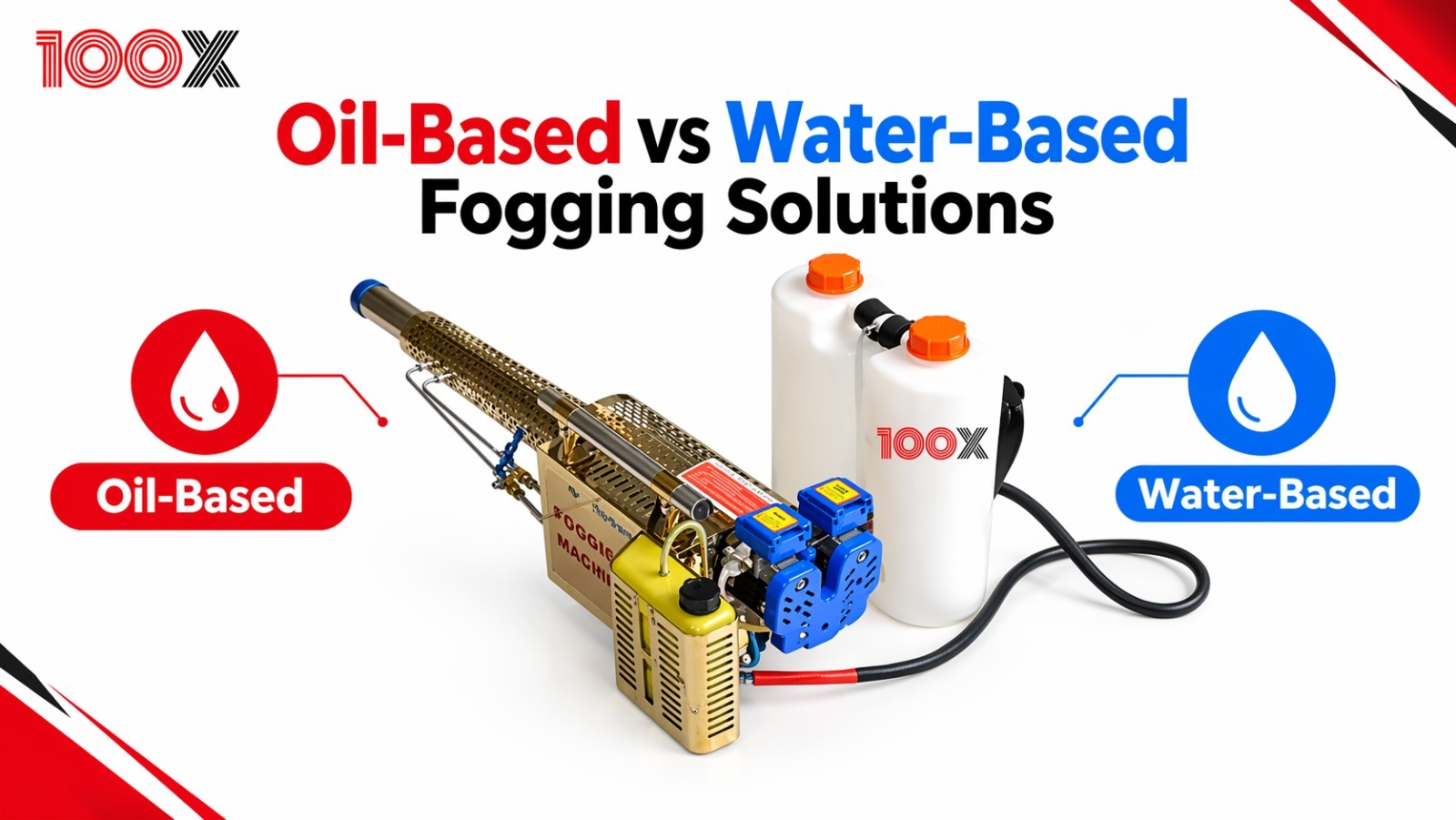
Oil-Based vs Water-Based Fogging Solutions: Which Machine Should You Use?
Oil-based vs water-based fogging solutions: compare droplet behavior, cost and use cases to pick the right fogging machine for each.
Walk into any pest control shop in India and you will hear the same debate. One person swears by diesel-mixed chemicals. Another says plain water works better and costs less. The truth is that oil-based vs. water-based fogging solutions is not a contest with one winner. Each liquid behaves differently inside a fogger, and the wrong match can waste chemical, clog parts, or leave a greasy film on your walls.
This guide explains the difference in plain words. You will learn how each solution makes fog, which machine suits which liquid, what each one costs to run, and how to stay safe. If you are about to buy or upgrade a machine, read to the end before you spend any money.
Oil or Water: What Is Actually Inside the Fog?
What Oil-Based Solutions Are?
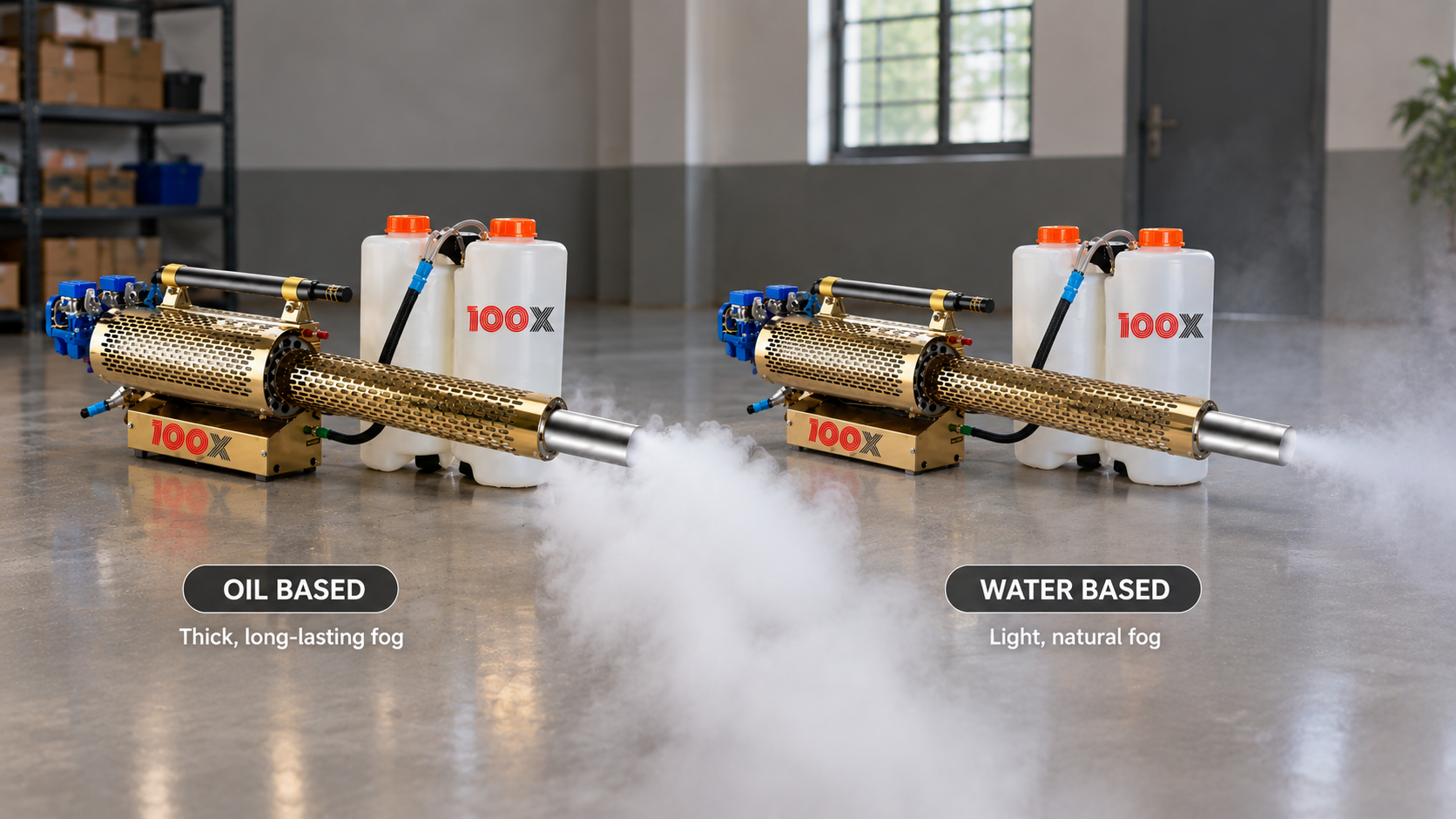
An oil-based solution mixes the active chemical with a light oil carrier such as diesel or kerosene. The oil protects the chemical from the heat of the machine and creates a thick, white, visible cloud. Operators like this cloud because they can see where the fog has gone. It also hangs in the air for longer, which helps when you treat drains, hedges, and open compounds.
What Water-Based Solutions Are?
A water-based solution uses water as the carrier. The chemical is usually an emulsion or a soluble formula that mixes into water. Some users add a little glycol so the fog stays visible when the machine is heated. Water-based fog is lighter, dries faster, and leaves little smell or residue behind. That is why hospitals, kitchens, and offices often prefer it.

A Simple Way to Remember
Think of oil as a heavy coat and water as a light shirt. The coat lasts longer outdoors but feels messy. The shirt is clean and easy, but it fades quickly in wind and heat.
Understanding Oil-Based and Water-Based Fog in Thermal Fogging Machines
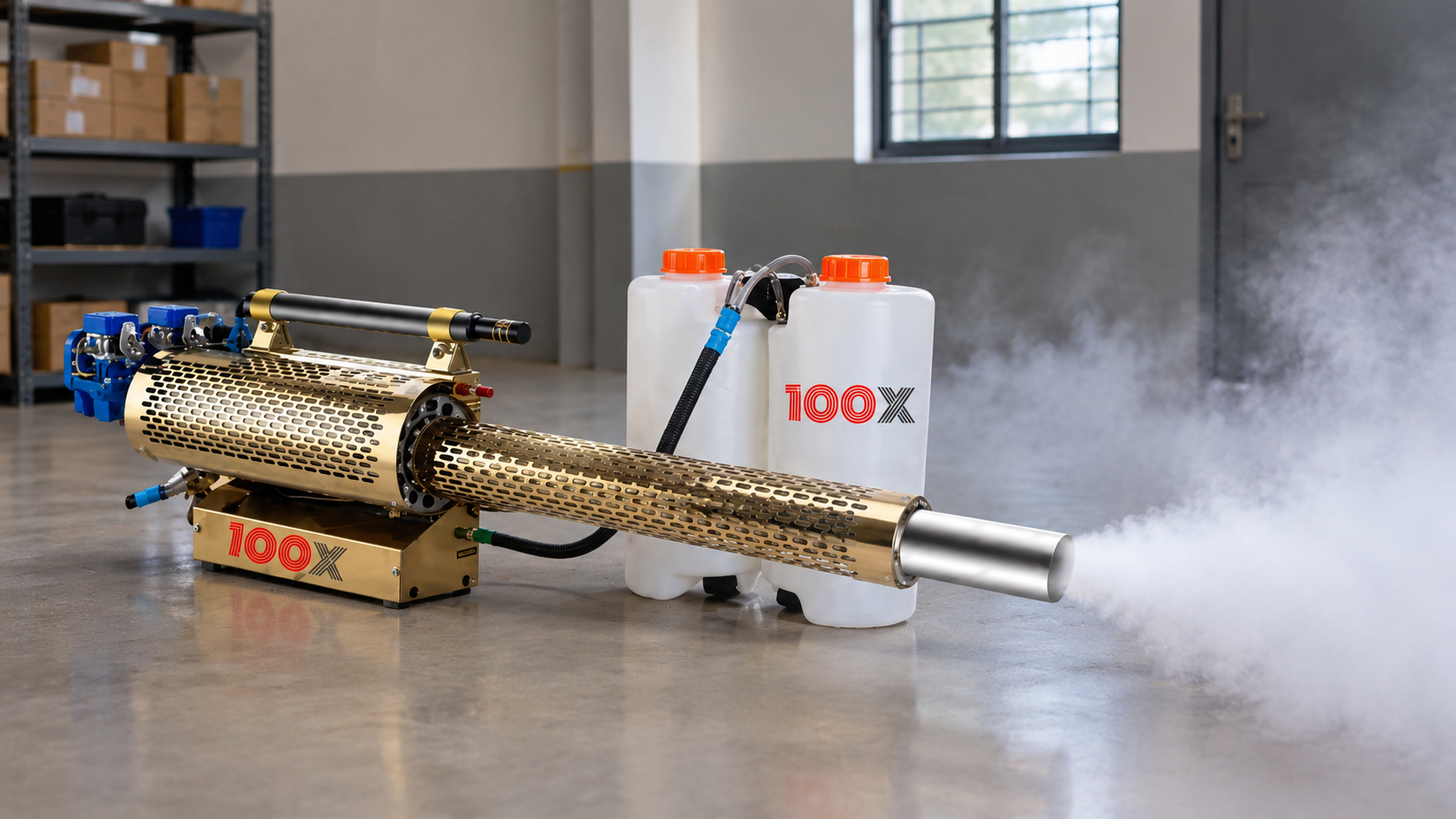
A thermal fogger heats the liquid until it turns into vapour. When the vapour meets cool air at the nozzle, it turns back into tiny droplets and forms a dense cloud. A pulse jet engine does the heating. It burns fuel in quick bursts and pushes hot gas through a resonator tube, and the solution breaks into fog as it passes through.
Why Oil Suits Heat Well?
Oil does not boil away too fast, so the fog stays dense and travels far. Droplets from a good pulse jet unit are very small, often 8 to 20 microns, which lets them drift into corners and gaps that a normal sprayer cannot reach. For large outdoor drives, this is the combination most teams trust.
Can Water Work in a Thermal Unit?
Yes, but the machine must be built for it. Plain water turns to steam very quickly, so the fog can disappear before it reaches the target. A unit with a proper chemical tank and a flow valve handles water mixes better. The Thermal and Cold Fogging Machine (100XTFS50) from 100x circle private limited runs in both modes, which is handy when you switch between oil and water formulas.
Fogging Chemical Compatibility: Oil or Water Formulations?
Before you pour anything into the tank, read the label. Good fogging chemical compatibility starts with one question: is this product made to mix with oil, with water, or with both? Pesticides come in different forms. Emulsifiable concentrates dissolve well in oil and turn milky in water. Some powders and suspensions do not dissolve at all, and they settle at the bottom of a water tank. A mismatch can clog the nozzle, give uneven fog, and lower the kill rate.
Signs of a Bad Mix
A bad mix often shows up as a layer floating on top, white flakes, or a tank that turns thick and cloudy. If you see any of these, stop. Do a small jar test first. Mix a little chemical with the carrier in a clear jar, shake it, and wait ten minutes. A good mix stays even from top to bottom.
Tanks and Seals Matter Too
Some oil carriers soften certain plastics and rubber seals over time. Tanks made from HDPE or stainless steel handle most WHO approved chemicals well, so check what your tank and seals are made of before a long season. If you want to know which chemicals are common and what they do, read our list of common fogging machine chemical names.
Best Fogging Solutions for Indoor and Outdoor Environments
The place you fog decides the liquid more than anything else.
Outdoor Jobs
Streets, drains, parks, and farms are open spaces. Wind, heat, and distance all work against you. Oil-based fog is lighter and lasts longer, so it is the usual pick for city mosquito drives and orchard work.
Indoor Jobs
Homes, offices, hospitals, and godowns need a cleaner fog. Water-based fog leaves less smell and less residue, and it dries quickly. It is also gentler around electronics and stored goods. For many indoor jobs, cold fogging is an even better fit, which we cover below.
Quick Pick List
Use this list as a starting point:
- Open drains and public parks: oil-based
- Orchards and tall crops: oil-based
- Hospitals and clinics: water-based
- Restaurants and kitchens: water-based
- Homes and offices: water-based
- Warehouses: either one, depending on what is stored
Do Not Forget Fire Safety
Oil carriers are flammable. Never fog an oil-based mix near open flames, gas stoves, or pilot lights, and never in a closed room. Keep a fire extinguisher close, and let the machine cool before you refill it. To see how these machines are used in the field, read about the uses of a thermal fogging machine.
Cost vs. Performance: Choosing the Right Fogging Solution
Running Cost
Water is cheap. Diesel or kerosene adds a cost to every litre, and fuel prices change often. Over a season of daily drives, that adds up. On the other hand, oil fog stays in the air longer, so you may need fewer passes to cover the same area. Also, you must consider the cost of the chemical used in fogging. Water-based chemicals used in cold fogging cost more than oil-based chemicals.
Cleaning and Upkeep
Oil leaves carbon and sticky residue inside the tank and nozzle. Water-based mixes are gentler, but hard water can leave scale. Use clean, soft water when you can, and flush the machine at the end of each working day.
Visibility and Operator Skill
Visible fog helps new operators judge coverage. With water-based fog the cloud is thinner, so operators need a little more training and a steady walking pace.
Thermal Fogging Machines or Cold Foggers: Which Handles Each Solution?
Thermal foggers use heat. Cold foggers, also called ULV machines, use air pressure and a fine nozzle to break the liquid into droplets with no heat at all. This changes which solution you can use.
Cold Foggers and Water
Cold foggers are happy with water-based solutions and with chemicals that cannot take heat. The droplets are a little larger and there is no thick white cloud, so you must trust your coverage plan and not your eyes. They suit indoor disinfection well. To learn more, see the uses of cold fogging.
Thermal units give the dense cloud most people expect, and oil carriers perform best here. For a side by side look at the machines, read our overview of the types of fogging machines.
Dual Mode Machines
If your work covers both indoor and outdoor sites, a dual mode machine can save money because one unit handles both liquid types.
Practical Tips for Choosing Thermal and Cold Fogging Equipment
Here is a simple way to choose a fogging machine equipment without guesswork. Answer four questions, and the right type becomes clear.
Where Will You Fog?
Outdoor drives favour thermal units with oil carriers. Indoor work favours cold or dual mode units with water-based mixes.
What Does the Chemical Label Say?
The label tells you whether the product mixes in oil, water, or both. Pick the machine around the chemical, not the other way round.
How Big Is the Area?
Wards, highways, and large farms need vehicle mounted units. Housing societies, shops, and small farms do well with hand carried models.
Who Will Support the Machine?
A machine is only as good as its spare parts. Being a genuine manufacturer, 100x circle private limited keeps original parts in stock and ships them across India, so a small fault does not stop your season.
Common Myths and Facts About Fogging Machines
Thicker Fog Means a Better Kill
This is a myth. Thick fog looks impressive, but the kill depends on droplet size, correct dose, and good timing. A thin fog at the right dose can beat a thick cloud with a weak mix.
Best Time to Fog
This is a fact. Mosquitoes are most active around dawn and dusk, and winds are usually calmer then. Fogging in strong midday wind and heat pushes the cloud away before it works.
Using More Chemical Gives Better Control
Another myth. Extra chemical wastes money, harms the environment, and can build resistance in insects. Follow the dose on the label every time.
Final Verdict: Oil or Water?
Oil and water are not rivals. They are tools for different jobs. Oil-based fog suits open spaces, long reach, and thermal machines. Water-based fog suits clean indoor sites, light residue, and cold or dual mode machines. Once you understand oil-based vs. water-based fogging solutions, the choice becomes much easier, and you avoid wasted chemical and damaged parts. Always match the liquid to the label, the place, and the machine, and keep safety first. If you want expert help to pick the right unit, the team at 100x circle private limited can guide you from the first question to the final delivery. A few minutes of planning saves a full season of trouble. Use the box below, and get a recommendation made for your site.
Frequently Asked Questions
Can I use water in a thermal fogger?
Yes, if the machine is designed for it, and a little glycol helps keep the fog visible.
Is oil-based fog safe to use indoors?
It is not the best choice because of smell, residue, and fire risk, so use water-based or cold fog instead.
Which solution works better for mosquito control?
Oil-based fog usually performs better outdoors since it stays in the air longer, while water-based fog suits closed spaces.
How often should I fog for mosquitoes?
Peak season programmes often repeat every week or two, and this guide on fogging frequency explains the details.
How do I clean a fogger after oil-based use?
Flush the tank and lines with clean carrier oil, then wipe the nozzle once the machine has cooled.
Ansita Sahu
Article Author