Fogging vs Fumigation vs Spraying: Top 5 Differences Explained
Confused about fogging, fumigation, and spraying? Explore the top 5 pest control methods compared and find the right treatment for your property right now.
Pest infestations rarely announce themselves before they take over a home or workplace. When they do strike, most people are unsure which treatment to book, and that is exactly where the confusion around Fogging vs Fumigation vs Spraying begins. Each method works differently, targets different pests, and suits different spaces. Choosing the wrong one can waste money and leave the actual problem untouched. This guide breaks down these three pest control methods compared side by side, so you know exactly which one fits your situation. By the end, you will understand not just what each treatment does, but when to use it and why the difference genuinely matters.
Homeowners dealing with a mosquito heavy garden, warehouse managers protecting stored grain, and clinics needing routine hygiene checks are all searching for the same thing: the right method for their exact problem. A restaurant with a cockroach issue does not need the same treatment as a furniture exporter fighting termites, even though both fall under the same broad category of pest management.
Fogging Pest Control Explained
Fogging pest control uses a machine to turn liquid insecticide into fog made up of droplets roughly 8 to 20 microns wide. This fog spreads through the air and settles on surfaces, cracks, and corners that ordinary sprays often miss. It is commonly used against mosquitoes, flies, and other flying insects in gardens, warehouses, and open compounds.
A typical fogging session covers 1,000 to 1,500 square feet in under 20 minutes, which makes it a fast option for large outdoor areas. Because the droplets are so fine, they stay airborne longer and reach hidden breeding spots that manual methods cannot access.
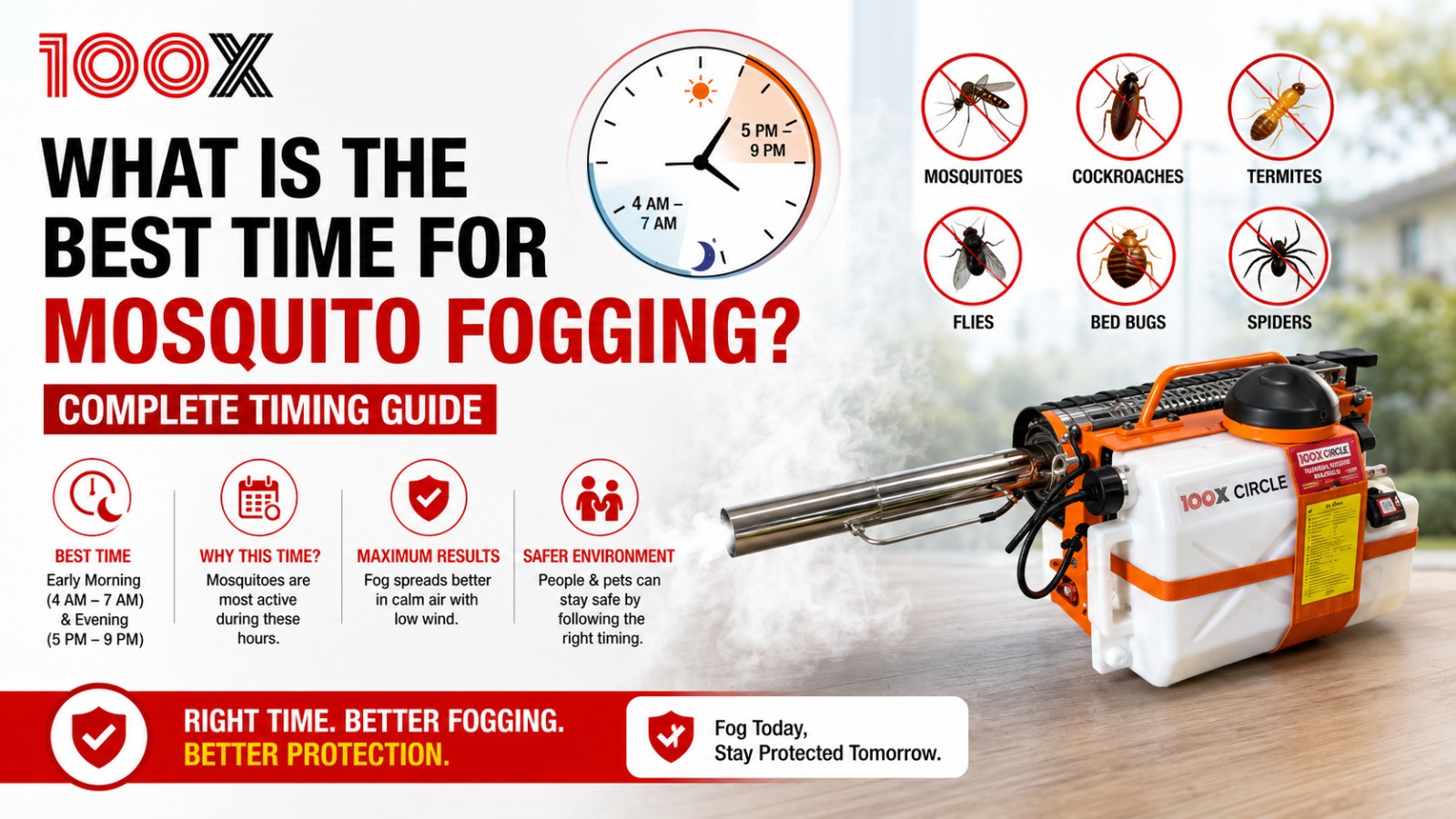
A housing society battling a mosquito surge before monsoon season can see visible results after a single evening fogging round, since the mist reaches drains, bushes, and stagnant water spots that a handheld sprayer would take hours to cover manually. Choosing between 100X Circle and other providers usually comes down to whether the technician assesses the property first, since fogging, fumigation, and spraying are not interchangeable and the treatment should match the actual pest problem rather than following a one size fits all approach.
Cold Fogging or Mist: A Different Droplet Range
Fogging and mist are often used as if they mean the same thing, but the droplet sizes tell a different story. Thermal or standard fogging produces droplets in the 8 to 20 micron range, while cold foggers, sometimes called ULV or cold or mist machines, produce a coarser droplet of around 20 to 80 microns. This difference matters because coarser mist droplets settle faster and cover surfaces more directly, while finer fogging droplets stay suspended in air for longer and are better suited to reaching hidden gaps and flying insects. Droplet size distribution charts used in application science place typical aerosol, mist, and medium spray ranges on a clear gradient, and mixing up mist with fogging is one of the most common misunderstandings in pest control terminology.
What Makes Fogging Pest Control Effective Indoors?
Indoors, fogging works well in warehouses, basements, and factory floors where pests hide in gaps and machinery. Since the mist floats and settles slowly, it reaches areas that manual spraying simply cannot cover. Most technicians recommend keeping the space sealed for 30 to 45 minutes after treatment for the best results.
Best Situations to Use This Method
Fogging suits seasonal mosquito control, event venues before outdoor functions, and large storage units with heavy pest activity. It is not the best fit for small, enclosed rooms where fine mist can linger and briefly affect air quality.
Fumigation Services for Deep Pest Elimination
Fumigation services involve sealing an entire structure and releasing a gaseous chemical as a fine aerosol, typically under 10 microns in droplet size, that penetrates walls, furniture, and stored goods. Unlike fogging, fumigation does not just target visible pests; it reaches eggs, larvae, and pests hiding deep inside wood or packaging material. It is this extremely fine, gas-like particle size that lets fumigation get where mist and spray physically cannot.
This method is commonly used for termite infestations, warehouse stock protection, and shipping container treatment. A standard fumigation cycle can last anywhere from 24 to 72 hours, depending on the pest type and the size of the structure.
Because the gas used in fumigation is potent, licensed technicians monitor concentration levels throughout the process and conduct air quality checks before declaring the space safe for reentry. Skipping this monitoring step is one of the biggest risks of hiring unlicensed operators.
When Businesses Need Professional Fumigation Services?
Export businesses, furniture manufacturers, and grain storage units often rely on fumigation because international shipping regulations require pest-free certification. Skipping this step can lead to rejected shipments or heavy penalties at customs.
Disinfection Spraying Services for Everyday Hygiene
Disinfection spraying services apply a liquid solution directly onto surfaces using handheld or motorized sprayers, producing much larger droplets of roughly 200 to 500 microns. These larger droplets are heavy enough to fall quickly and wet the surface on contact rather than staying airborne, which is exactly what makes spraying effective for direct surface disinfection rather than air or crevice treatment. It targets germs, bacteria, and viruses rather than only insects, making it a common choice for offices, clinics, and homes after illness outbreaks.
A single spraying session for a 1,000 square foot office typically takes 30 to 40 minutes and can be completed without evacuating the entire building, unlike fumigation. Equipment suited to occupied indoor spaces means daily operations are barely interrupted.
Many businesses now schedule spraying alongside their regular cleaning routine rather than treating it as a one-time fix. A monthly schedule, for instance, keeps bacterial counts consistently low instead of only reacting after an outbreak or complaint.
Why Disinfection Spraying Services Matter for Hygiene?
Since the pandemic, more offices, schools, and hospitals request routine spraying schedules, sometimes weekly, to reduce surface contamination. It is a lighter, faster option compared to gas based treatments and needs no special protective gear for occupants.
Common Areas That Benefit From Spraying
High touch surfaces such as door handles, elevator buttons, desks, and washrooms see the most benefit. Spraying is also widely used for cockroach and ant control in kitchens and food storage areas.
Difference Between Pest Control Treatments: Top 5 Comparisons
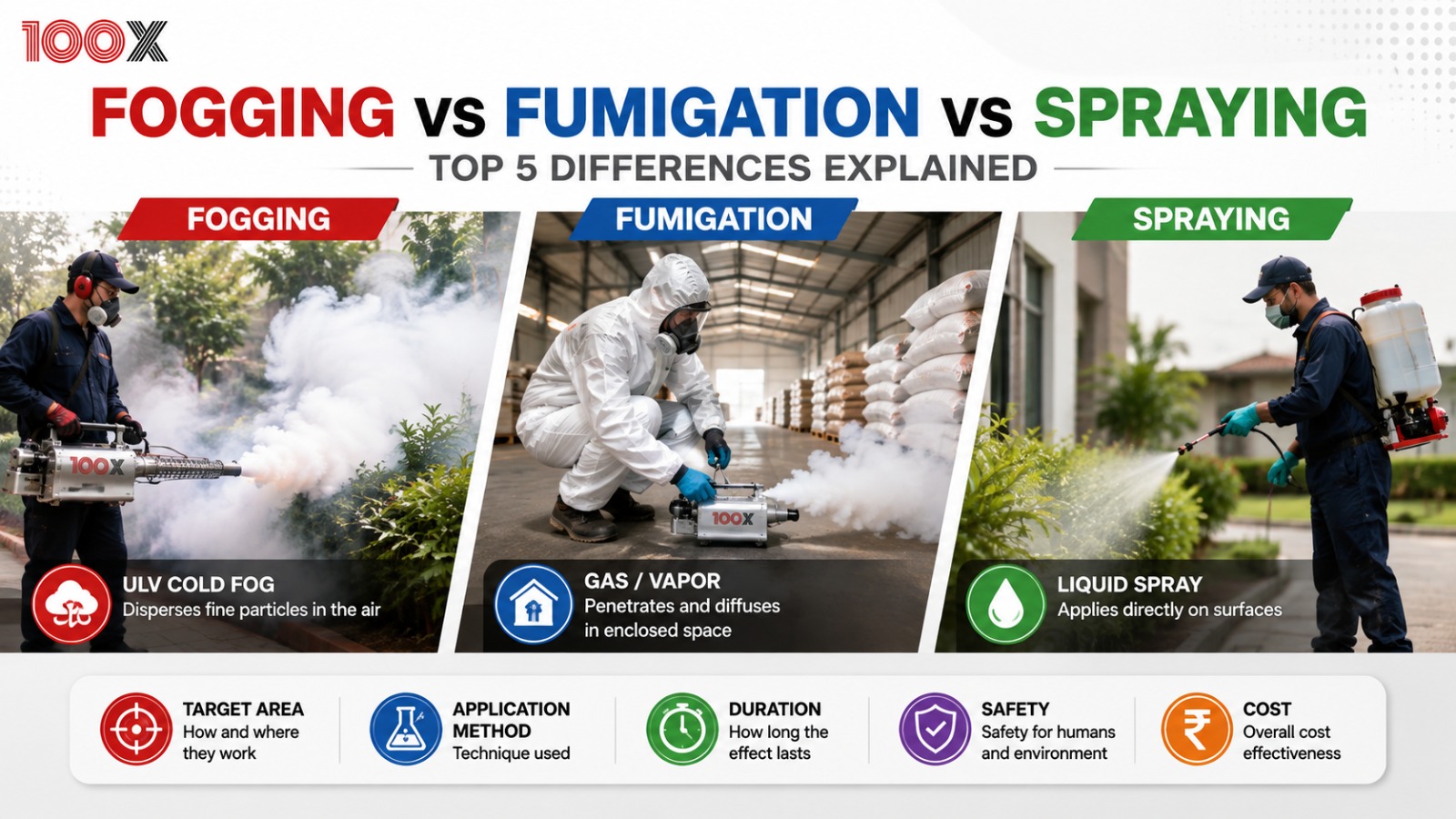
Now that each method is clear on its own, here is the actual difference between pest control treatments when placed side by side.
- Droplet size: fogging produces droplets of 8 to 20 microns, cold fogging or mist produces 40 to 60 microns, fumigation uses a gas like aerosol under 10 microns, and spraying produces the largest droplets at 200 to 500 microns.
- Coverage area: fogging and fumigation cover large spaces of 1,000+ square feet, while spraying suits smaller, targeted zones.
- Treatment duration: spraying takes 30 to 40 minutes, fogging takes 15 to 20 minutes, and fumigation takes 24 to 72 hours.
- Target pests: fogging targets flying insects, fumigation targets deep hidden pests like termites, and spraying targets germs and crawling insects.
- Safety and evacuation: fumigation requires full evacuation, fogging needs a short ventilation window, and spraying allows near immediate reentry.
Pest Control Methods Compared on Cost and Coverage
Spraying is generally the most budget-friendly option, fogging sits in the middle, and fumigation costs the most due to equipment, gas and longer service time. For a mid-sized home, spraying can start from a few thousand rupees, while fumigation for a warehouse can run into lakhs depending on size.
Which Treatment Suits Your Property Best?
A home dealing with mosquitoes needs fogging, an office wanting germ control needs disinfection spraying, and a warehouse with termite damage needs fumigation. Matching the pest to the right method saves both time and money in the long run.
Common Mistakes People Make When Picking a Method
Picking the wrong pest control method can cost you time, money, and peace of mind. Here are the most common mistakes people make:
- Using a quick spray for a termite problem: Termites often need fumigation to be fully removed. A simple spray might just hide the problem for a while but it comes back later, usually worse.
- Choosing fumigation for a small apartment: Fumigation is powerful, but it's not always necessary. For smaller spaces, a lighter fogging or spraying treatment can get the job done and save you a lot of money in the process.
- Not matching the treatment to the pest: Different pests need different approaches. What works for termites won't necessarily work for bed bugs or cockroaches.
- Skipping a proper inspection first: Jumping straight to a treatment without understanding the actual problem often leads to picking the wrong method altogether.
Final Thoughts
Choosing between fogging, fumigation and spraying is not about which one is best overall, but which one fits the pest and the property. The real answer to Fogging vs Fumigation vs Spraying lies in matching the method to the problem: mosquitoes call for fogging, termites call for fumigation, and everyday hygiene calls for spraying.
Whether the choice is fogging, fumigation, or spraying, working with a trusted provider like us helps you to ensure the treatment is applied correctly and safely, protecting the space without unnecessary chemical exposure.
Before booking any product, ask the provider which method they recommend and why, how long the treatment will take, and what precautions to follow afterward. A clear answer to these three questions is usually a good sign of an experienced team rather than a generic one-size-fits-all operator.
Not Sure Which Treatment Your Space Needs? Get a free property assessment and a treatment plan tailored to your pest problem, indoors or outdoors.
Frequently Asked Questions
What is the main difference between fogging, fumigation, and spraying?
Fogging uses fog for flying insects, fumigation uses gas for deep infestations, and spraying uses liquid for germs and crawling pests.
Which method works fastest for mosquito control?
Fogging clears mosquitoes fastest, usually within 15 to 20 minutes per session.
Do I need to leave my home during fumigation?
Yes, fumigation requires full evacuation for 24 to 72 hours depending on the treatment scale.
Is disinfection spraying safe for offices and hospitals?
Yes, disinfection spraying uses surface-safe solutions and allows near-immediate reentry after treatment.
Which treatment is most cost-effective for small homes?
Spraying is generally the most affordable option for small residential spaces with minor pest issues.
Ansita Sahu
Article Author