How Agricultural Fogging Equipment Helps Protect Crops and Farms?
Agricultural Fogging Equipment Helps Protect Crops and Farms
Every farming season in India brings a familiar anxiety: will the pests arrive before the harvest does? Paddy fields in Bihar, fruit orchards in Himachal Pradesh, vegetable farms in Haryana, and sugarcane belts in Uttar Pradesh all face persistent pressure from insects, fungi, and vector-borne threats that can devastate a standing crop within days if left unchecked. The shift from manual spraying to powered fogging has been one of the most practical improvements in Indian farm-level crop protection over the past decade. Agricultural fogging equipment produces an ultra-fine chemical mist that reaches into the dense crop canopy, under leaves, between rows, and into soil crevices that conventional backpack sprayers simply cannot penetrate effectively at speed.
Indian agriculture loses an estimated Rs 90,000 crore worth of crops annually to pest damage. In Bihar alone, where paddy, wheat, maize, litchi, and mango are the dominant crops, localised pest outbreaks in Muzaffarpur, Samastipur, and Darbhanga have caused millions of rupees in losses in a single season. When fogging is deployed at the right moment, with the right equipment and the right chemical formulation, those losses are avoidable. This guide explains how different types of agricultural fogging machines work, what crops and pests they address, and what Bihar and Indian farmers should look for when selecting the right equipment.
Pest Control Fogger in India: Why Fogging Outperforms Traditional Spraying in Agricultural Settings
The Physics Behind Fogging and Why Ultra-Fine Droplets Protect More Crop Per Litre of Chemical
A pest control fogger in India generates droplets that are typically between 5 and 50 microns in diameter. Standard hydraulic knapsack sprayers produce droplets in the range of 200 to 400 microns. That difference in droplet size is not cosmetic. Smaller droplets stay airborne longer, drift further into the crop canopy, settle on both the upper and lower leaf surfaces, and penetrate into soil-level vegetation where ground-dwelling pests breed. The same volume of pesticide covers significantly more surface area when fogged than when sprayed.
For paddy farmers in Bihar's north and central districts, this penetration advantage is critical for managing brown planthopper and stem borer infestations, which occur close to the base of the plant in standing water. A pest control fogger in India deployed at dusk, when these insects are most active, creates a fog cloud that settles at ground level and delivers the insecticide precisely where the pest population is concentrated. The same application with a hydraulic sprayer requires three to four times the volume of water and does not achieve comparable canopy-level distribution.
Coverage Speed That Makes Fogging Economically Viable for Small and Mid-Size Indian Farms
Labour availability at the right time is one of the most serious constraints in Indian crop protection. By the time a pest infestation is visible, it has often been building for days. Mobilising enough manual labour for a large-scale spray intervention, particularly during peak harvesting or planting seasons, is frequently impossible in Bihar's agricultural labour market. A single thermal fogging machine operated by one person can cover 3 to 5 acres per hour depending on terrain and canopy density. A hydraulic sprayer operated by a full labour team covers 0.5 to 1 acre per hour.
This coverage speed translates directly into the economic case for fogging. The equipment investment pays back within one to two seasons through reduced chemical volume, reduced labour cost, and improved effectiveness against pest populations that would have caused yield loss if the response had been slower.
Which Crops in Bihar and India Benefit Most From Agricultural Fogging Applications
Fogging is beneficial across a wide range of Indian crop systems, but the highest-impact applications are in crops with dense canopy structures, high-value standing crops where pest damage is economically catastrophic, and crops grown in conditions that favour rapid pest and disease spread.
- Paddy and wheat: stem borer, brown planthopper, blast fungus, and wheat rust control
- Sugarcane: pyrilla, early shoot borer, red rot fungicide application
- Litchi, mango, and banana orchards in Bihar: fruit borer, mealybug, leaf webber
- Vegetable crops: whitefly, thrips, aphids, and downy mildew in dense planting
- Maize: fall armyworm, which has caused significant losses in Bihar and eastern India since 2018
Mosquito and Pest Control Equipment: Agricultural Use and the Cross-Over With Public Health Fogging
Why the Same Equipment Handles Both Farm Pest Control and Vector-Borne Disease Management
The mosquito and pest control equipment used in public health campaigns and the equipment used in agricultural fogging share the same core technology. The pulse-jet thermal fogger that a Nagar Panchayat in Bihar's Motihari district uses for dengue and malaria control drives is functionally identical to the machine a litchi orchard owner in Muzaffarpur uses for fruit borer control. This technology overlap matters because it means farms that invest in quality fogging equipment can serve double duty during off-season periods when public health authorities contract local operators for vector control drives.
In Bihar, where dengue and malaria outbreaks are seasonal and predictable, farm-based fogging machine operators have increasingly found a secondary revenue stream by deploying their equipment for municipal pest control work between cropping cycles. Mosquito and pest control equipment that is built for agricultural use is typically more durable than light-duty residential models, making it well-suited for extended public health deployment without additional capital investment.
How Fogging Is Used to Manage Malaria-Carrying Mosquitoes in Bihar's Agricultural Districts
Bihar's paddy-growing districts, particularly in the Koshi River basin and North Bihar plains, face persistent malaria pressure because standing water in irrigated fields creates ideal mosquito breeding habitat. The same fields that produce the crop create a public health risk. Agricultural fogging equipment deployed by farmers in the early evening serves crop protection and vector control purposes simultaneously when the appropriate formulation is used.
Several districts in Bihar, including Sitamarhi, Madhubani, and West Champaran, have district health authorities that coordinate with local farming cooperatives for combined crop protection and vector control fogging drives. This integrated approach, using agricultural fogging machines on farms and around field boundaries, has measurably reduced localised malaria incidence in pilot programme areas in the region.
Key Specifications to Check When Buying Mosquito and Pest Control Equipment for Dual-Use
Farmers and operators looking for equipment that can serve both agricultural and public health fogging applications should evaluate:
- Tank capacity: 5 to 15 litres for portable models, 8 to 30 litres for heavy-duty field use
- Fuel compatibility: Petrol-based thermal foggers are the most widely used in Indian agricultural settings
- Fog output rate: measured in litres per hour; agricultural applications need higher output than residential use
- Nozzle adjustability: the ability to vary droplet size between 5 and 30 microns for different applications
- Pulse-jet engine type: the most reliable technology for Indian field conditions, with lower maintenance than motor-driven alternatives
Agricultural Pest Control Machine: Types Available in India and How to Choose the Right One
Thermal Foggers vs Cold ULV Foggers: The Core Choice Every Indian Farmer Needs to Understand
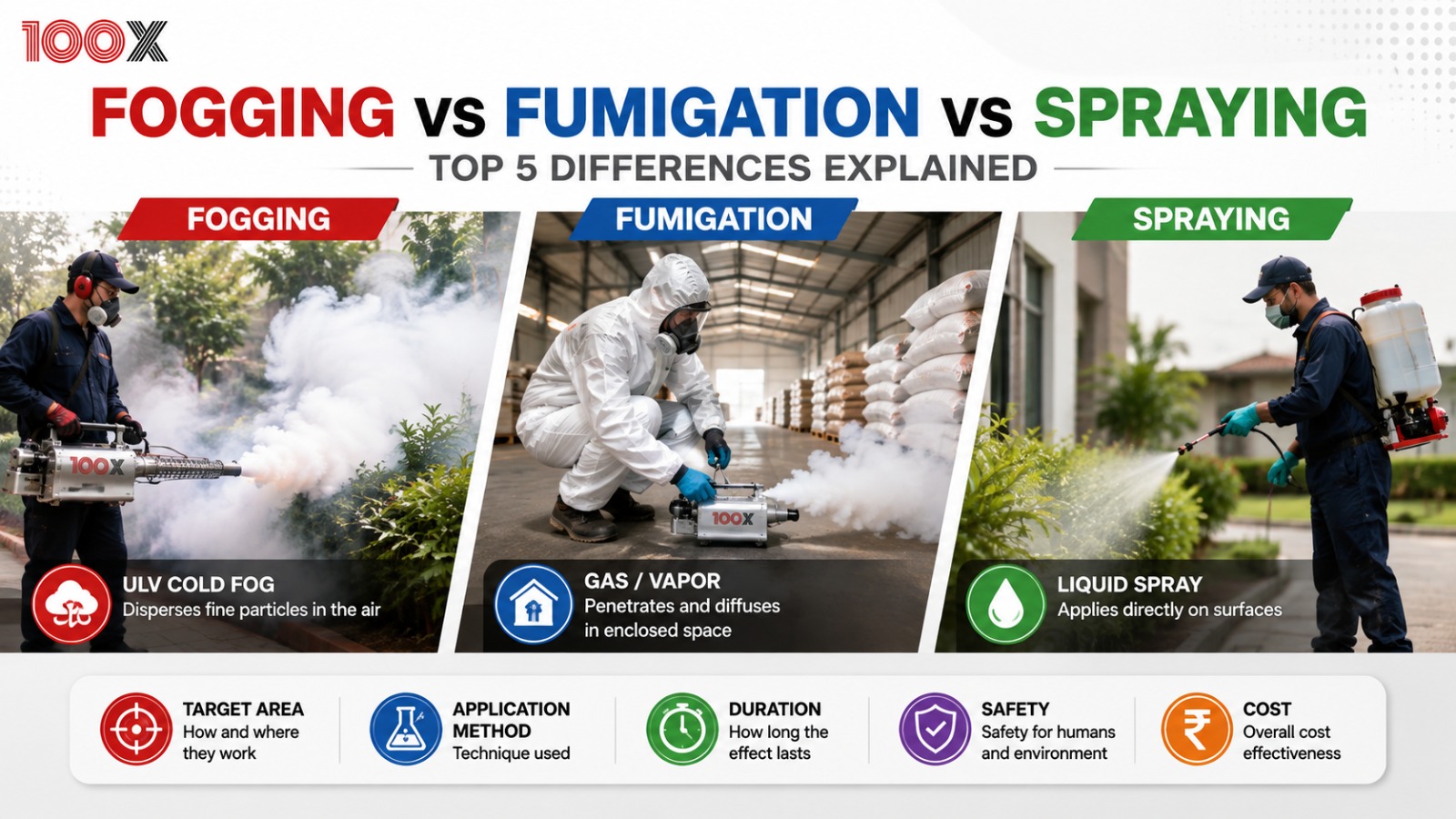
The agricultural pest control machine market in India offers two primary technologies: thermal foggers and cold ULV (Ultra Low Volume) foggers. Thermal foggers use a pulse-jet engine and heat to vaporise a diluted chemical solution into ultra-fine particles. Cold ULV foggers use a high-speed electric or petrol motor to atomise the liquid without heat. Each has distinct advantages depending on crop type, application timing, and the chemical formulation being used.
Thermal foggers produce a visible, dense white fog that is highly effective for insecticide applications in orchards, paddy fields, and open agricultural areas. Cold ULV foggers produce a near-invisible mist that is preferred for fungicide applications in enclosed spaces like poly-houses and dense vegetable rows, where heat from a thermal fogger could damage sensitive plants. For most Bihar and North Indian farm applications, thermal foggers remain the dominant and most cost-effective choice.
Quick Reference: Matching the Right Fogger Type to Your Crop and Application
The table below maps the most common agricultural fogging machine types to their optimal farm application in Indian conditions:
Fogger Type
Best Crop / Setting
Coverage Per Hour
Key Advantage
Thermal Fogger
Orchards, paddy, sugarcane
3 to 5 acres
Ultra-fine fog, deep penetration
Cold ULV Fogger
Vegetables, floriculture, greenhouses
2 to 4 acres
Chemical-efficient, no heat
Portable Backpack Fogger
Small holdings, row crops
1 to 2 acres
Single-operator use
Vehicle-Mounted Fogger
Large farms, canal-side fields
10 to 20 acres
High-volume, fast coverage
Pulse-Jet Engine Fogger
Dense crop cover, banana, areca nut
4 to 6 acres
Powerful fog for a thick canopy
What GeM Registration Means When Buying an Agricultural Pest Control Machine in India
Farmers, agricultural cooperatives, Farmer Producer Organisations (FPOs), and government-sponsored schemes purchasing agricultural pest control machine equipment can now access the Government e-Marketplace (GeM) to compare and procure from registered suppliers. GeM registration requires manufacturers to meet quality and service standards and allows direct government procurement without intermediary markups.
Bihar's agriculture department and district krishi vibhags have increasingly been procuring fogging equipment through GeM for distribution to FPOs and gram panchayats under central and state crop protection schemes. Farmers who have access to these schemes can receive subsidised or free fogging equipment by ensuring their cooperative or FPO coordinates with the district agriculture office during procurement windows.
Farm Fogging Machine: What Bihar and Indian Farmers Should Look for in 2026
The Five Most Important Technical Features to Evaluate Before Buying a Farm Fogging Machine
Not all farm fogging machine products sold in India deliver the same field performance. The price range for agricultural foggers in India spans from Rs 3,500 for basic backpack models to Rs 85,000 or more for heavy-duty vehicle-mounted systems. The differences in build quality, fuel efficiency, fog output consistency, and durability are substantial and directly affect the machine's performance over its useful life.
The five most important specifications to evaluate when purchasing a farm fogging machine in India are:
- Engine type and power: pulse-jet engines are the most reliable for Indian field use; check cc rating for output capacity
- Tank material and capacity: stainless steel or high-density polyethylene tanks resist chemical corrosion better than standard plastic
- Fog output consistency: test or request demo data showing consistent droplet size across the full tank load, not just at start-up
- After-sales service coverage: verify that spare parts and service are available within your district or state, not only in the manufacturer's city
- Warranty terms: manufacturer warranty of a minimum of one year with direct manufacturer support is the industry standard from quality suppliers
Why Bihar's Agricultural Conditions Require Specific Equipment Features
Bihar's farming environment presents specific equipment challenges that not every farm fogging machine available in the Indian market is built to handle. High seasonal humidity in the Koshi and Gandak belt affects both machine operation and chemical formulation performance. Dusty conditions during Rabi season affect air intake filters. The mix of diesel and kerosene available in rural Bihar's fuel supply requires machines with tolerant fuel systems.
Equipment manufactured and tested for North Indian and Bihar conditions specifically, rather than generic products designed for the South Indian or export market, consistently performs better in these field conditions. Farmers and FPOs in Muzaffarpur, Darbhanga, Vaishali, and Begusarai should prioritise suppliers who have active service support in Bihar rather than those relying entirely on courier-based spare parts delivery.
Thermal Fogger for Agriculture: Why Pulse-Jet Technology Is the Right Choice for Indian Crop Protection
How a Thermal Fogger for Agriculture Works and Why Indian Farmers Prefer It Over Other Options
A thermal fogger for agriculture uses a pulse-jet engine to heat a fuel-air mixture to temperatures between 350 and 600 degrees Celsius inside a resonance tube. A chemical solution is injected into this hot gas stream and instantly vaporised into particles of 5 to 15 microns. These particles are expelled at high velocity from the machine's nozzle, creating the characteristic dense white fog that can be seen settling across a field during operation.
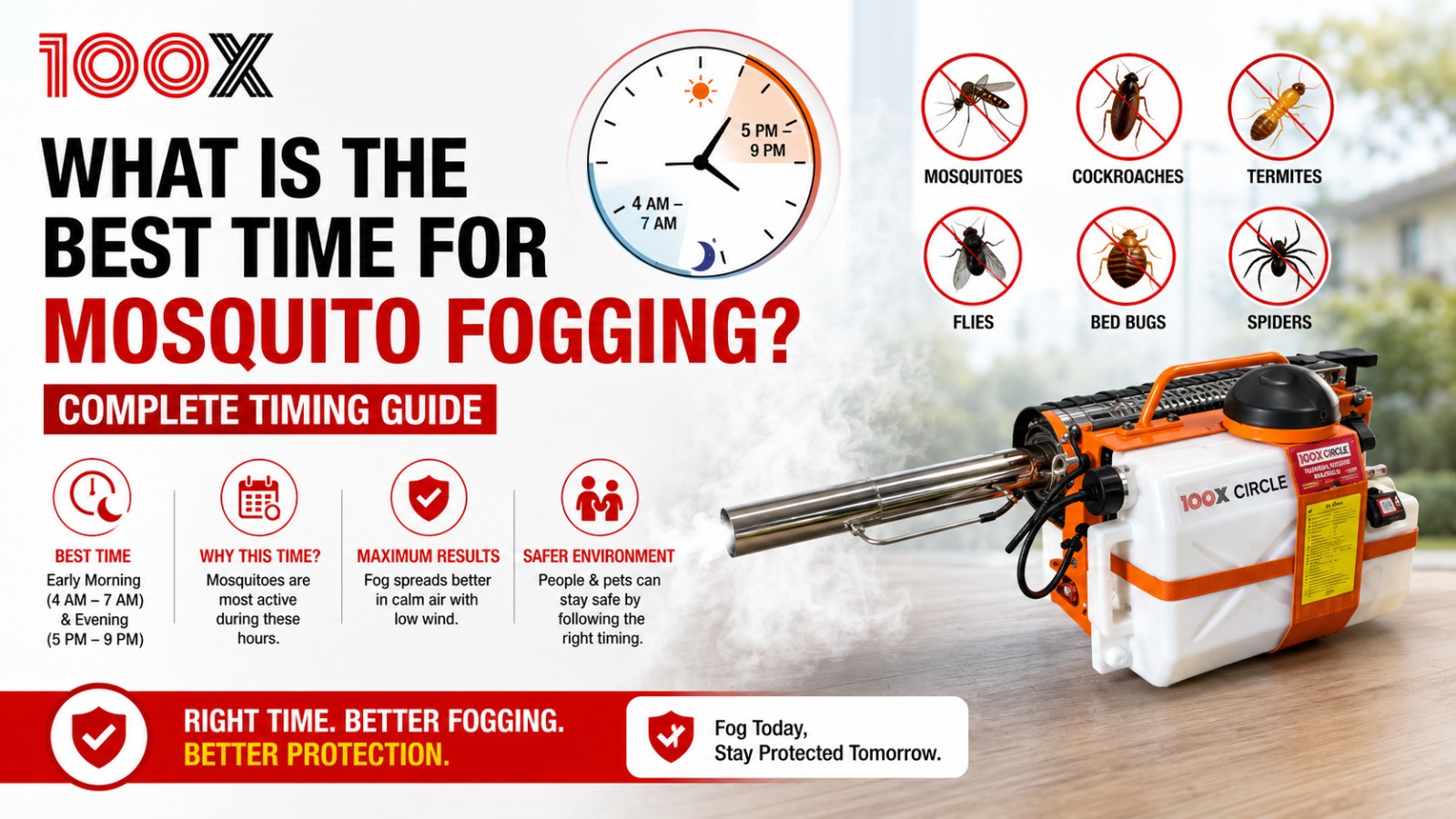
Indian farmers prefer thermal foggers over ULV foggers for most open-field crop protection applications because the dense fog is visible, allowing the operator to confirm coverage in real time. In the early morning or evening conditions when fogging is most effective, the operator can see exactly where the fog cloud has settled and adjust their path accordingly. This visual feedback is important for farmers who are learning to use fogging equipment for the first time.
Chemical Formulations That Work With Thermal Foggers for Indian Crop Protection
Not every pesticide or fungicide formulation is compatible with a thermal fogger for agriculture. Heat-sensitive chemicals can degrade during the vaporisation process and lose efficacy. Oil-based formulations specifically designed for thermal fogger use, which are widely available from major agrochemical companies in India, including Bayer, Syngenta, PI Industries, and BASF, are the correct choice for thermal fogging applications.
Farmers in Bihar and Uttar Pradesh should work with their local krishi kendras or the manufacturer's agronomist to identify the correct formulation and dilution ratio for their specific pest or disease target. Using standard emulsifiable concentrate formulations without proper dilution in a thermal fogger is a common and avoidable mistake that reduces efficacy and risks equipment damage.
Maintenance Practices That Keep Your Agricultural Fogging Equipment Working Season After Season
A thermal fogging machine that is properly maintained lasts 7 to 10 years of regular seasonal use in Indian field conditions. Post-application cleaning is the single most important maintenance practice: flush the tank and delivery lines with clean diesel or a manufacturer-recommended solvent after every use session to prevent chemical residue from blocking the nozzle and restricting output in subsequent applications.
The pulse-jet engine should be inspected seasonally for carbon buildup in the combustion chamber, which is the most common cause of starting difficulty and inconsistent fog output. The fuel filter should be cleaned or replaced annually. Farmers who maintain a simple log of operating hours and maintenance intervals consistently report fewer breakdowns and longer equipment life than those who operate the machine reactively without any scheduled maintenance routine.
Conclusion
The adoption of agricultural fogging equipment across India's farming communities has accelerated significantly over the past five years, driven by rising labour costs, more frequent and severe pest outbreaks, and a growing awareness of how dramatically fogging improves both the speed and effectiveness of crop protection interventions. For farmers in Bihar, Uttar Pradesh, and across the Indian agricultural belt, fogging is no longer a specialised or urban-market tool. It is a practical, affordable, and proven crop protection approach that pays back its cost within one to two seasons.
For farmers, FPOs, and agricultural input businesses in India looking for reliable, field-tested fogging machines with GeM approval and direct manufacturer support, 100x Circle manufactures and supplies a complete range of thermal and ULV fogging equipment with coverage across Bihar, Uttar Pradesh, Delhi, Maharashtra, and 50-plus distributor locations nationwide. Visit 100xcircle.com or call +91 78272 29116 for product specifications, demos, and pricing.
Frequently Asked Questions (FAQs)
1. What is the difference between a thermal fogger and a cold ULV fogger for agricultural use?
A thermal fogger uses heat from a pulse-jet engine to vaporise chemical solutions into ultra-fine 5 to 15 micron particles ideal for open-field insecticide application, while a cold ULV fogger uses a high-speed motor to atomise liquid without heat, making it preferred for heat-sensitive fungicides and enclosed growing environments like poly-houses and greenhouses.
2. How many acres can an agricultural fogging machine cover per hour in Indian field conditions?
Coverage rates vary by machine type: a portable thermal fogger covers 3 to 5 acres per hour, a backpack ULV fogger covers 1 to 2 acres, and a vehicle-mounted fogging system covers 10 to 20 acres per hour, depending on terrain, crop density, and wind conditions at the time of application.
3. Which crops in Bihar benefit most from regular fogging with pest control equipment?
Bihar's paddy, litchi, mango, maize, and wheat crops benefit most from agricultural fogging; paddy crops in the Koshi belt face stem borer and planthopper pressure, litchi orchards in Muzaffarpur face fruit borer and mealybug, and maize crops face fall armyworm infestations that fogging at the right growth stage can effectively suppress.
4. Can the same thermal fogger be used for both crop protection and mosquito control in rural Bihar?
Yes, thermal fogging machines used in agricultural settings are fully compatible with mosquito control insecticide formulations such as pyrethroid-based solutions, making them suitable for dual use in crop protection during the growing season and vector control operations between cropping cycles, which also creates a secondary income opportunity for farm-based equipment owners.
5. What maintenance does a farm fogging machine need to last multiple seasons in Indian conditions?
Post-application tank and nozzle flushing with clean diesel or solvent after every use, seasonal inspection and cleaning of the pulse-jet combustion chamber for carbon deposits, annual fuel filter replacement, and storing the machine with an empty tank in a dry location between seasons are the minimum maintenance steps that ensure 7 to 10 years of reliable operation in Indian field conditions.
100X
Article Author