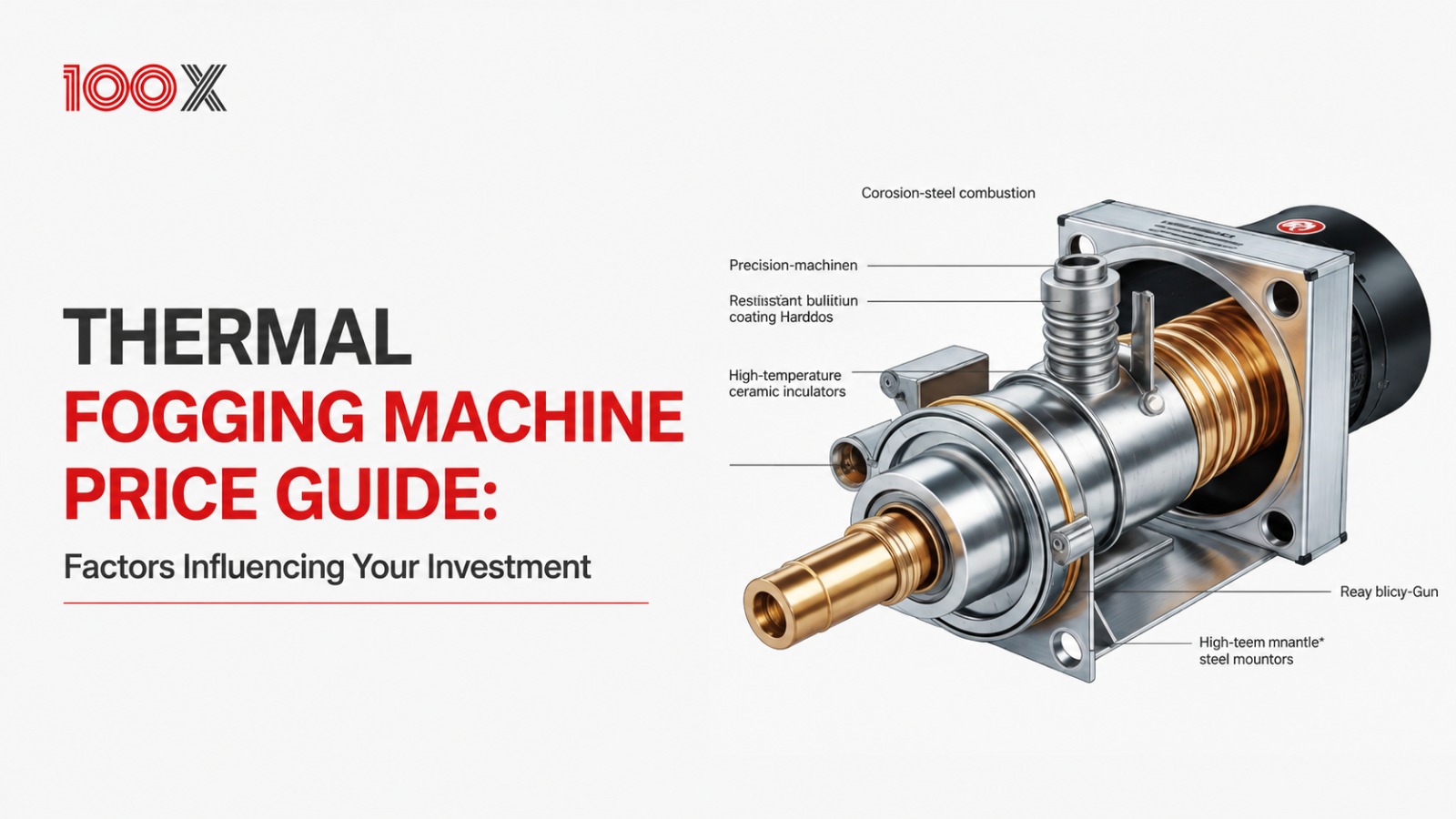
Thermal Fogging Machine Price Guide: Factors Influencing Your Investment
Thermal Fogging Machine Price Guide
When it comes to purchasing a fogging machine, most buyers ask the same first question: how much does it cost? It is a fair starting point, but price alone rarely tells the full story. Two machines may carry similar price tags yet deliver entirely different performance, durability, and long-term value. Understanding what actually drives the price of a thermal fogging machine helps you make a smarter, more confident investment.
This thermal fogging machine guide breaks down the key factors that influence pricing so you know exactly what you are paying for and what questions to ask before committing to a purchase.
Factor 1: Quality of Construction Materials
The single biggest driver of price difference between fogging machines is the quality of materials used in their construction. Three components in particular determine whether a machine is built to last or built to fail.
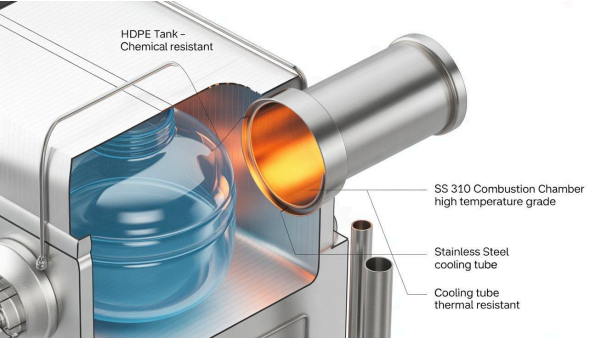
The Tank: The fogging solution tank and fuel tank can be made from HDPE (high-density polyethene), PE ( polyethylene) , stainless steel, Aluminium, or standard mild steel also called CRC steel. HDPE tanks costs more to manufacture and are best in class being 100% resistant to chemical tanks and leaf free from joints. Stainless steel tanks also resist corrosion, handle a wider range of chemical formulations, and maintain structural integrity over years of use. Aluminium and Mild steel tanks / CRC steel are cheapest tanks to produce but rust over time, especially in humid conditions or when exposed to chemical residues. Machines with premium tank materials will always carry a higher price, and for good reason.
The Combustion Chamber: The combustion chamber operates under extreme and sustained heat. A chamber built from SS 310 is the best as SS 310 grade can withstand very high temperature in combustion chamber. Other lower grades of SS 304 or SS 316 stainless steel still resists warping, oxidation, and thermal fatigue but not for professional use fogging machines. When a thermal fogging machine manufacturer uses high-grade stainless steel for the combustion chamber, the cost of the machine reflects that investment. Cheaper machines cut costs here, often resulting in early failure of this critical component.
The Cooling Tube: The cooling tube converts superheated vapour into dispersible fog. Stainless steel cooling tubes, preferred for their thermal heat withstand capability, are more expensive than aluminium or other aluminium alloy alternatives. Machines with Stainless steel cooling tubes tend to produce more consistent fog output and have longer service lives. This component is a reliable indicator of overall build quality and directly influences the price point.
Moulded Vs Welded design tanks
: Moulded designs are leak from joints unlike welded joints. Always ask the manufacturer if the tank is made in molded design or welded design.
Factor 2: Engine Technology and Performance
The engine is what powers the entire fogging operation. Machines using pulse jet engine technology with non pressurized fuel tank, the industry standard for professional thermal foggers, are priced higher than those using basic pulse jet engine designs, but they deliver significant advantages. Pulse jet engines with non pressurised fuel tanks are fuel-efficient, produce powerful and consistent fog output, require minimal maintenance, and have longer operational lifespans. They are also well-suited to India's varied field conditions, from dense urban localities to open agricultural land.
When evaluating price, always ask the supplier or thermal fogging machine manufacturer about the engine specification, recommended service intervals, and spare parts availability in your region. A cheaper machine with an inferior engine will cost more in the long run through frequent repairs, higher fuel consumption, and reduced operational reliability. The engine is not an area where cutting costs pays off. It is the component that determines whether your machine performs consistently in the field or fails mid-operation.
Factor 3: Fuel System Design: Pressurised vs Non-Pressurised Fuel Tanks
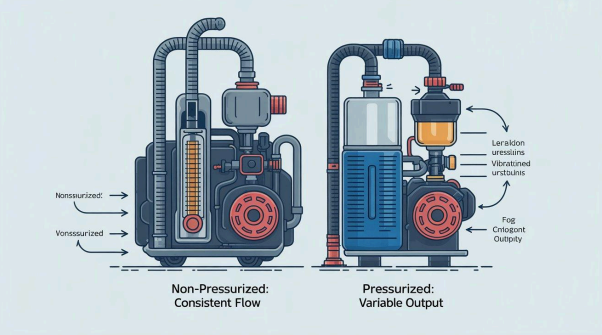
Not all fuel delivery systems are equal, and this design choice has a direct impact on both price and performance. Machines with non pressurised fuel tanks deliver a consistent flow of fuel to the combustion chamber regardless of how full or empty the tank is and can withstand field vibrations. This results in stable, uniform fog output throughout the operation.
Pressurised fuel systems are simpler and less expensive to manufacture. They work adequately for basic applications but can produce uneven fog output as the fuel level drops with field/ operational vibrations. For professional use such as municipal programmes, public health drives, and large-scale pest control operations, a non pressurised fuel system is generally the more reliable choice and is reflected in a slightly higher price point.
Any serious thermal cold fogger manufacturer India should be able to clearly explain which system their machine uses and why.
Factor 4: Machine Type and Application Scale
The type of machine and the scale of application it is designed for are major pricing factors. Broadly, thermal fogging machines fall into two categories based on use case:
Handheld or Backpack Models are designed for individual operators covering moderate areas such as residential localities, small farms, or contained industrial spaces. These are the most accessible price ranges for buyers.
Vehicle-Mountable or Industrial Models are designed for large-scale operations covering entire districts, industrial zones, or large agricultural areas in a single deployment. These machines are built with heavier-duty components, larger capacities, and more powerful engines, which positions them at a significantly higher price point.
Understanding which application scale you actually need prevents overbuying or underbuying. Consulting with an experienced industrial thermal cold fogging machine supplier before purchasing ensures you select the right category for your operational requirements.
Factor 5: Tank Capacity
Tank capacity determines how long a machine can run continuously before needing a refill, which directly affects operational efficiency. Larger-capacity machines can cover more ground per shift, reducing downtime and labour costs for the operator.
It is important to understand that tank capacity is a fixed design specification. It is set during manufacturing and cannot be modified after purchase. A machine with a larger solution tank will cost more than a comparable machine with a smaller one. When assessing price, calculate the tank capacity against your required coverage area to determine the most cost-effective option for your operations rather than simply choosing the cheapest available capacity.
Factor 6: Government Certification and GeM -OEM Registration
For institutional buyers such as government health departments, municipal corporations, Nagar Palika, Nagar Nigam, and public sector procurement teams, whether a machine is listed on the Government e-Marketplace (GeM) and whether the manufacturer is a verified OEM can directly affect the procurement process and, in some cases, the approved price band.
100X Circle Pvt Ltd is a GeM-approved OEM of fogging machines, which makes procurement straightforward and compliant for government and institutional buyers across India. Machines from GeM-registered manufacturers may appear at a standardised price point, but they come with verified quality assurance, supplier accountability, and a simplified purchasing process. All of this represents real value for institutional buyers.
Factor 7: After-Sales Support and Spare Parts Availability
A price comparison that ignores after-sales support is an incomplete comparison. The true cost of owning a fogging machine includes maintenance, spare parts, and technical support over its entire operational life. A machine from a manufacturer with readily available spare parts, and responsive technical support may cost more upfront, but will cost considerably less over time compared to a cheaper machine where spares are difficult to source or service is unavailable.
Before finalising any purchase, ask any thermal fogging machine manufacturer or industrial thermal fogging machine supplier about parts availability and the typical response time for technical support. These are not minor details. They are the difference between a machine that serves you for a decade and one that sits idle waiting for repairs.
A Note on What Does Not Affect Price
It is worth clarifying one common misconception in the market: there are no electric thermal fogging machines. Thermal fogging is a petrol-engine-driven process that requires intense heat generation to vaporise the fogging solution. Electric variants exist only in the category of cold foggers (ULV foggers), which is a completely different technology with a different application profile. Any listing or comparison that references electric thermal foggers is inaccurate. Price comparisons between thermal and electric machines are not valid because they are not equivalent products.
Frequently Asked Questions (FAQs)
Q: Why do two thermal fogging machines with the same tank capacity have different prices?
Tank capacity is just one specification. The real price difference comes from the combustion chamber material, cooling tube quality, engine technology, and fuel delivery system. Use this thermal fogging machine guide to evaluate the full specification, not just one figure.
Q: Is a higher-priced machine always better?
Only when it is backed by verified specifications from a credible thermal fogging machine manufacturer. Always confirm the combustion chamber grade, cooling tube material, and engine type before assuming a higher price means higher quality.
Q: What material questions should I ask before buying?
Ask whether the combustion chamber is SS 310 or 304 or SS 316 stainless steel, whether the cooling tube is stainless steel or aluminium and whether the tank is HDPE or stainless steel or CRC steel or aluminium. A reliable thermal fogger manufacturer India will answer all of these clearly and without hesitation.
Q: Does machine weight affect the price?
Weight itself is not a pricing factor, but it reflects material choices. Stainless steel and HDPE tanks add cost compared to cheaper alloy alternatives. Discuss both weight and material specifications with your industrial thermal fogging machine supplier to find the right balance for field use.
Q: How do I calculate the real cost of owning a fogging machine? Add the purchase price to estimated annual maintenance, fuel consumption, spare parts, and service costs over the machine's lifespan. A machine with better fuel efficiency and lower maintenance needs will often cost less to own overall than a cheaper upfront alternative.
Q: Can I get a thermal fogging machine customised for my specific needs?
Core specifications, including tank capacity are fixed at the manufacturing stage and cannot be altered post-purchase. Describe your application scale and coverage requirements clearly to your manufacturer and they will recommend the most suitable model from their existing range.
Final Thoughts
Price is always a part of the purchasing decision, but it should be the conclusion of your evaluation, not the starting point. The factors outlined in this thermal fogging machine guide cover materials, engine technology, fuel system design, machine type, tank capacity, certifications, and after-sales support. These are what truly determine the value of your investment.
Understand these factors, ask the right questions, and you will be in a strong position to choose a machine that performs reliably, lasts for years, and delivers genuine return on your investment.
Related Images
100X
Article Author