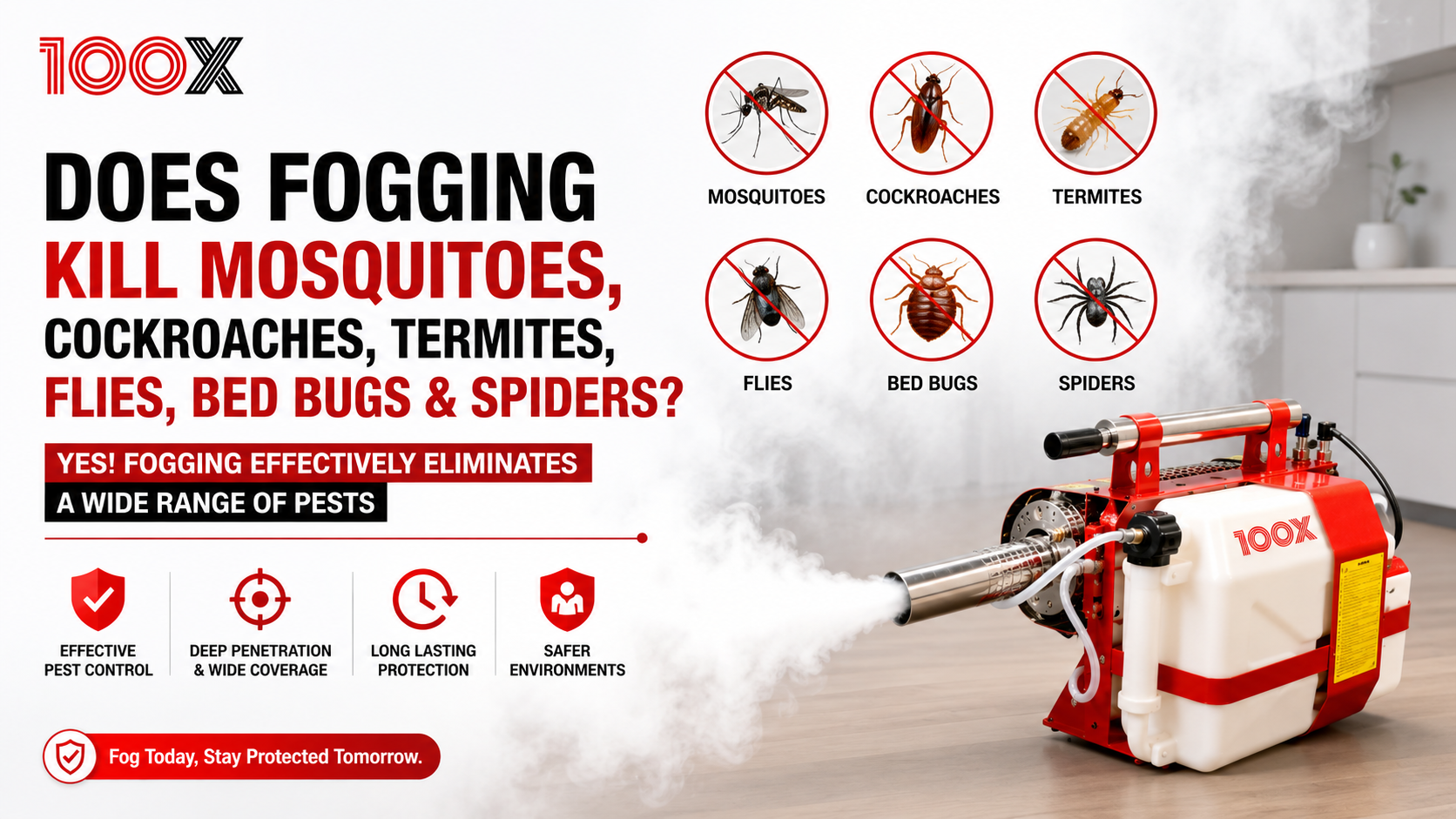
Does Fogging Kill Mosquitoes, Cockroaches, Termites, Flies, Bed Bugs & Spiders? (Full Guide)
Does fogging really kill mosquitoes, cockroaches, termites, flies, bed bugs, and spiders? This guide explains how fogging works, which pests it can control, its effectiveness, and when other pest control methods may be more suitable.
If your home or warehouse has an active pest problem, you have probably typed one question into Google: does fogging kill cockroaches? The short answer is yes, fogging can knock down cockroaches, mosquitoes, flies, and several other pests, but the results depend heavily on the chemical used, the droplet size, and how thoroughly the space is treated. Fogging is one of the fastest ways to clear an infested area, yet every pest does not react to it the same way. This guide breaks down exactly which insects fogging eliminates, which ones need a different approach, and how to pick equipment that actually finishes the job.
What Is Fogging for Pest Control?
Fogging for pest control uses a machine to convert liquid insecticide into an ultra-fine mist, usually between 8 and 20 microns wide. Because the droplets are so small, they stay suspended in the air long enough to drift into cracks, drains, foliage, and other spots a handheld sprayer cannot reach. This makes fogging a preferred method for large gardens, warehouses, and open compounds where pests hide in hard-to-access places. Manufacturers such as 100X Circle point out that droplet size is the single biggest factor deciding how well a fogging session performs against a given pest.
For a deeper side-by-side comparison of pest control methods, our earlier guide on fogging vs fumigation vs spraying explains the differences in droplet size, coverage, and treatment time.
How the Fogging Machine Creates Fine Mist
A fogging machine heats or pressurises the chemical solution until it turns into a fine aerosol. This aerosol is pushed out through a nozzle and spreads across the treatment area, settling on surfaces and drifting into gaps where insects nest. Most residential sessions cover 1,000 to 1,500 square feet within 15 to 20 minutes.
Which Pests Respond Best to Fogging
Fogging performs strongest against flying and lightly hiding insects such as mosquitoes, flies, and exposed cockroaches. Pests that burrow deep into wood, walls, or fabric respond less predictably, which is why the type of infestation always decides whether fogging alone is enough.
Outdoor fogging, such as a garden or compound treatment before an outdoor event, generally delivers faster, more visible results than indoor fogging in a tightly packed room. Open spaces allow the mist to spread evenly and settle on foliage, drains, and stagnant water where mosquitoes and flies breed, while indoor fogging depends far more on furniture placement, ventilation, and how well the room is sealed during treatment.
Mosquitoes, Cockroaches, Termites & Flies: What Does Fogging Actually Kill?
Do mosquitoes die from fogging on contact? Yes, if the mist reaches them directly during the treatment window, mosquitoes die quickly. However, cockroaches that are deep inside wall voids or beneath appliances at the time of fogging may survive and reappear within days, which is why most pest control teams recommend two to three sessions spaced a week apart for full control.
Mosquitoes: The Pest It Works Best On
Does fogging kill mosquitoes better than any other pest? Yes. Mosquitoes are the pests fogging is most effective against, since they are airborne, thin-bodied, and constantly moving through open air rather than hiding in cracks, wood, or fabric. The fine mist reaches them directly almost every time a fogging session runs, which is why mosquito control is the application fogging machines were originally built for.
Cockroaches: What Fogging Actually Does
Fogging is highly effective on cockroaches that are active and exposed when the mist is applied. It struggles with roach eggs hidden in tight crevices, so a single round rarely eliminates an infestation.
Termite Fogging Treatment: Does It Work?
Termite fogging treatment is not the standard recommendation for termite colonies. Termites live inside wood and soil galleries that fogging mist cannot penetrate deeply enough to reach the queen or the colony core. Fumigation or targeted soil treatment usually works far better for structural termite problems, while fogging is better suited to surface-level or occasional termite sightings.
Flies: Quick Knockdown With Fogging
Flies respond almost immediately to fogging because they are airborne and directly exposed to the mist. A single fogging round in a kitchen, warehouse, or farm shed typically clears visible fly activity within minutes.
Does Fogging Kill Bed Bugs and Spiders?
Does fogging kill bed bugs the way it kills flies? Not reliably. Bed bugs hide inside mattress seams, furniture joints, and wall cracks, and the fine mist often cannot reach every hiding spot, especially eggs that are sealed away from direct contact.
Why Bed Bugs Resist Fogging
Bed bug eggs have a protective coating that resists many contact insecticides, and their habit of clustering in tight, enclosed spaces means fogging mist may never touch them directly. Heat treatment or targeted residual sprays are generally considered more reliable for full bed bug elimination.
Spiders and Web-Dwelling Pests
Spiders that are exposed on walls, ceilings, or webs die on contact with fogging mist. Spiders tucked into deep corners or wall voids, however, often survive the same way roaches and bed bugs do, since the mist needs direct exposure to work.
How Long Does Fogging Take to Kill Insects?
How long does fogging take to kill insects once the mist settles? Most flying insects and exposed crawling pests die within minutes of contact, while the overall treatment session itself usually runs 15 to 45 minutes depending on the size of the space.
- Flies and mosquitoes: die within 5 to 10 minutes of direct contact
- Exposed cockroaches: typically die within 15 to 20 minutes
- Spiders: die on contact, usually within 10 minutes
- Bed bugs and hidden termites: may not be affected at all if the mist does not reach them directly
- Full room clearance: most residential rooms are treated in under 20 minutes per session
Best Fogging Machine for Home Pest Control
Choosing the best fogging machine for home use comes down to three things: droplet size control, tank capacity, and ease of handling indoors. A portable thermal or ULV fogger with an adjustable output valve gives homeowners more control over how fine the mist is, which matters when treating small rooms versus open gardens. Manufacturers like 100X Circle build machines used across homes, municipalities, and farms, offering a range from lightweight portable units to vehicle-mounted systems for larger properties.
Features to Look For
A good home fogging machine should have a stable fuel- or battery-powered ignition system, a tank made from durable HDPE or stainless steel, and chemical compatibility with common WHO-approved pest control solutions. Comparing a couple of models before buying, and checking spare parts availability, saves both money and downtime later.
Homeowners often assume any fogger will do, but tank size and droplet control matter more than raw power. A compact 1 to 2 litre tank is usually enough for a single house, while larger tanks make sense for farmhouses or properties with gardens, sheds, and outbuildings that all need coverage in one session.
Common Mistakes When Fogging for Pests
Many homeowners expect one fogging session to solve every pest problem in the house, which is rarely realistic for hidden or egg-stage infestations. Skipping the ventilation window after treatment, using the wrong chemical dilution, or fogging a space without sealing gaps first are also common reasons results fall short. Matching the treatment to the pest, rather than expecting fogging to work universally, is the difference between a temporary fix and a lasting one.
Another frequent error is fogging during the wrong time of day. Mosquitoes and flies are most active at dawn and dusk, so treating a garden at midday often wastes chemical on insects that are already sheltering elsewhere. Timing the session around pest activity, not convenience, noticeably improves the outcome of any fogging round.
Final Thoughts
So, does fogging kill mosquitoes, cockroaches, termites, flies, bed bugs, and spiders effectively? Fogging works well against exposed cockroaches, mosquitoes, flies, and spiders, offers limited results on termites and bed bugs, and performs best when paired with a follow-up treatment for hidden pests. Understanding what fogging can and cannot do saves time, money, and repeat callbacks. Whether you are managing a home, a farm, or a large facility, 100X Circle's range of fogging machines is built to deliver consistent, fine-mist coverage for the pests that respond well to this method.
Not Sure Which Fogging Machine Fits Your Space?
Talk to the 100X Circle team and get expert guidance on choosing the right fogger for your home, farm, or facility.
Frequently Asked Questions
Do mosquitoes die from fogging? Yes, Mosquitoes die within 5 minutes of contact of fogging. For fogging to be effective time of fogging, chemical used and fogging machine chosen plays vital role. Choose the best of these and all mosquitoes are eliminated.
How fast do cockroaches die from fogging? Exposed cockroaches die within 15 to 20 minutes of contact, but roaches hidden in wall voids often survive a single session.
Can fogging fully remove bed bugs from a home? Rarely, since fogging mist seldom reaches bed bug eggs sealed inside mattress seams and furniture joints.
Does fogging eliminate an entire termite colony? No, fogging mainly affects surface-level termites and does not reach the queen deep inside wood or soil.
What is the typical fogging session time for insects? Most exposed insects die within 5 to 20 minutes, with a full room session usually finishing in under 45 minutes.
Which fogging machine works best for home pest control? A portable thermal or ULV fogger with adjustable droplet control is generally the most practical option for homes.
Jaya Agrahari
Article Author