trolley
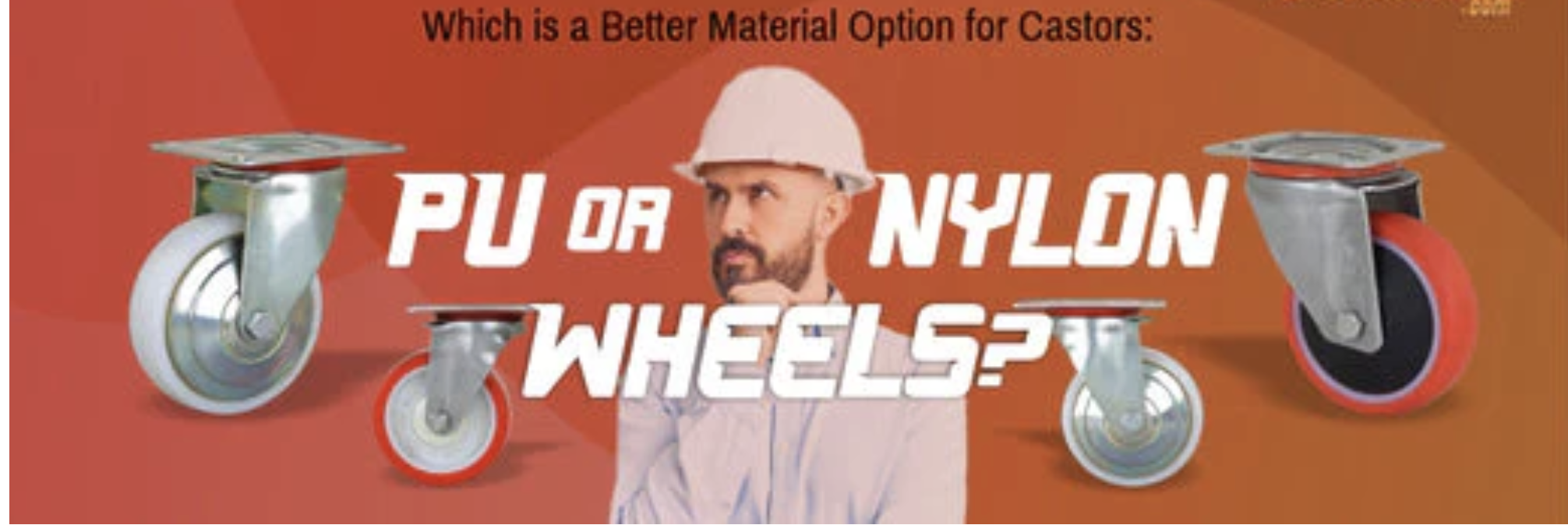
Castorking5 min readWhich is a Better Material Option for Trolley Wheels: PU or Nylon Wheels?
Polyurethane (PU) and Nylon wheels are among the most popular choices when selecting castors for industrial, commercial, or everyday applications. Each material offers unique advantages and is suited to specific requirements. Recognizing the differences can aid you in making a well-informed decision. Based on your application needs. In this blog, we’ll explore the features, benefits, and use cases of PU and nylon wheels to help you determine which option is better for your needs.
Polyurethane (PU) Wheels: Features and Benefits
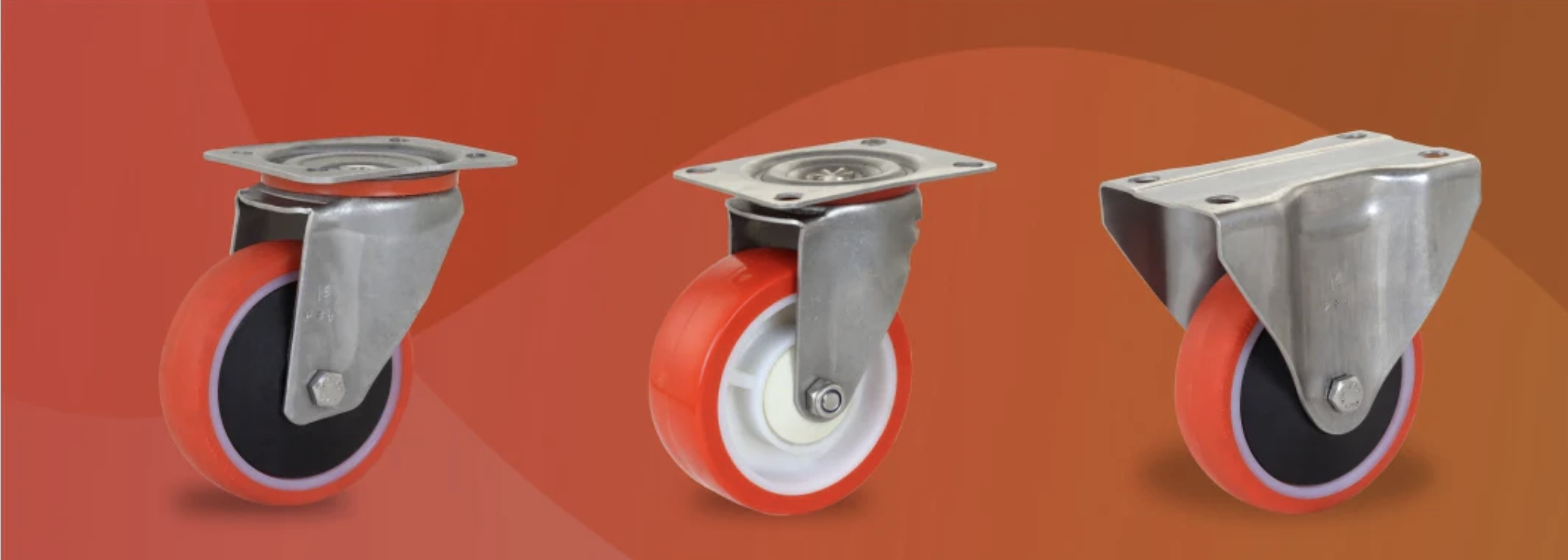
Polyurethane wheels are widely praised for their versatility and ability to provide smooth, quiet, and reliable performance. Below we have specified its key parameters:
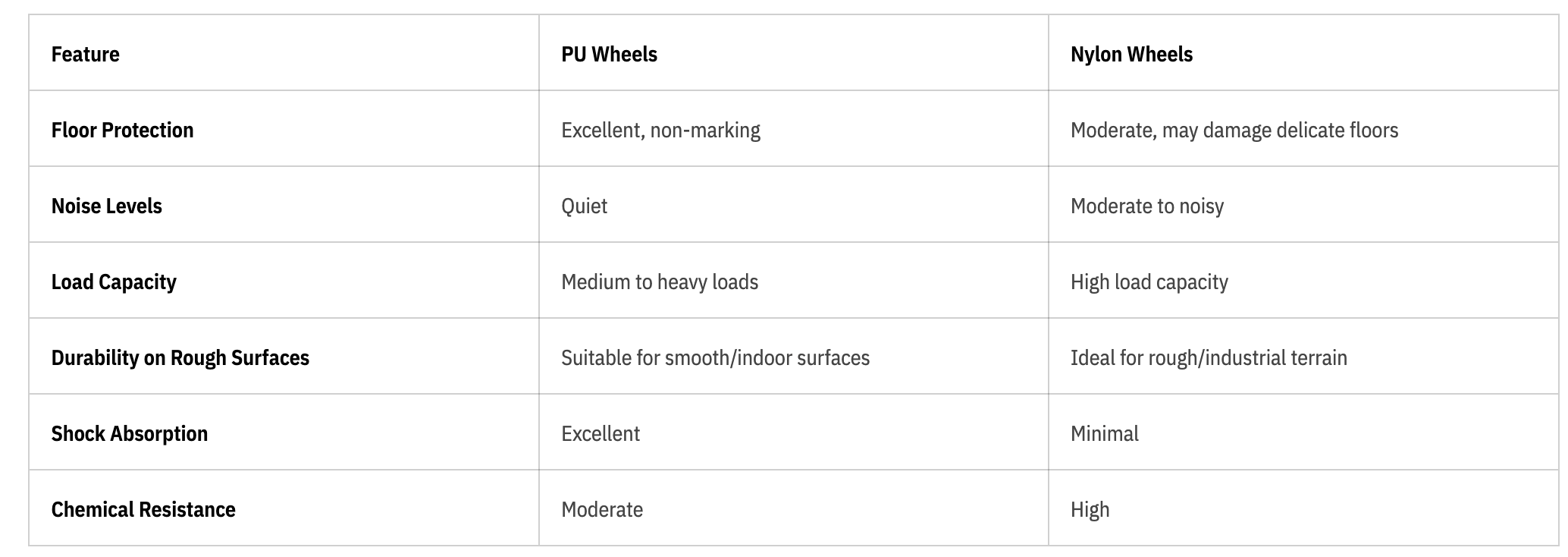
Floor Protection and Non-Marking
Castors with PU wheels are gentle on floors, making them an excellent choice for indoor use. They are non-marking, ensuring no scuff marks or damage, even on delicate surfaces like tiles or hardwood.
PU wheels are commonly used in hospital beds and office chairs, where protecting floors and maintaining a clean appearance are supremely essential.
Shock Absorption and Noise Reduction
PU wheels absorb vibrations and reduce noise, making them ideal for environments that require minimal disturbance.
In retail or light-load material movement, trolleys equipped with PU wheels provide quiet and smooth mobility, contributing to a pleasant shopping experience.
Moderate Load Capacity
PU wheels can support medium to heavy loads, making them suitable for applications where weight capacity is necessary but not extreme.
Chemical and Wear Resistance
PU wheels are resistant to oils, grease, and certain chemicals, ensuring their durability in environments where exposure to such substances is common.
Nylon Wheels: Features and Benefits
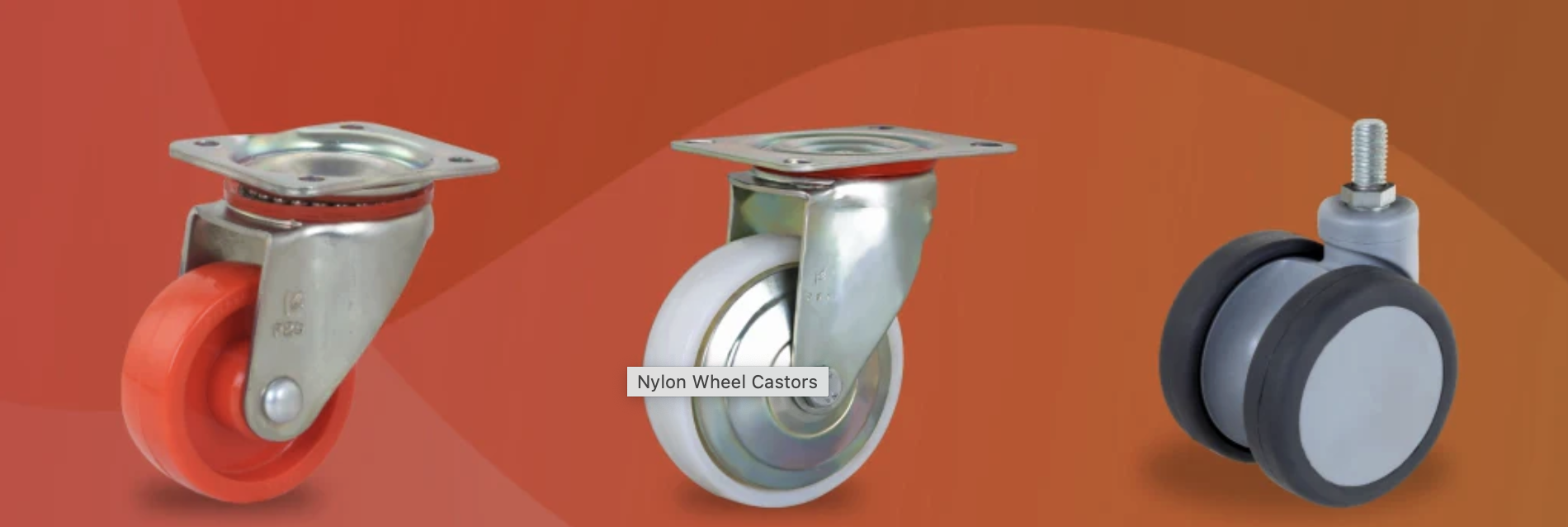
Nylon wheels are renowned for their strength, durability, and ability to support heavy loads. Below we have specified its key parameters:
High Load-Bearing Capacity
Nylon wheels are strong and can support substantial weights without deforming, making them ideal for industrial applications.
Warehouses and factories often use nylon wheels on heavy-duty trolleys to move large items such as machinery and raw materials.
Durability on Rough Surfaces
Castors with Nylon wheels perform exceptionally well on rough and uneven terrain, making them suitable for outdoor and industrial environments.
Heavy industries or logistics park frequently utilize nylon wheels on equipment that navigate uneven ground.
Resistance to Heat and Abrasion
Nylon wheels are heat-resistant and highly resistant to abrasion, ensuring long-lasting durability in demanding conditions.
Low Rolling Resistance
Nylon wheels require less effort to push or pull heavy loads, enhancing efficiency in material handling tasks.
Application-Based Recommendations
For Indoor Use (Offices, Hospitals, Retail)
Castors with PU wheels are the better choice due to their non-marking properties, quiet operation, and ability to protect floors.
For Heavy-Duty Industrial Applications (Factories, Warehouses, Construction)
Castors with Nylon wheels are more suitable thanks to their high load capacity, durability, and ability to handle rough surfaces.
For Outdoor Applications (Construction Sites, Logistics Facilities, Transport)
Castors with Nylon wheels perform better as they withstand abrasion and rough terrain, ensuring longevity and efficiency.
For Noise-Sensitive Environments (Hospitals, Hotels)
Castors with PU wheels are the ideal option, offering smooth and silent mobility.
Both polyurethane (PU) and nylon wheels have distinct advantages, and the right choice depends on your specific needs. PU wheels are ideal for applications that prioritize floor protection, quiet operation, and moderate load capacity. In contrast, nylon wheels are better suited for heavy-duty, high-load industrial applications where strength and durability are essential.
Related Images
Castorking
Article Author