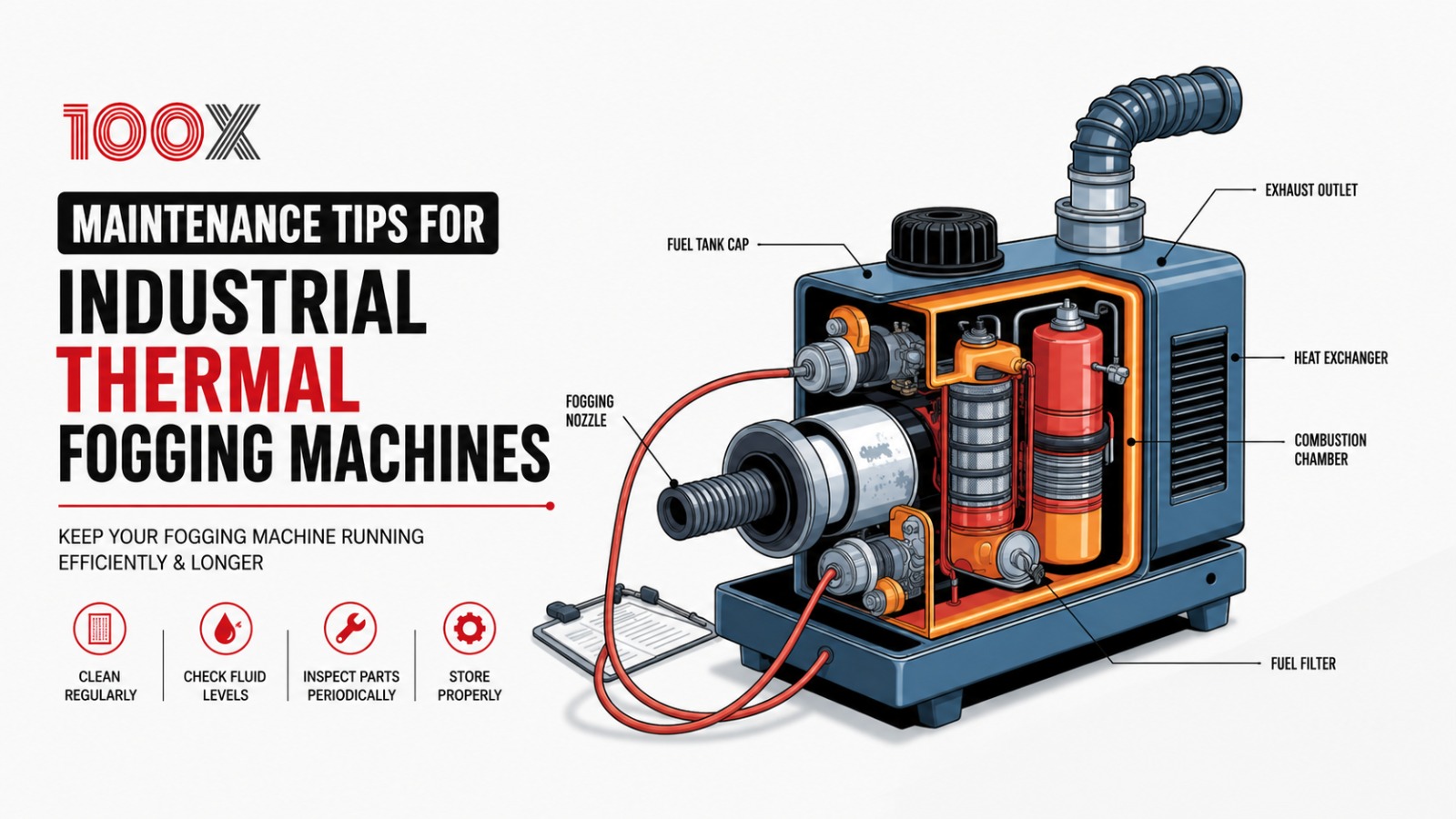
Maintenance Tips for Industrial Thermal Fogging Machines
Maintenance Tips for Industrial Thermal Fogging Machines
Owning a thermal fogging machine is a solid investment, whether you run a pest control business, manage municipal vector control programmes, or operate large agricultural fields. But like any piece of heavy-duty equipment, performance drops sharply when maintenance is ignored.
Proper industrial thermal fogger maintenance is what separates machines that last 5 to 10 years from machines that fail after 12 months. If you want reliable fog output, consistent chemical delivery, and zero unplanned downtime, the habits you build around daily and periodic servicing will make all the difference.
This guide covers everything you need to know, from daily cleaning routines and fuel system care to troubleshooting common issues and storing your machine correctly during off-season periods.
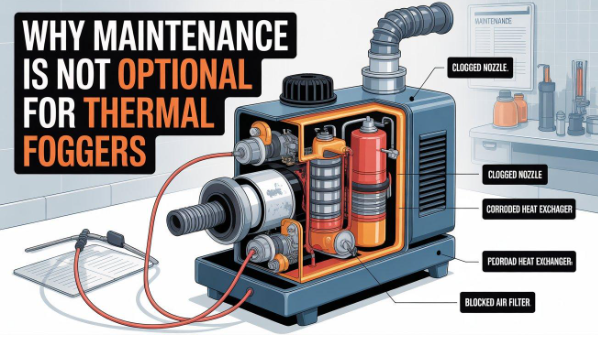
Why Maintenance Is Not Optional for Thermal Foggers
Thermal foggers operate under intense conditions. The pulse jet engine generates temperatures exceeding 300 degrees Celsius. Chemical solutions pass through narrow feed tubes at controlled flow rates. Fuel combustion happens in rapid, continuous cycles.
When any one of these components is not cleaned or serviced on time, the effects cascade quickly. A partially blocked nozzle reduces fog quality. Contaminated fuel causes erratic engine starts. Residue buildup inside the tank corrodes internal surfaces over time.
The numbers reflect this clearly. Studies across pest control operations in South and Southeast Asia show that machines with regular servicing schedules last on average 3.5 times longer than machines maintained only when problems occur. For a machine priced between Rs. 15,000 and Rs. 1,50,000, that difference in lifespan is a significant financial consideration.
Good thermal fogging machine care also protects the people operating it. Faulty fuel connections, cracked tubes, and blocked exhaust paths are the most common causes of fogger-related accidents in field operations.
Daily Maintenance: What to Do After Every Use
The single most impactful maintenance habit is also the simplest: clean the machine every time you use it. Thermal foggers that are stored with chemical residue inside them are far more likely to develop blockages, corrosion, and seal damage within weeks.
Post-Use Cleaning Checklist
• Flush the chemical tank: After every session, fill the tank with clean water and run the machine for 2 to 3 minutes. This pushes residual chemicals out of the feed tube and nozzle assembly.
• Wipe down the exterior: Use a dry cloth to remove any chemical splashes from the body, handle, and fuel tank. Chemical deposits on the outer casing attract dust and can accelerate surface corrosion.
• Check the nozzle tip: Inspect visually for carbon deposits or dried chemical residue. A partially blocked nozzle is the most common cause of uneven fog output.
• Drain the fuel tank if storing overnight: Leaving fuel in the tank for extended periods degrades its quality and can gum up the carburettor.
• Let the machine cool completely: Never store a machine that is still warm. Allow at least 20 to 30 minutes of cooling before placing it in a bag or enclosed storage. Storing in an enclosed box is a must.
This routine takes under 15 minutes and has a direct impact on fogging equipment longevity. Operators who skip this step consistently are the ones calling for repairs within 6 months of purchase.
Weekly and Monthly Maintenance Tasks
Beyond the daily routine, there are components that need attention on a weekly or monthly cycle, depending on how frequently the machine is used. High-use machines, such as those deployed for daily municipal fogging or warehouse disinfection, need weekly checks on parts that occasional users can inspect monthly.
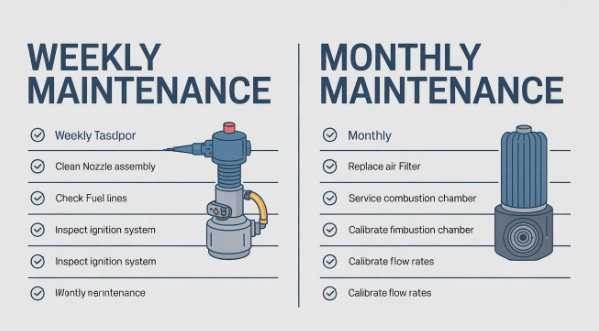
Weekly Tasks
• Inspect all fuel lines and connections: Look for cracks, loose fittings, or signs of fuel seepage. Even a small leak at a fuel line joint can cause ignition problems or become a safety hazard.
• Clean the spark plug: Remove the spark plug and check for carbon fouling. A fouled plug is a leading cause of hard starts and misfires. Clean with a wire brush or replace if electrode wear is visible.
• Check the air filter: A clogged air filter restricts airflow to the engine and reduces combustion efficiency. Tap it clean or replace it if heavily soiled.
• Test the chemical flow rate: Run the machine briefly and observe the fog density. A noticeable drop in fog volume often points to a partially blocked feed tube or flow valve.
Monthly Tasks
• Deep clean the chemical tank: Use a mild solvent or manufacturer-recommended cleaning solution to remove any film or residue that has built up on tank walls.
• Inspect the heat exchanger tube: Carbon deposits inside the combustion tube reduce heat transfer efficiency. Use a thin wire brush or the cleaning rod supplied with the machine.
• Check all seals and gaskets: Look for any signs of cracking, swelling, or deformation, particularly on the tank cap seal and nozzle assembly gasket.
Thermal Fogger Fuel System Care
The fuel system is arguably the most sensitive part of any thermal fogger. A well-maintained engine starts on the first or second pull every time. A neglected one can leave operators frustrated in the field and operations delayed by hours.
Thermal fogger fuel system care starts with using the right fuel. No 2T oil or any additive is added in fogging machines. Always use clean and new Fuel from oil pumps. Using the wrong petrol or mixed petrol or substituting with stale petrol leads to incomplete combustion, excess carbon deposits, and accelerated engine wear.
Key Fuel System Practices
• Always use fresh fuel: Stale or mixed fuel degrades within 30 days. Avoid using old petrol that will sit unused for extended periods.
• Use clean containers: Contaminated fuel containers introduce debris into the carburettor. Dedicate a specific funner and clean container for fuel dispensing and storage.
• Clean the carburettor every 3 months: Use a carburettor cleaning spray and a soft brush. A dirty carburettor is the number one cause of engine flooding and difficult starts.
• Drain fuel before long storage: If the machine will not be used for more than 1 week, drain both the fuel tank and the carburettor float chamber to prevent gumming.
• Check the fuel filter: The inline fuel filter should be replaced every 3 to 6 months depending on usage. A blocked filter starves the engine of fuel and causes lean running conditions.
Thermal Fogger Cleaning Guide: Nozzle and Tank
The nozzle and chemical tank are the two areas where cleaning makes the most immediate difference to fog quality and chemical delivery. Following a proper thermal fogger cleaning guide for these components takes no more than 20 minutes but prevents the majority of performance issues operators encounter.
Nozzle Cleaning Steps
• Allow the machine to cool completely before touching the nozzle assembly.
• Unscrew the nozzle tip carefully using the appropriate spanner.
• Soak the nozzle in a bowl of warm water mixed with a mild descaling agent for 10 to 15 minutes.
• Use a cloth to clear the central orifice.
• Rinse thoroughly, dry, and refit. Do not over-tighten as this can crack the nozzle seat.
Tank Cleaning Steps
• Empty the tank completely and rinse with clean water twice.
• Fill with a solution of warm water and white vinegar in a 3:1 ratio for a deeper clean.
• Shake well, leave for 10 minutes, then drain and rinse with clean water until the rinse water runs clear.
• Leave the cap off and allow the tank to air dry completely before the next use or refill.
For machines used with oil-based chemical formulations, use a dedicated solvent flush instead of water to ensure complete removal of oil residue from tank walls and the feed tube.
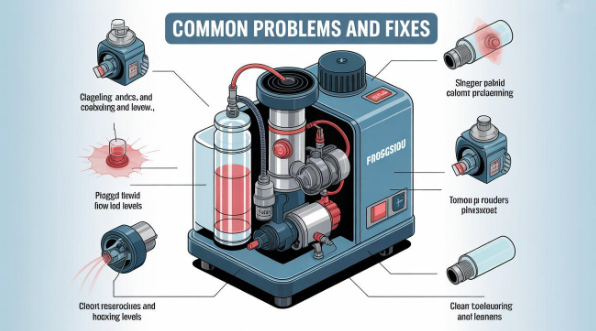
Fogging Machine Troubleshooting: Common Problems and Fixes
Even well-maintained machines occasionally develop issues. Knowing how to identify and resolve the most common problems saves time, reduces repair costs, and avoids unnecessary downtime during active operations.
Good fogging machine troubleshooting starts with observation. Before calling a technician, run through the checklist below and you will resolve the majority of field issues yourself within minutes.
Engine Will Not Start
• Check fuel level: Incorrect or mixed fuel are the most common cause of no-start conditions. At least 1-2 Litres of petrol should be filled.
• Inspect the spark plug: A wet or fouled plug will not fire. Dry, clean, or replace as needed. Keep gap in sparkplug as recommended in manual. Fogging machines spark plug gap are higher than most machines. About 1.5mm is the recommended gap in sparkplug.
• Check for fuel blockage: Remove the fuel line from the carburettor inlet and check for flow. No flow indicates a blocked filter or kinked line.
Poor or No Fog Output
• Blocked nozzle orifice: This is the most common cause. Clean as per the nozzle cleaning steps above.
• Chemical flow rate too low: Adjust the flow valve and check the feed tube for blockages or airlocks.
• Engine not reaching full operating temperature: Allow 60 to 90 seconds of warm-up before opening the chemical valve.
Excessive Smoking or Unburnt Chemical
• Chemical flow rate set too high: Reduce the flow rate until the fog output is clean and white rather than grey or yellowish.
• Engine running too cold: Allow more warm-up time before opening chemical flow. Allow 60 to 90 seconds of warm-up before opening the chemical valve.
• Wrong chemical viscosity: Ensure the chemical formulation is compatible with the machine specifications. Very thick solutions do not vaporise properly.
Vector Control Machine Repair: When to Call a Professional
Most routine issues can be handled in the field with basic tools and the practices outlined above. However, there are situations where vector control machine repair requires a trained technician to avoid causing further damage or creating safety risks.
Seek professional servicing if you notice any of the following:
• Visible cracks in the combustion tube or heat exchanger body.
• Fuel leaking from the carburettor or fuel tank seams.
• Persistent engine misfiring even after spark plug replacement and carburettor cleaning.
• Chemical backflow into the engine compartment.
• Unusual grinding, rattling, or high-pitched sounds from the engine during operation.
Attempting to repair combustion components or carburettor internals without proper training often worsens the problem. Most reputable manufacturers and authorised service centres can turn around a standard service job within 3 to 5 working days.
Extending Machine Lifespan Through Proper Storage
Storage conditions have a direct impact on how long a thermal fogger remains in peak working condition. Machines stored incorrectly between seasonal campaigns deteriorate far faster than those stored with care, even if they were perfectly maintained during the operating season.
The goal of extending machine lifespan through proper storage comes down to three things: keeping moisture out, keeping fuel residue out, and protecting external components from physical damage.
Long-Term Storage Checklist
• Complete a full flush: Run clean water through the system, then a final flush with a light machine oil solution to coat internal surfaces.
• Drain all fuel: Remove fuel from the tank and carburettor. Run the engine until it stops from fuel starvation to ensure the carburettor is fully dry.
• Remove and store the spark plug separately: Apply a drop of oil into the spark plug hole before sealing with a rag to protect the cylinder bore.
• Store in a dry, covered location: Avoid damp garages, open sheds, or areas with direct sunlight exposure. UV radiation degrades plastic components and rubber seals faster than most people expect.
• Cover the machine: A breathable cotton cover prevents dust accumulation while allowing any residual moisture to escape.
Following this routine before each off-season period adds years to the working life of any thermal fogger and dramatically reduces the cost of ownership over time.
Choosing Equipment Built to Last
Maintenance practices can only do so much if the machine itself is built with low-quality components. The ease of servicing, the availability of spare parts, and the durability of internal components all vary significantly between manufacturers.
Operators across India who invest in machines from trusted manufacturers like 100x Circle find that the build quality itself reduces how often intervention is needed. Pulse jet engines with heat-resistant combustion tubes, HDPE chemical tanks, and robust nozzle assemblies simply hold up better under the daily demands of professional fogging operations.
When evaluating any fogging equipment, ask specifically about the availability of replacement parts . These factors matter as much as the initial purchase price.
Building a Maintenance Schedule That Actually Works
The biggest reason maintenance routines fail is not lack of knowledge but lack of structure. Operators know what needs to be done but skip steps when operations are busy or schedules are tight.
A simple written maintenance log kept with the machine solves this problem almost entirely. Record the date of each use, chemical used, and any observations about performance. Note when the spark plug was last changed, when the carburettor was last cleaned, and when seals were last inspected.
This kind of systematic approach to fogging equipment longevity also helps when machines are shared across teams or handed between operators. Anyone picking up the machine can see at a glance what has been done and what is due next.
For operations running 3 or more machines, consider a shared maintenance calendar with monthly reminders for deep servicing tasks. The upfront time investment pays back immediately in fewer breakdowns and lower repair bills.
Final Thoughts
A thermal fogging machine that is cleaned after every use, serviced on a regular schedule, and stored correctly will reliably outperform and outlast one that is run hard and maintained only when something breaks. The practices in this guide are not complicated. They are consistent.
Whether you are managing a single handheld fogger for a local pest control business or running a fleet of vehicle-mounted machines for municipal vector control, industrial thermal fogger maintenance is the foundation that keeps your operations running smoothly, your clients satisfied, and your investment protected.
If you are looking for machines designed with serviceability and long-term performance in mind, explore the full range of professional thermal foggers available at 100x Circle. Quality equipment, backed by good maintenance habits, is the combination that serious operators rely on.
Frequently Asked Questions (FAQs)
Q1. How often should I service my industrial thermal fogger?
Daily cleaning after every use is essential, with weekly checks on the spark plug, air filter, and fuel lines, and a thorough monthly deep service covering the carburettor, heat exchanger, seals, and chemical tank.
Q2. What is the most common reason a thermal fogger stops producing fog?
A blocked nozzle orifice is the most frequent cause of poor or zero fog output, followed by a low chemical flow rate or a feed tube blockage; cleaning the nozzle and checking the flow valve resolves the issue in most cases.
Q3. Can I use any fuel in my thermal fogging machine?
No; always use the fuel type and mixture ratio specified by the manufacturer, typically fresh petrol not mixed with any oil is used, as incorrect fuel causes combustion problems, carbon buildup, and accelerated engine wear.
Q4. How should I store a thermal fogger during the off-season?
Drain all fuel, flush the chemical tank with clean water followed by a light oil solution, remove and oil the spark plug, then store the machine in a dry covered location away from direct sunlight and moisture to prevent corrosion and seal degradation.
Q5. When should I take my fogger to a professional for repair?
Seek professional servicing when you notice cracks in the combustion tube, persistent fuel leaks, continued misfiring after basic troubleshooting, chemical backflow into the engine, or any unusual sounds during operation that do not resolve with standard maintenance steps.
Related Images
100X
Article Author